Best Dual Timeline Novels: Books That Move Between Two Periods
The best dual timeline novels — from Atonement to The Hours to Cloud Atlas. Books that move between two time periods to create meaning from the contrast between past and present.

The dual timeline novel — fiction that moves between two different historical periods, using the contrast between them to generate meaning that neither period alone could produce — is one of the most powerful and most widely practiced structural innovations in contemporary fiction. When the technique works, it creates a kind of double vision: each period illuminates the other, the reader holds both temporalities in mind simultaneously, and the emotional effect of their convergence is greater than either story alone could achieve. What follows are the novels that have used this structure most effectively.
Atonement — Ian McEwan (2001)
The most formally sophisticated dual timeline novel in recent British fiction. Part One is set in a country house in 1935 on a hot summer afternoon — the afternoon that thirteen-year-old Briony Tallis misidentifies a crime and sends an innocent man to prison. Parts Two and Three follow the consequences: Robbie Turner at Dunkirk, Cecilia as a wartime nurse, Briony working through her guilt as she also trains to nurse. Part Four — a frame set in 1999 — reveals that the entire narrative has been Briony’s novel, written and rewritten over sixty years as an act of atonement for what she did.
The structural revelation (we have been reading Briony’s attempt to give the people she wronged the ending they deserved) is the most devastating use of the dual timeline in fiction.
The Hours — Michael Cunningham (1998)
Cunningham’s Pulitzer Prize-winning novel moves between three women in three periods: Virginia Woolf in Richmond in 1923, writing the opening pages of Mrs Dalloway; Laura Brown, a Los Angeles housewife in 1949, reading Mrs Dalloway on the day she considers suicide; and Clarissa Vaughan in New York in 1990s, who is planning a party for a friend dying of AIDS and whom everyone calls Mrs Dalloway. The three timelines illuminate each other through echo and contrast — the same novel, the same preoccupations, the same questions about what makes a life worth living — and converge in a final meeting that reveals the connections between all three women.
One of the most formally accomplished dual timeline novels, and one of the most emotionally intelligent.
Cloud Atlas — David Mitchell (2004)
Mitchell’s most formally ambitious novel — six interlocking stories across five centuries (1850, 1931, 1975, near future, post-apocalyptic far future, post-collapse far future), each interrupted at its midpoint and returned to in reverse order. Each narrative is connected to the others through reincarnation (a comet birthmark recurring in each protagonist), through nested documents (each character finds a text from the previous era), and through the novel’s central argument: that the patterns of power and exploitation repeat across centuries, and that resistance to them also repeats. The most structurally complex novel on this list — requiring patience and trust — and the most rewarding when its architecture becomes clear.
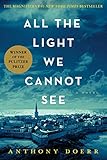
All the Light We Cannot See — Anthony Doerr (2014)
Doerr’s Pulitzer Prize-winning novel moves between two parallel stories: Marie-Laure LeBlanc, a blind French girl who flees Paris with her father and a possibly cursed diamond when the Nazis occupy France; and Werner Pfennig, a German orphan with a gift for radio electronics who is drawn into the Hitler Youth and eventually the Wehrmacht. The two characters’ paths converge in 1944 Saint-Malo; their stories are told in short chapters that alternate throughout, gradually narrowing the gap between the timelines until they meet. Intensely readable, beautifully written, and the most emotionally accessible of the major dual timeline novels.
The Nightingale — Kristin Hannah (2015)
Hannah’s most celebrated novel — set in occupied France during the Second World War, following two sisters: Vianne, who stays in her village when her husband is taken prisoner and must survive the Occupation; and Isabelle, who joins the French Resistance and becomes a guide for Allied airmen escaping across the Pyrenees. The novel alternates between their perspectives and eventually introduces a present-day framing narrative that reveals the connection between past and present. The most immediately accessible dual timeline historical novel on this list — warm, gripping, and emotionally direct — and an ideal starting point for the form.
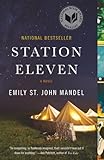
Station Eleven — Emily St. John Mandel (2014)
Mandel’s most celebrated novel moves between the pre-pandemic world of Arthur Leander (an actor whose death on a Toronto stage on the night the Georgian Flu begins sets the novel’s events in motion) and the post-pandemic world twenty years later, where Kirsten Raymonde travels with the Travelling Symphony performing Shakespeare. The past and present illuminate each other through connected characters and objects — particularly the graphic novel ‘Station Eleven,’ which travels through the novel’s timelines — and the dual structure allows Mandel to ask what is worth preserving from the old world and what has actually survived.
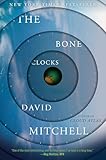
The Bone Clocks — David Mitchell (2014)
Mitchell’s second major dual timeline novel — following Holly Sykes from 1984 (when she runs away from home at fifteen) through six decades of her life, into 2043 and a world damaged by climate change. Each of the novel’s six sections is narrated by a different character whose life intersects with Holly’s, and each successive section reveals more of the novel’s supernatural framework: a centuries-long war between two factions of immortals, played out in the background of ordinary human history. More accessible than Cloud Atlas, it uses its multiple timelines to show a single life from the outside, across time.
The Glass Hotel — Emily St. John Mandel (2020)
Mandel’s most atmospheric novel — centred on a Ponzi scheme, a remote Canadian hotel, and the multiple characters whose lives intersect with both. The novel moves between different years (before and after the scheme’s collapse, during the investigation) and between multiple characters’ perspectives, circling repeatedly around moments of crisis and choice. The dual structure — essentially a loop that returns to key moments from different vantages — is Mandel’s most formally complex, and the novel’s investigation of complicity and self-deception is deepened by the way time reveals what a single moment cannot show.
Reading Dual Timeline Novels
The dual timeline structure works best when each period is genuinely necessary — when the contrast between past and present generates meaning that neither alone could produce, and when the eventual convergence of the timelines creates an emotional or intellectual effect that the single-period novel cannot achieve. Begin with All the Light We Cannot See or The Nightingale for the most immediately accessible; approach Atonement and The Hours for the most formally sophisticated; attempt Cloud Atlas when you want the most structurally ambitious treatment of the form.
Frequently Asked Questions
What is a dual timeline novel?
A dual timeline novel moves between two or more different time periods, using the contrast between them to create meaning that neither period alone could generate. The structure can take many forms: alternating chapters in two different eras (The Nightingale), a present-day frame around a historical narrative (Atonement), three parallel storylines in different periods (The Hours), or a complex multi-century structure (Cloud Atlas). The most effective dual timeline novels use the historical distance to illuminate something about the contemporary story, or vice versa — the past and present interrogate each other.
What are the best dual timeline novels?
The best dual timeline novels include: Atonement by Ian McEwan (1935 and the Second World War, connected by a single act of misidentification); The Hours by Michael Cunningham (Virginia Woolf in 1923, a housewife in 1940s Los Angeles, and a woman in 1990s New York); All the Light We Cannot See by Anthony Doerr (a blind French girl and a German boy during the Second World War); and Cloud Atlas by David Mitchell (six interlocking stories across five centuries). Station Eleven (pre- and post-pandemic), The Nightingale (wartime France in two timelines), and The Glass Hotel (multiple time periods around a financial fraud) are also essential.
Why do writers use dual timelines?
Writers use dual timelines for several reasons: to create dramatic irony (the reader knows something about the future that the past characters don't), to explore how history shapes the present (how wartime events echo through peacetime lives), to contrast two different worlds and make each illuminate the other, and to create structural complexity that a single linear timeline cannot achieve. The form is particularly useful for historical fiction, where a contemporary frame can establish stakes and emotional investment that a purely historical narrative might lack. When done well, the dual structure makes the story feel larger than either timeline alone.
What are some easy dual timeline novels for beginners?
For readers new to dual timeline fiction, The Nightingale by Kristin Hannah is the most immediately accessible — clear prose, two sisters in wartime France, with timelines that eventually converge in an emotionally satisfying revelation. All the Light We Cannot See by Anthony Doerr is slightly more complex but equally engaging. Station Eleven is ideal for readers who want a literary rather than genre starting point. Atonement requires more patience with its structure but rewards it fully.