Best Books with Unreliable Narrators: Fiction That Keeps You Guessing
The best books with unreliable narrators — from Gone Girl and Lolita to The Remains of the Day and We Need to Talk About Kevin. Fiction that keeps you guessing.
The unreliable narrator is one of fiction’s most powerful techniques — a way of making the reader an active participant in constructing meaning rather than a passive recipient. When a narrator is unreliable, the reader must simultaneously follow the story as told and interrogate the telling: what is being concealed, distorted, or misunderstood? The gap between what the narrator says and what the reader infers is the novel’s richest territory.
The Essential List
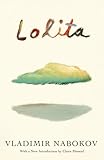
Lolita — Vladimir Nabokov (1955)
The most formally accomplished unreliable narrator in fiction. Humbert Humbert’s account of his ‘love’ for twelve-year-old Dolores Haze — told in the dazzling, self-justifying prose of a man who has constructed an aesthetic framework to make his abuse appear beautiful — is the most complete demonstration of how narration can simultaneously reveal and conceal. The reader who submits to Humbert’s rhetoric finds it seductive; the reader who resists it discovers Lolita — almost invisible within the novel’s surface, always present in its margins. Nabokov insisted he felt no sympathy for Humbert; the novel is his demonstration that understanding is not the same as endorsement.
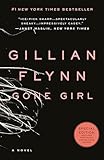
Gone Girl — Gillian Flynn (2012)
The best contemporary thriller with unreliable narration. The alternating perspectives of Nick Dunne (narrating the present, after his wife Amy’s disappearance) and Amy Dunne (narrating their early relationship through her diary) are both systematically misleading — the reader’s assumptions are overturned in the novel’s central revelation, and then overturned again. Flynn’s structure is the most technically sophisticated use of dual unreliable narrators in popular fiction; the revelation of what is actually happening is as satisfying as any thriller twist, and more disturbing than most.
The Remains of the Day — Kazuo Ishiguro (1989)
The most moving unreliable narrator in literary fiction. Stevens, a retired English butler, drives through the countryside reviewing his professional life — his devotion to his employer Lord Darlington, his relationship with the housekeeper Miss Kenton, his conception of ‘dignity’ as a professional ideal. His narration is not dishonest but self-deceived: the reader sees, through the gaps in Stevens’s account, what Stevens cannot bear to see — that his employer was a Nazi sympathiser, that Miss Kenton loved him and he refused to acknowledge it, that his entire professional life has been given to mistaken values. The most devastating portrait of self-deception available.
We Need to Talk About Kevin — Lionel Shriver (2003)
The most psychologically complex unreliable narrator in contemporary literary fiction. Eva’s retrospective letters to her husband about their son Kevin — who has committed a school massacre — are unreliable not through lying but through the impossible complexity of her position: she must simultaneously account for what Kevin did, assess her own role in his development, and navigate her ongoing ambivalence about motherhood. Shriver refuses to resolve whether Eva’s early coldness toward Kevin caused his violence or was a response to it already-present; the novel’s unreliability is the unreliability of memory and guilt.
The Silent Patient — Alex Michaelides (2019)
The best-selling contemporary psychological thriller with an unreliable narrator. Alicia Berenson, a famous painter who has stopped speaking after apparently shooting her husband, is treated by psychotherapist Theo Faber, who has his own obsession with the case. The novel’s revelation — which overturns the reader’s understanding of who has been narrating and why — is one of the most satisfying twists in recent thriller fiction. More manipulative than the literary examples above but technically accomplished.
Atonement — Ian McEwan (2001)
McEwan’s meditation on memory, fiction, and unreliable narration. Briony Tallis’s false testimony — which destroys Cecilia and Robbie’s relationship — is presented initially from her perspective with the conviction of a sincere witness; the novel’s gradual revelation of what she misunderstood is not a twist but a deepening of understanding. The novel’s final section reveals that the ‘resolution’ we have been given is itself fiction — Briony’s own novel, written in old age, giving her sister the happy ending that the war denied. McEwan’s argument about the relationship between fiction and truth, and the limits of narrative as a vehicle for moral redemption, is the most philosophically serious engagement with unreliable narration in contemporary British fiction.
The Sense of an Ending — Julian Barnes (2011)
The most economical treatment of unreliable memory. Tony Webster’s carefully maintained self-image as a passive bystander in his own life is progressively dismantled as documentary evidence — letters, a will, a bequest — reveals that his memory of his early life is not merely incomplete but actively self-serving. Barnes’s novel argues that memory is not merely imperfect but strategically unreliable: we remember what we need to remember to maintain the self we have constructed. The most elegant demonstration of the principle.
Fight Club — Chuck Palahniuk (1996)
The most popular use of unreliable narration in American fiction — the narrator’s gradual revelation of who Tyler Durden actually is overturns everything that has preceded it and requires the reader to reread the entire novel. Palahniuk’s technique is less sophisticated than Nabokov or Ishiguro — the twist is deployed for maximum shock — but the novel’s meditation on male identity, violence, and consumer capitalism under the unreliable narrator’s cover gives it more intellectual substance than its thriller mechanics suggest.
Why Unreliable Narration Works
The unreliable narrator implicates the reader in the reading act itself. When we discover that a narrator has been deceiving us — or deceiving themselves — we are forced to ask what made us believe them, what in their account was plausible, and why we were willing to accept their version of events. The best unreliable narrator fiction is therefore also a study in the reader’s own credulity: a reminder that all narration involves selection, emphasis, and the construction of a self that wants to be believed.
Frequently Asked Questions
What is the best book with an unreliable narrator?
Lolita (1955) by Vladimir Nabokov is the most formally accomplished — Humbert Humbert's self-justifying, aesthetically dazzling account of his abuse of Dolores Haze (Lolita) is the most complete demonstration of how narration can simultaneously reveal and conceal. Gone Girl (2012) by Gillian Flynn is the best contemporary thriller with an unreliable narrator — its dual perspective structure, where both narrators are concealing essential information, is one of the most sophisticated twists in recent popular fiction.
What makes a narrator unreliable?
An unreliable narrator is one whose account of events cannot be fully trusted — either because they are lying (deliberately concealing or distorting information), self-deceived (unable to see their own role in events clearly), mentally ill or cognitively impaired (perceiving events incorrectly), or simply limited in perspective (unable to see beyond their own point of view). The best unreliable narrators are those whose unreliability is itself the subject: the reader's gradual discovery of what the narrator is hiding or misunderstanding is the novel's central experience.
Is The Remains of the Day an unreliable narrator?
Yes — Stevens in The Remains of the Day (1989) by Kazuo Ishiguro is one of the most celebrated unreliable narrators in literary fiction. Stevens is not lying but self-deceived: his account of his service, his relationship with Miss Kenton, and his admiration for Lord Darlington is systematically distorted by a professional identity that has excluded emotional honesty. The reader sees what Stevens cannot: that his professional 'dignity' has cost him a relationship, that his admired employer was a Nazi sympathiser, that his life has been given to a mistaken set of values. The novel is the most moving study of self-deception available.
What is We Need to Talk About Kevin about?
We Need to Talk About Kevin (2003) by Lionel Shriver follows Eva Khatchadourian, who writes letters to her estranged husband about their son Kevin — who has committed a school massacre. Eva's narration is unreliable not through lying but through the complexity of her emotional state: she is simultaneously honest about her ambivalence about motherhood and incapable of full honesty about what she may have contributed to Kevin's development. The novel is a study in how the retrospective narrative of a catastrophe is shaped by guilt, love, and the need to establish where responsibility lies.