Best Books Set in Russia: Essential Russian Fiction and Nonfiction
The best books set in Russia — from Anna Karenina and The Master and Margarita to A Gentleman in Moscow and The Gulag Archipelago. Essential Russian literature.

Russian literature is one of the richest national literary traditions in the world — producing, in the nineteenth century alone, what many critics consider the greatest novels ever written (Tolstoy’s Anna Karenina, Dostoevsky’s Brothers Karamazov), and in the Soviet period a literature of extraordinary moral courage written under conditions of political terror. The books listed here span the full range of Russia’s literary tradition, from the pre-revolutionary aristocratic world to the Soviet gulag.
The Russian novel is characterised by moral seriousness, psychological depth, and a scope that is comfortable with the largest questions: God, suffering, guilt, redemption, and the meaning of human life.
The Essential List
Anna Karenina — Leo Tolstoy (1878)
The greatest novel ever written, by most serious assessments. Tolstoy’s account of Anna Karenina’s extramarital affair with Count Vronsky — and the parallel story of Levin’s search for meaning in rural Russia — contains everything that fiction can contain: a perfect psychological study, a comprehensive portrait of Russian society, a meditation on religion and death, and one of the most devastating tragic structures in literature. The novel’s famous opening line (‘All happy families are alike; each unhappy family is unhappy in its own way’) is the only famous opening line in any language that is actually borne out by the novel that follows it.
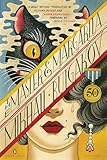
The Master and Margarita — Mikhail Bulgakov (1967)
The great Soviet-era Russian novel. Bulgakov’s Devil visits Stalinist Moscow — where his supernatural tricks expose the moral emptiness of the Soviet bureaucracy — while in Jerusalem, Pilate interrogates Yeshua and condemns him to death. The novel weaves these strands with a love story (the Master and Margarita’s pact with the Devil) into a meditation on good and evil, cowardice and courage, and the suppression of art. Written in secret during the Stalin era and published posthumously; Bulgakov revised it on his deathbed. Among the ten most important novels of the twentieth century.
Crime and Punishment — Fyodor Dostoevsky (1866)
The best starting point for Dostoevsky. Raskolnikov, a brilliant but impoverished student in St. Petersburg, murders a pawnbroker and her sister to prove his theory that great men are above conventional morality — and then undergoes the psychological disintegration of guilt. The novel is less interested in the crime than in the criminal’s consciousness: the escalating paranoia, the rationalisation, the eventual confrontation with the impossibility of self-deception. The model for every subsequent psychological crime novel.
The Brothers Karamazov — Fyodor Dostoevsky (1880)
Dostoevsky’s final and most comprehensive novel — a murder mystery, a family drama, a philosophical debate about God and suffering, and a theological argument all simultaneously. The three Karamazov brothers (Dmitri, Ivan, Alyosha) represent different responses to the question of how to live in a world where God’s existence is uncertain. Ivan’s ‘Grand Inquisitor’ chapter is the most powerful argument against God’s goodness in Western literature; the novel’s resolution (Alyosha’s gentle faith) is Dostoevsky’s answer to it. The most important novel in the tradition of religious fiction.
A Gentleman in Moscow — Amor Towles (2016)
The most accessible and pleasurable of the books listed here. Count Rostov’s thirty-two years of house arrest in the Metropol Hotel — from the Bolshevik tribunal of 1922 to his escape in 1954 — is told with Towles’s characteristic elegance and wit. The novel is a celebration of civilised values (food, wine, friendship, literature, the cultivation of beauty) that survive political catastrophe; Rostov’s refusal to be diminished by his confinement is both a character study and an implicit argument about the limits of what Soviet power could destroy.
War and Peace — Leo Tolstoy (1869)
Tolstoy’s other masterpiece and the largest novel in the Western tradition. The Napoleonic Wars as experienced by the Rostov, Bolkonsky, and Bezukhov families — across fifteen years of Russian history — is both a comprehensive portrait of Russian aristocratic society and a sustained philosophical argument about the nature of historical causation. Tolstoy’s conclusion (that history is not made by great individuals but by the collective movement of forces too large for any individual to control) is argued through the novel’s structures rather than stated directly. Begin with Anna Karenina if you’re new to Tolstoy; come to this one when you’re ready for the full scope.
One Day in the Life of Ivan Denisovich — Alexander Solzhenitsyn (1962)
The first published account of life in the Soviet gulag — a single day in the life of Ivan Denisovich Shukhov, a political prisoner in a Siberian labour camp, narrated in the prisoner’s own voice and from his own perspective. Solzhenitsyn was a gulag survivor; the novel’s authenticity is its foundation. Published during the Khrushchev thaw, it was the first acknowledged crack in the official Soviet narrative. Short, precise, and devastating.
Doctor Zhivago — Boris Pasternak (1957)
Pasternak’s only novel was smuggled out of the Soviet Union and published in Italy in 1957; Pasternak was awarded the Nobel Prize but forced to decline it under Soviet pressure. The novel follows Yuri Zhivago — poet, doctor, romantic — through the Russian Revolution and civil war, and his love for Lara. Less politically didactic than Solzhenitsyn, more interested in the texture of individual experience under historical upheaval, and among the most beautifully written of the books listed here.
Why Russian Literature?
The nineteenth-century Russian novel — Tolstoy, Dostoevsky, Turgenev, Gogol — emerged in a country that was simultaneously modernising and desperately traditional, where the largest questions (God, freedom, guilt, redemption) were still genuinely open in a way that they were not in the more secular West. This openness gives the great Russian novels their moral seriousness and their scope; characters argue about whether God exists and whether murder can be justified in ways that would seem melodramatic in English fiction but feel entirely natural in Russian. The tradition of moral seriousness survived into the Soviet period, where it became courage: writing honestly about what the regime could not acknowledge.
Frequently Asked Questions
What is the best Russian novel to start with?
Anna Karenina (1878) by Leo Tolstoy is the best starting point — it is both the most accessible of the major Russian novels and, by many assessments, the greatest novel in any language. The story of Anna's extramarital affair and its consequences is told with Tolstoy's characteristic psychological precision and moral seriousness, alongside the parallel story of Levin's search for meaning in rural Russia. A Gentleman in Moscow (2016) by Amor Towles is the most accessible contemporary entry point — an aristocrat under house arrest in a luxury Moscow hotel for thirty-two years. Crime and Punishment (1866) is the best starting point for Dostoevsky.
What is The Master and Margarita about?
The Master and Margarita (written 1930s, published 1967) by Mikhail Bulgakov follows three interrelated stories: the Devil's visit to Stalinist Moscow, accompanied by a troupe of demons who wreak supernatural havoc; Pontius Pilate's interrogation of Yeshua (Jesus) in Jerusalem; and the love story between the Master, a novelist whose manuscript has been suppressed, and Margarita, who makes a pact with the Devil to save him. The novel is one of the great satires of Soviet bureaucracy and mediocrity, and one of the great love stories in Russian fiction. Completed by Bulgakov on his deathbed and published posthumously.
What is A Gentleman in Moscow about?
A Gentleman in Moscow (2016) by Amor Towles follows Count Alexander Rostov, an aristocrat sentenced by a Bolshevik tribunal in 1922 to spend the rest of his life under house arrest in the Metropol Hotel in Moscow. Rather than being a tragedy of confinement, the novel follows Rostov's construction of a rich life within the hotel — through friendship, food, love, and the observation of the changing Soviet world visible in the hotel's lobby and restaurant — across thirty-two years and the entire Stalin era. The most popular and most elegantly structured of recent novels set in Russia.
Which Dostoevsky novel should I read first?
Crime and Punishment (1866) is the best starting point — Raskolnikov's murder of a pawnbroker and his subsequent psychological disintegration is the most dramatically propulsive of Dostoevsky's major novels. The Brothers Karamazov (1880), his final and most comprehensive work, is his greatest achievement but requires more patience. The Idiot (1869) follows Prince Myshkin, an epileptic whose profound goodness is incompatible with the corrupt world he enters. For readers who want to understand Dostoevsky's religious philosophy, The Brothers Karamazov is essential; for readers who want narrative momentum, Crime and Punishment.