Best Books for Teens: Essential Reading for Young Adults
The best books for teens — from The Catcher in the Rye and Lord of the Flies to The Hunger Games and The Hate U Give. Essential reading for young adults and teenagers.
The best books for teenagers are those that take adolescent experience seriously — that explore the disorientation of growing up, the encounter with injustice, the discovery that the adult world is more complicated and more hypocritical than it appeared, and the question of what kind of person you want to be. The books below range from twentieth-century classics that have shaped how the Western world thinks about adolescence to contemporary YA that addresses the specific challenges of growing up now.
The Classics of Adolescence
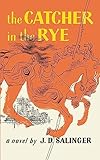
The Catcher in the Rye — J.D. Salinger (1951)
The defining portrait of adolescent alienation in American literature — Holden Caulfield’s three days in New York after his expulsion from prep school, his preoccupation with ‘phoniness,’ his grief for his dead brother Allie, and his fantasy of protecting children from the fall into adult inauthenticity. The novel has been banned, challenged, and beloved in roughly equal measure; it remains the most precisely observed account of the experience of being sixteen and feeling that everything around you is fake.
Lord of the Flies — William Golding (1954)
The most disturbing novel about children in literature — a group of British schoolboys stranded on an island without adults, and what they do to each other when civilisation’s constraints are removed. Golding’s argument (that the violence and tribalism are not a corruption of children’s nature but the revelation of human nature itself) is the most pessimistic in the canon of books assigned to young readers. Essential precisely because it refuses comfort.
The Outsiders — S.E. Hinton (1967)
Written by Hinton when she was sixteen — the story of the Greasers and the Socs (Socials), two class-divided gangs in 1960s Tulsa, and Ponyboy Curtis’s coming of age in the aftermath of violence. The novel’s empathy for working-class teenagers, its refusal to sentimentalise poverty or idealise middle-class life, and its central question (why should teenagers have to choose sides?) remain as relevant as when it was published.
Dystopian Fiction
The Hunger Games — Suzanne Collins (2008)
The most influential dystopian YA novel of the twenty-first century — Katniss Everdeen, a teenager from a poor district in a future North America, is selected to compete in a televised fight to the death organised by the authoritarian Capitol. Collins’s novel uses the spectacle of the Games to examine wealth inequality, the ethics of survival, and how oppressive systems use entertainment to maintain control. The most immediately gripping book in this list and the best starting point for readers who haven’t yet found fiction they love.
The Giver — Lois Lowry (1993)
A perfect dystopian novella — Jonas’s discovery that his society’s apparent perfection requires the suppression of everything that makes life meaningful (colour, music, strong emotion, individual memory) is one of the most effective moral arguments in children’s literature. Short enough to read in a single sitting, with questions that stay much longer.
Divergent — Veronica Roth (2011)
Roth’s dystopian Chicago — a society divided into five factions based on virtue (Dauntless, Erudite, Abnegation, Amity, Candor), and Tris Prior, who doesn’t fit any of them. Less thematically serious than The Hunger Games but more immediately propulsive, and the best gateway to YA dystopia for readers who want nonstop action.
Contemporary YA
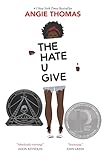
The Hate U Give — Angie Thomas (2017)
The most important YA novel about race in recent years — Starr Carter’s experience of watching her unarmed best friend shot by a police officer, and the aftermath: the protests, the grand jury, and her own decision about whether to speak out. Thomas’s novel is both a coming-of-age story and a political argument, and it treats its teenage readers as fully capable of engaging with both.
The Perks of Being a Wallflower — Stephen Chbosky (1999)
Charlie’s letters to an anonymous correspondent during his freshman year of high school — his friendships with seniors Sam and Patrick, his gradual discovery of his own history of trauma, and his encounter with literature, music, and belonging. The novel is the most empathetic portrait of the experience of being socially marginal in high school and the most emotionally honest account of adolescent friendship.
Meeting Teenage Readers Where They Are
The selection of books for teenage readers requires a particular wisdom — an understanding that the goal is not to impose what adults think young people should read but to meet teenagers where they actually are, offering books that genuinely speak to the concerns, intensities, and experiences of adolescence, and that can win young people to reading on their own terms. Adolescence is a distinct and turbulent stage of life, marked by intense emotion, the urgent search for identity, the navigation of new social and romantic complexities, the testing of boundaries and authority, and the often painful transition from childhood toward adulthood, and the books that resonate most powerfully with teenage readers are those that take these experiences seriously and speak to them directly. The titles on this list are chosen with this understanding, selected not for their improving qualities or their adult prestige but for their genuine connection to the teenage experience and their capacity to engage young readers on the level of their actual lives and concerns. This means books that portray adolescent experience with honesty and respect, that grapple with the questions and feelings that preoccupy young people, and that offer characters and situations in which teenagers can recognize themselves and their world. It means valuing what genuinely engages young readers rather than imposing what adults imagine they ought to appreciate, and trusting that books which authentically speak to the teenage experience will do more to create lifelong readers than any quantity of worthy but alienating classics. Meeting teenage readers where they are is not a lowering of standards but a recognition of how reading is actually won, and the books gathered here reflect a respect for the reality of adolescent life and a faith that literature which honestly engages that reality will reach young people as no imposed reading ever could.
Fiction as a Mirror for the Adolescent Self
For teenage readers, perhaps more than for any other audience, fiction serves a vital developmental function as a mirror in which the turbulent, uncertain, rapidly forming adolescent self can be reflected, recognized, and understood — and the books on this list are valued partly for this power to help young people make sense of who they are becoming. Adolescence is fundamentally a period of identity formation, a time when young people are urgently working out who they are, what they believe, where they belong, and who they wish to become, and this often confusing and isolating process is one that fiction can profoundly assist. By portraying characters who are grappling with the same questions, feelings, and struggles that the teenage reader is experiencing, fiction offers the powerful reassurance of recognition, the relief of seeing one’s own confusing inner life reflected and validated, and the comforting discovery that the intense and often painful experiences of adolescence are shared rather than uniquely isolating. A teenager wrestling with questions of identity, belonging, first love, family conflict, or the search for meaning can find in the right book a mirror that helps them understand their own experience, a companion that assures them they are not alone, and a source of insight into the very questions that preoccupy them. This mirroring function has real developmental significance, for the work of forming an identity is aided immensely by encountering, through fiction, the experiences of others navigating the same passage, and by finding in literature both the validation of one’s own struggles and a range of possible selves and paths to consider. The books on this list are chosen partly for this power to serve as mirrors for the adolescent self, to help young readers in the crucial work of understanding who they are and who they might become, and to offer, in the often lonely and bewildering passage of adolescence, the recognition and companionship that fiction uniquely provides.
Cultivating a Lifelong Love of Reading
The deepest purpose behind any list of books for teenagers, and the hope that animates this selection, is the cultivation of a lifelong love of reading — the creation of readers who will carry the habit, the pleasure, and the enrichment of books with them throughout their lives, long after adolescence has passed. The teenage years are often decisive in determining a person’s lifelong relationship with reading, the period in which young people either discover that books can be a source of genuine pleasure, meaning, and connection, or conclude that reading is a tedious obligation to be abandoned as soon as school permits. Which of these outcomes prevails depends largely on the books that teenagers encounter and the experiences those books provide, and a list like this one is offered in the hope of producing the former. The aim is not merely that young people should read these particular books but that, through the experience of reading books that genuinely engage and move them, they should discover the pleasures and rewards of reading itself, and so become readers for life. This is why the emphasis falls on genuine engagement rather than improving worthiness, on books that teenagers will actually love rather than books that adults think they should appreciate: because the surest way to create a lifelong reader is to provide the experience of being captivated, moved, and rewarded by a book, the experience that teaches a young person that reading is not a chore but a joy. A teenager who discovers, through the right book at the right moment, that literature can absorb, delight, console, and enlarge them has gained something precious that will enrich their entire life, and the cultivation of this lifelong love of reading is the ultimate goal toward which every book on this list is directed. To create not merely students who have read but adults who love to read is the truest measure of success.
Reading Order
New to YA: The Hunger Games → The Hate U Give → The Giver.
Classic canon: Lord of the Flies → The Outsiders → The Catcher in the Rye.
Complete: Lord of the Flies → The Catcher in the Rye → The Outsiders → The Giver → The Hunger Games → The Hate U Give → The Perks of Being a Wallflower.
Frequently Asked Questions
What is the best book for a teenager to read?
The answer depends on the reader. For a teenager who hasn't yet found books they love, The Hunger Games (2008) is the most immediately gripping — a propulsive dystopian novel with a strong, active protagonist, action from the first page, and genuine moral complexity beneath the entertainment. For a teenager who already reads: The Catcher in the Rye (1951) remains the most precise portrait of adolescent alienation in literature, and The Hate U Give (2017) is the most important recent novel about race, police violence, and what it means to speak out.
What is The Catcher in the Rye about?
The Catcher in the Rye (1951) by J.D. Salinger follows Holden Caulfield over three days in New York City after his expulsion from a prep school — his wandering, his encounters with old friends and strangers, his preoccupation with 'phoniness' (the performance of social roles rather than authentic feeling), and his fantasy of being 'the catcher in the rye,' protecting children from falling into adult compromise. The novel has been both celebrated as the defining portrait of adolescent alienation and criticised as self-indulgent; it remains the most widely discussed first-person narrator in American fiction.
What is The Hate U Give about?
The Hate U Give (2017) by Angie Thomas follows Starr Carter, a Black teenager who witnesses the police shooting of her unarmed best friend Khalil. Starr lives between two worlds — her predominantly Black neighbourhood and the predominantly white private school she attends — and the novel follows the aftermath of the shooting: the protests, the grand jury decision, and Starr's decision about whether to speak out publicly. Named after Tupac Shakur's acronym THUG LIFE (The Hate U Give Little Infants F***s Everybody), it is the most important YA novel about race and police violence published in recent years.
What is The Giver about?
The Giver (1993) by Lois Lowry follows Jonas, a twelve-year-old in a seemingly perfect, pain-free society where all difference has been eliminated — no colour, no music, no strong emotion. Jonas is chosen as the new 'Receiver of Memory,' the single person in the community who holds all the memories of human history before the era of 'Sameness.' The novel's exploration of what is lost when suffering is eliminated — and whether a life without pain is a life worth living — is one of the most effective moral arguments in children's literature.