Best Books for Introverts: Fiction and Non-Fiction for the Quiet Mind
The best books for introverts — from Quiet and Stoner to Norwegian Wood and The Remains of the Day. Books about inner life, solitude, and the introvert experience.
Books for introverts divide into two categories: non-fiction that takes introversion seriously as a temperament and explains what it is, and fiction that renders inner life — the kind of experience that is primarily internal — with the depth it deserves. Both are listed below.
Understanding Introversion
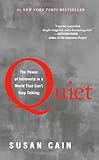
Quiet — Susan Cain (2012)
The book that changed how many introverts understood themselves. Cain argues that introversion — the preference for less stimulation, for depth over breadth, for thinking before speaking — is a legitimate temperament, not a personality problem to be fixed. She traces the rise of what she calls the Extrovert Ideal in American culture (the expectation that effective people are outgoing, assertive, and group-oriented) and its costs. The research is solid; the argument is important; and many introverted readers report that reading it was the first time they felt their experience taken seriously.
The Interior Life in Fiction
Stoner — John Williams (1965)
The novel of the quiet inner life — the one that best captures the experience of a person whose richest experience is intellectual and private, whose emotional depth is never fully visible to others, and whose life appears unremarkable while containing great feeling. William Stoner’s story — Missouri farm boy, professor, failed husband, devoted scholar — is not dramatic. Its power is in what Williams shows us is happening inside a man who has no gift for self-expression: how much he feels, how completely he is alive to what he loves, how the ordinary texture of academic life contains everything that matters to him.
The Remains of the Day — Kazuo Ishiguro (1989)
The most elegant fictional study of what repression costs. Stevens, a butler of the old school, has devoted his life to professional dignity — to being perfectly controlled, professionally self-effacing, never inappropriate. On a journey to visit a former housekeeper he loved and never told, he reviews his choices in memories that are careful, ordered, and reveal more than he intends. Ishiguro’s novel is a portrait of what happens when an interior life is systematically suppressed, and an argument — quietly devastating — about the things that cannot be deferred forever.
Norwegian Wood — Haruki Murakami (1987)
Murakami’s most emotionally direct novel — a young man at a Tokyo university in the late 1960s who loves two women, one of whom is drawn towards death and one towards life, and who must choose between them. The novel is about grief, longing, and the specific loneliness of people who feel things intensely and cannot articulate them to others. It is more accessible than Murakami’s magical realist work and resonates strongly with readers who recognise the experience of inhabiting an interior world that others cannot fully see.
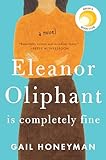
Eleanor Oliphant Is Completely Fine — Gail Honeyman (2017)
A more contemporary and more warmly comic portrait of a socially isolated woman — Eleanor Oliphant, who has created a perfectly sufficient life for herself with no friends and strict routines, and whose rigid self-sufficiency conceals a painful history. The novel is about connection and what prevents it, about the cost of the defences we build, and about the specific loneliness of people who have learned that depending on others is not safe. It ends with more hope than most of the books on this list.
Reading as the Introvert’s Natural Habitat
There is a pleasing logic to a reading list made for introverts, because reading is perhaps the introvert’s most natural and restorative activity, and understanding why illuminates the temperament this list explores. Introversion, as Susan Cain’s Quiet clarifies, is not shyness or social anxiety but a preference for lower levels of external stimulation and a tendency to find energy in solitude and reflection rather than in crowds and constant interaction. Reading suits this disposition perfectly. It is a deep, sustained, solitary activity that rewards exactly the qualities introverts possess in abundance — the capacity for prolonged focus, the comfort with being alone, the preference for depth over breadth, the rich inner life that finds in a book a worthy companion. Where a party drains the introvert, an evening with a novel replenishes them. More than this, reading offers introverts a form of intimacy and social connection that does not exhaust them: through books they enter other minds and lives with an intensity that real-time socializing rarely allows, encountering other people on terms that respect their need for reflection and retreat. For many introverts, the relationship with books formed in childhood was a first refuge and remains a lifelong source of nourishment. A list like this one, then, is not merely a collection of books about introversion; it is an affirmation of the activity through which introverts most fully come into themselves, and a reminder that the quiet pleasures of the page are not a retreat from life but, for some temperaments, the deepest way of living it.
Fiction That Honors the Inner Life
The fiction gathered on this list shares a quality that makes it especially resonant for introverted readers: it locates the real drama of human existence in the interior, in the vast and often invisible inner life that conventional narrative, with its preference for action and external incident, tends to overlook. This is precisely the territory introverts know best, and these novels validate it as worthy of the most serious literary attention. Stoner is the supreme example — a novel in which almost nothing dramatic happens by external measure, yet which contains a whole life’s worth of feeling, devotion, and quiet tragedy, all of it occurring inside a man who has no gift for showing it. The Remains of the Day makes the suppressed interior life its very subject, revealing through a butler’s careful, evasive memories the enormous weight of everything he has never allowed himself to express. Norwegian Wood dwells in the inner experience of grief and longing in people who feel intensely but cannot articulate what they feel. What these books offer the introverted reader is a profound recognition: the affirmation that a life lived largely inward, rich in private thought and unexpressed emotion, is not a lesser or emptier life but one of the great subjects of literature. In a culture that often prizes the visible, the expressive, and the demonstrative, this fiction insists that the quietest people may contain the most, and that the inner world deserves to be rendered with the depth and seriousness these novelists bring to it.
A Quiet Corrective to a Loud Culture
Beyond their individual pleasures, the books on this list together perform a valuable cultural function, offering a corrective to what Susan Cain memorably named the “Extrovert Ideal” — the pervasive modern assumption, especially strong in Western and particularly American culture, that the ideal person is outgoing, gregarious, assertive, comfortable in groups, and quick to speak. This ideal shapes schools, workplaces, and social life in ways that can make introverts feel that their temperament is a deficiency to be overcome rather than a legitimate and valuable way of being. The non-fiction and fiction here push back against that assumption from different directions. Quiet makes the explicit argument, marshaling research and history to demonstrate that introverts possess distinctive strengths — depth of thought, capacity for focus, careful judgment, creativity nurtured in solitude — and that a culture which undervalues these qualities impoverishes itself. The fiction makes the case implicitly but no less powerfully, by taking the inner lives of quiet, reserved, undemonstrative people utterly seriously and finding in them the stuff of great literature. Together, the books constitute a kind of permission and a kind of pride: permission for introverts to honor their own nature rather than perpetually straining against it, and pride in the genuine gifts that a quieter temperament brings. For the introverted reader who has spent a lifetime being told to speak up, come out of their shell, and be more outgoing, this list offers something rarer and more valuable — the message that there was never anything wrong with them, and that the quiet life of reflection and reading is a rich and complete way to be human.
Reading Order
Non-fiction first: Quiet → Stoner → The Remains of the Day.
By emotional intensity: Norwegian Wood → Stoner → The Remains of the Day.
For connection: Eleanor Oliphant → Norwegian Wood → Stoner.
Frequently Asked Questions
What is the best book for introverts?
Quiet: The Power of Introverts in a World That Can't Stop Talking by Susan Cain is the most important non-fiction book for introverts — a well-researched argument that modern culture systematically undervalues introversion and that introversion has distinct cognitive advantages. For fiction, Stoner by John Williams is the definitive novel of a quiet inner life — a man who lives mostly within himself, whose richest experience is intellectual, and whose seemingly unremarkable life contains profound feeling. The Remains of the Day by Kazuo Ishiguro is the most elegant fictional study of a man undone by his own repression and reserve.
What is Quiet by Susan Cain about?
Quiet (2012) by Susan Cain argues that introversion is not a personality defect to be overcome but a distinct temperament with genuine advantages — that introverts are often better listeners, deeper thinkers, and more careful decision-makers than extroverts, and that modern culture (schools, workplaces, social norms) is designed for extroverts in ways that systematically waste introverted talent. Cain draws on neuroscience, psychology, and case studies to make the argument that the world needs introverts and should stop trying to change them.
What is Stoner about?
Stoner (1965) by John Williams is the story of William Stoner, a Missouri farmer's son who discovers a love of literature at university, becomes an English professor, marries badly, loves once, and teaches for decades in the same institution. On the surface, nothing much happens. The novel's power is in Williams's treatment of Stoner's inner life — the intensity of his intellectual passion, the private cost of his failed marriage, the unexpected grace of his later love affair — and in the argument that a life lived in commitment to something one loves, even without recognition, is a life fully lived.
What is The Remains of the Day about?
The Remains of the Day (1989) by Kazuo Ishiguro is narrated by Stevens, a repressed English butler who has spent his life in service to an English lord, suppressing his own feelings, loyalties, and loves in pursuit of professional dignity. On a motoring holiday to visit a former housekeeper — a woman he was clearly in love with — he reviews his life through carefully managed memories and reveals, to the reader if not to himself, what his dedication to service has cost him. The novel is the definitive literary exploration of repression, self-deception, and the quiet tragedy of a life not fully lived.