Best Books for College Students: Essential Reading for University
The best books for college students — from The Great Gatsby and Beloved to 1984 and Things Fall Apart. Essential reading for university and intellectual life.
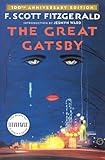
The books that form the core of a serious college education share a set of qualities: they can be read and discussed at multiple levels (plot, character, style, argument, context), they repay re-reading and reward the kind of sustained attention that the essay and seminar invite, and they address questions that remain alive and contested. The list below is not a comprehensive survey of world literature — it is a starting point for the kind of reading that expands how you see.
The American Canon
The Great Gatsby — F. Scott Fitzgerald (1925)
The most essential American novel for college students — small enough to read in an afternoon, complex enough to generate a semester’s discussion. Fitzgerald’s examination of the American Dream — Jay Gatsby’s belief that wealth and reinvention can overcome the past — is the most compressed and perfect in fiction. Every sentence is doing multiple things at once; no other American novel teaches craft so efficiently.
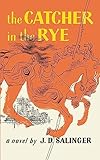
The Catcher in the Rye — J.D. Salinger (1951)
Holden Caulfield’s three-day wandering through New York after being expelled from prep school — a novel about adolescent alienation that is also about the gap between adult performance and authentic feeling. Every college student will recognise something in Holden; the question the novel poses (whether his dissatisfaction is wisdom or arrested development) is one that remains open.
Beloved — Toni Morrison (1987)
The most important American novel of the late twentieth century — Sethe’s haunting by the child she killed to prevent her return to slavery. Morrison’s prose — allusive, fragmented, demanding — enacts the psychological reality of trauma in its form. Essential for understanding American history, American literature, and what the novel can do.
Invisible Man — Ralph Ellison (1952)
The unnamed narrator’s journey from the South to Harlem, from naivety to political disillusionment, is simultaneously a Bildungsroman, a satirical account of American racial politics, and a philosophical investigation of Black identity. Ellison’s novel contains more ideas per page than any other American novel of its era.
Their Eyes Were Watching God — Zora Neale Hurston (1937)
Janie Crawford’s three marriages and her journey toward self-discovery — written in a vernacular prose that preserves the voice and culture of the Black American South with a fidelity and beauty that no other novel matches. The most important rediscovery of the Harlem Renaissance.
World Literature Essentials
Things Fall Apart — Chinua Achebe (1958)
The most important novel in African literature — Okonkwo’s story in pre-colonial and colonial Igbo society, told from the inside with full understanding of the culture’s complexity. Essential for understanding both postcolonial literature and the European literary tradition it responds to.
One Hundred Years of Solitude — Gabriel García Márquez (1967)
The founding text of magical realism and the novel that made Latin American literature internationally visible. The Buendía family across seven generations in Macondo — a town founded in the jungle and doomed to repeat its own history — contains everything García Márquez had to say about memory, solitude, and the relationship between myth and reality.
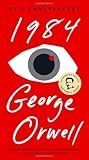
1984 — George Orwell (1949)
The political vocabulary of the twentieth and twenty-first centuries — Big Brother, doublethink, Newspeak, Room 101 — all from this novel. Essential for any college student trying to understand authoritarianism, propaganda, and the relationship between language and political power.
The Existential and the Philosophical
The Trial — Franz Kafka (1925)
Josef K. is arrested and prosecuted by an authority that never reveals its charges — the definitive literary account of bureaucratic power and the subject’s helplessness before it. The most philosophically productive novel on this list and the most applicable to modern life.
Crime and Punishment — Fyodor Dostoevsky (1866)
Raskolnikov’s murder of a pawnbroker and his psychological disintegration afterward — Dostoevsky’s investigation of the psychology of guilt, self-justification, and redemption. The most psychologically penetrating novel in the Western canon.
The Short Masterwork
The Metamorphosis — Franz Kafka (1915)
Gregor Samsa wakes up as a giant insect — the most efficient allegory of alienation, economic dependence, and the family’s reduction of the individual to a productive function. At 50 pages, the most teachable literary masterwork.
The Intellectual Awakening of the College Years
The college years represent a unique and precious moment in intellectual life — a time of expanding horizons, newfound independence, and exposure to ideas and perspectives that can permanently transform how a young person understands the world, and the books chosen for this stage are selected to nourish and provoke that transformation. Unlike high school, with its required curriculum and its focus on foundational skills, college offers a freedom and a depth of intellectual engagement that can be genuinely awakening, a chance to encounter the great ideas, debates, and works of human thought in their full complexity and to begin forming one’s own considered views. It is a period when young people are uniquely open to having their assumptions challenged, their perspectives broadened, and their minds expanded, when they are encountering for the first time the full range of human thought and grappling seriously with questions they may never have considered. The books on this list are chosen to serve this intellectual awakening — works substantial and challenging enough to reward the deepened engagement that college makes possible, significant enough to matter in the great conversations of human thought, and provocative enough to unsettle comfortable assumptions and open new ways of seeing. They are books to think with and against, to argue about, to be changed by, the kind of works that can mark a turning point in intellectual development and shape the thinker a person becomes. This is the period when reading can be at its most transformative, when a single book encountered at the right moment can alter the entire trajectory of a mind, and the titles gathered here are selected for their capacity to seize this opportunity — to make the college years not merely a credential to be earned but a genuine awakening of the intellect.
Reading Beyond the Syllabus
One of the most important lessons a college student can learn, and a principle that animates this list, is that the most valuable reading often happens beyond the boundaries of any syllabus — that genuine intellectual development depends on the self-directed exploration that no course can fully provide, and that the habit of reading widely and independently is among the most precious things the college years can cultivate. The formal curriculum, valuable as it is, can offer only a fraction of the intellectual nourishment available, structured by the requirements of degrees and the boundaries of disciplines, and the student who reads only what is assigned will receive only a partial education. The deeper and more lasting intellectual growth comes from following one’s own curiosity beyond the assigned reading, exploring the books and ideas that no course has prescribed, and building, through self-directed reading, a personal intellectual life that extends far beyond any classroom. This list is offered in that spirit, as an invitation to read beyond the syllabus, to discover the works that the curriculum may have missed and the ideas that lie outside one’s chosen field, and to take responsibility for one’s own intellectual development rather than leaving it entirely to the structure of formal education. The habit of independent reading cultivated during the college years is perhaps the most valuable intellectual skill a student can develop, because it is the foundation of lifelong learning, the means by which a person continues to grow and think long after formal education has ended. The student who learns to read widely and independently, to pursue ideas wherever they lead, and to build a rich intellectual life beyond the requirements of any course has gained something more valuable than any degree: the capacity and the habit of continued intellectual growth, which will serve them for the rest of their lives.
Books That Shape How You Think
The ultimate value of the reading recommended for college students lies not merely in the knowledge or information these books contain but in their power to shape how a person thinks — to develop the habits of mind, the modes of reasoning, and the intellectual capacities that distinguish a truly educated person and that endure long after particular facts are forgotten. The deepest purpose of a college education is not the accumulation of information, which is easily acquired and easily lost, but the formation of the mind itself — the development of critical thinking, intellectual rigor, the capacity to analyze and evaluate arguments, to hold complexity and ambiguity, to question assumptions, and to reason one’s way toward considered judgments. The books on this list are chosen partly for their power to develop these capacities, to serve not merely as sources of knowledge but as instruments for shaping the mind. A challenging work of philosophy develops the capacity for rigorous reasoning; a complex novel cultivates the ability to hold ambiguity and to understand multiple perspectives; a powerful work of argument teaches the reader to analyze and evaluate, to distinguish sound reasoning from sophistry, and to construct considered positions of their own. Through engagement with such books, the college student develops not merely a stock of knowledge but a quality of mind, the intellectual capacities that constitute genuine education and that will remain valuable in any field and throughout a life. This is what it means to say that these are books that shape how you think: their value lies less in their particular content than in what the engagement with them does to the mind that engages them, developing the durable intellectual capacities that are education’s truest and most lasting gift. The student who reads them well emerges not merely knowing more but thinking better, equipped with the habits of mind that define an educated person.
Reading Order
First year: The Great Gatsby → 1984 → Things Fall Apart → The Metamorphosis.
American literature focus: The Great Gatsby → Invisible Man → Their Eyes Were Watching God → Beloved.
Complete: The Metamorphosis → The Great Gatsby → Crime and Punishment → 1984 → Invisible Man → Their Eyes Were Watching God → Things Fall Apart → One Hundred Years of Solitude → Beloved.
Frequently Asked Questions
What books should every college student read?
The Great Gatsby (1925) by F. Scott Fitzgerald is the most essential — a short novel (under 200 pages) that contains the most searching criticism of the American Dream in fiction, and a lesson in how to construct a perfect narrative. Beloved (1987) by Toni Morrison is the most important American novel of the late twentieth century — the story of a formerly enslaved woman haunted by her dead child, and the fullest account of what slavery did to human beings. 1984 (1949) by George Orwell provides the vocabulary every college student needs for understanding political repression, propaganda, and the relationship between language and power.
Why is The Great Gatsby essential for college students?
The Great Gatsby (1925) is essential for college students for two reasons: it is the most economically efficient demonstration of the American Dream's hollowness available in fiction — in under 200 pages it constructs, examines, and demolishes the mythology of self-invention and class mobility that underlies American culture. And it is a lesson in craft: Fitzgerald's prose is the most controlled in American fiction, every sentence earning its place, the whole novel constructing its meanings through detail and imagery rather than statement. It is the best novel to study for both what literature can say and how literature says it.
What is Beloved about and why is it important?
Beloved (1987) by Toni Morrison follows Sethe, a formerly enslaved woman living in Cincinnati after the Civil War, who is haunted by the ghost of her dead daughter — a ghost that eventually takes physical form. The novel is based on the true story of Margaret Garner, an enslaved woman who killed her daughter rather than let her be taken back into slavery. Morrison's novel is the fullest account in fiction of slavery's psychological and physical violence, and it is written in a prose style — allusive, poetic, non-linear — that enacts the trauma it describes. Won the Pulitzer Prize; the most important American novel of its decade.
What is 1984 about?
1984 (1949) by George Orwell is set in a totalitarian future Britain — the superstate of Oceania, ruled by the Party and its figurehead Big Brother, in which history is constantly rewritten, language is being simplified to make dissent impossible (Newspeak), and citizens are monitored by telescreens. Winston Smith, a minor Party official, begins to keep an illegal diary and falls in love with Julia — an act of rebellion that is ultimately futile. Orwell's novel introduced the vocabulary of political repression that we still use: Big Brother, doublethink, Newspeak, Room 101. The most politically important novel of the twentieth century.