Best Books About War: Essential Reading List
The best books about war — from All Quiet on the Western Front and Catch-22 to The Things They Carried and Slaughterhouse-Five. War literature's most essential works.

War literature at its best does what war journalism cannot: it renders the interior experience of combat, the psychological weight of killing, the specific absurdity of military institutions, and the way that war changes the people who survive it. The novels below range from the trenches of World War I to Vietnam, from the bitterest realism to the darkest satire.
World War I
All Quiet on the Western Front — Erich Maria Remarque (1929)
The defining anti-war novel. Paul Bäumer enlists at nineteen, encouraged by his schoolmaster’s rhetoric about honour and the fatherland, and the novel is his account of what he finds: mud, lice, gas attacks, the progressive loss of everyone he knows, and the growing impossibility of imagining any life after the war. Remarque strips away every trace of heroism and replaces it with a documentary honesty that made the novel simultaneously the most celebrated and most banned book in Germany.
The final scene — Paul’s death on a day described as ‘All Quiet on the Western Front’ — is one of the most effective endings in twentieth-century fiction: the narrator disappears in the same casual, official language that the army has used to describe the death of millions.
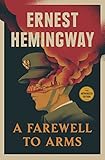
A Farewell to Arms — Ernest Hemingway (1929)
The great American World War I novel. Frederic Henry, an American ambulance officer in the Italian army, falls in love with the English nurse Catherine Barkley, deserts during the Caporetto retreat, and flees with her to Switzerland. The novel’s famous Hemingway restraint — the prose that refuses to sentimentalise, that states rather than interprets — achieves its most devastating effect in the final scenes, where the understatement becomes a kind of formal elegy for everything the war destroyed.
Birdsong — Sebastian Faulks (1993)
The most powerful recent novel about World War I. The narrative moves between 1910 (Stephen Wraysford’s affair in northern France), 1916-18 (his experience at the Somme and in the tunnels beneath the trenches), and 1978 (his granddaughter’s reconstruction of his story). Faulks’s rendering of the Somme — particularly the underground tunnelling operations — is among the most visceral in war fiction.
World War II
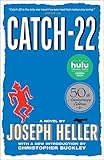
Catch-22 — Joseph Heller (1961)
The definitive satirical novel of war. Yossarian’s attempts to escape further bombing missions, blocked by the circular logic of Catch-22 (you must be insane to want to fly, but wanting to stop proves you’re sane), expand into a comprehensive satire of military bureaucracy, American capitalism, and the specific absurdity of institutional life. Heller is very funny and very dark simultaneously — the novel’s comedy is the comedy of horror, of people adapting to conditions that should not be tolerated.
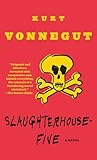
Slaughterhouse-Five — Kurt Vonnegut (1969)
Vonnegut’s account of the firebombing of Dresden, filtered through Billy Pilgrim’s unstuck-in-time consciousness. The science fiction frame — Billy’s abduction by aliens who show him that all moments exist simultaneously — allows Vonnegut to approach an atrocity that he himself survived (as a prisoner of war) from a perspective that makes the horror legible without making it comprehensible. “So it goes” — the novel’s refrain after every death — is the most eloquent response to mass death in American literature.
The Vietnam War
The Things They Carried — Tim O’Brien (1990)
The finest literary treatment of the Vietnam War. O’Brien’s linked stories about an infantry platoon — the literal and psychological weight of what the soldiers carry, the specific horror of specific incidents, the relationship between storytelling and truth — blur the line between fiction and autobiography throughout. The book’s most important argument: that war stories are always both true and untrue, that the only honest way to render combat experience is to make the reader understand why the truth is complicated.
For Whom the Bell Tolls — Ernest Hemingway (1940)
The finest novel about the Spanish Civil War. Robert Jordan, an American demolitions expert fighting with Republican guerrillas, spends three days in the mountains preparing to blow up a bridge. The novel is about commitment, about the nature of the cause worth dying for, and about the specific compression of experience that combat produces — the way that three days can contain everything.
The Eternal Argument Between War and Anti-War
The literature of war contains within it an ancient and unresolved tension — between the impulse to find in war meaning, heroism, and glory, and the impulse to expose it as horror, waste, and futility — and the greatest war writing engages this tension rather than resolving it simply. War has been celebrated in literature since the epics of antiquity as the arena of courage, honor, and transcendent purpose, the testing ground where human beings discover what they are capable of and where the noblest virtues find their fullest expression. Yet war is also slaughter, terror, and the destruction of everything human, and a powerful countertradition has insisted on this truth, stripping away the glamour to reveal the suffering, the senseless death, and the moral catastrophe beneath the heroic myth. The finest war literature holds both these visions in view, refusing the easy comfort of either pure celebration or pure condemnation, and capturing instead the genuine complexity of an experience that can contain real heroism and real horror in the same moment. The best of these books acknowledge what draws human beings to war and what war can reveal of human courage and devotion, while never losing sight of its terrible cost and the lie of its glorification. This refusal of simple answers is itself a mark of the literature’s seriousness, for war is too vast and contradictory a human reality to be reduced to a slogan, whether martial or pacifist. To read across this tradition is to confront the full, unresolved difficulty of war — its capacity to ennoble and to destroy, to call forth the best and the worst in human beings — and to understand why it has remained, through all of human history, one of literature’s most compelling and necessary subjects.
What Only Those Who Were There Can Tell
A distinctive and crucial feature of war literature is the authority of direct experience — the recognition that there are truths about war that can be conveyed only by those who have actually endured it, and that the testimony of the combatant carries a weight no secondhand account can match. War is an extreme of human experience, so far removed from ordinary life that those who have not undergone it struggle even to imagine its reality, and a persistent theme in war writing is the gulf of incomprehension between those who have seen combat and those who have not. The most powerful war literature is often the work of those who were there — who knew the specific terror of battle, the physical and sensory reality of violence, the strange intimacies and brutalities of life among soldiers, and the lasting wounds that war inflicts on those who survive it. Their testimony bears an authenticity and an authority that grant it special value, communicating realities that imagination alone cannot reach and correcting the distortions of those who write about war from a comfortable distance. This literature of witness performs an essential function, preserving the actual truth of war against the sanitizing myths of politicians, propagandists, and a public that prefers not to know, and insisting that the reality be acknowledged in all its horror and complexity. It also serves those who shared the experience, giving voice to what is often unspeakable and offering a form of recognition to veterans whose ordeal civilian society struggles to comprehend. The authority of direct experience does not make war literature merely reportage; the finest of it transmutes raw experience into art. But its rootedness in lived reality gives war writing a moral seriousness and a truth-telling power that few other literatures possess.
The Aftermath and the Unending Cost
War does not end when the fighting stops, and some of the most important war literature concerns itself not with battle but with aftermath — with the long, often lifelong cost that war exacts from those who survive it and from the societies that wage it. The books on this list understand that the true reckoning of war must include what comes after: the physical and psychological wounds that combatants carry home, the trauma that does not heal with the cessation of hostilities, the difficulty of returning to ordinary life after the extremity of war, and the way that the violence reverberates through individuals, families, and nations for years and generations. This attention to aftermath corrects the tendency to think of war as a discrete event with a clear beginning and end, revealing instead that its consequences extend far beyond the battlefield and the armistice. The returning soldier, haunted by what he has seen and done, unable to communicate his experience or to reintegrate into a society that has moved on, is a central figure in this literature, embodying the unending cost that war exacts from those who fight it. But the aftermath extends beyond the individual to the collective — the grief of bereaved families, the social scars of communities that have lost a generation, the political and moral consequences that shape nations for decades, and the cycles of trauma and violence that war sets in motion and that outlast any particular conflict. By insisting on this long aftermath, war literature offers a fuller and more honest accounting of war’s true cost than any tally of battlefield casualties can provide, revealing that the price of war is paid not only in the moment of combat but across the entire lives of those it touches and the long histories of the societies it shapes. This recognition is among the literature’s most important contributions, a sober reckoning with the full and lasting consequences of humanity’s most destructive endeavor.
Reading Order
Anti-war sequence: All Quiet on the Western Front → Slaughterhouse-Five → Catch-22.
By conflict: A Farewell to Arms (WWI) → Catch-22 (WWII) → The Things They Carried (Vietnam).
For emotional depth: Birdsong → All Quiet on the Western Front → The Things They Carried.
Frequently Asked Questions
What is the greatest novel about war?
All Quiet on the Western Front by Erich Maria Remarque (1929) is the most widely read anti-war novel — its account of World War I from the perspective of a young German soldier, rendered with a clarity and honesty that strips away all romanticism, changed how Europeans thought about the Great War. Catch-22 by Joseph Heller is the definitive satirical account of war's bureaucratic absurdity. The Things They Carried by Tim O'Brien is the most psychologically honest account of the Vietnam War in fiction. Each approaches the subject from a different angle, and together they cover the essential register of what war literature can do.
What is Catch-22 about?
Catch-22 by Joseph Heller (1961) follows Yossarian, an American bombardier in World War II Sicily, who wants to stop flying missions because the missions might kill him. His commanding officers refuse to ground him: the only way to be grounded is to be insane, but anyone who asks to be grounded is demonstrating that they're sane, because it's rational to avoid danger. The logic is circular — a 'catch-22' — and the novel extends this logic to every institution and every authority it encounters. It is simultaneously very funny and very dark: a satire of military bureaucracy that is also a serious examination of how institutions dehumanise individuals.
What is The Things They Carried about?
The Things They Carried by Tim O'Brien (1990) is a collection of linked stories about an American infantry platoon in Vietnam — both the things the soldiers carry physically (weapons, photographs, good-luck charms) and the things they carry psychologically (fear, guilt, grief, responsibility). O'Brien blurs the line between fiction and autobiography throughout, raising questions about the relationship between storytelling and truth that are inseparable from the Vietnam War's specific legacy in American culture. It is widely considered the finest literary treatment of the Vietnam War.
What is All Quiet on the Western Front about?
All Quiet on the Western Front by Erich Maria Remarque (1929) follows Paul Bäumer, a young German student who enlists in World War I at the urging of his schoolmaster, and his comrades as they experience the trenches. Remarque strips away all romanticism from the experience of war — the mud, the lice, the constant fear, the progressive dehumanisation of the soldiers — and the novel's final scene, in which Paul dies on a day the army communiqués describe as 'All Quiet on the Western Front,' is one of the most devastating endings in twentieth-century fiction. The novel was burned by the Nazis in 1933.