Best Books About the Brain and Mind: Essential Reading in Neuroscience
The best books about the brain and mind — from The Man Who Mistook His Wife for a Hat to The Body Keeps the Score and Being Mortal. Essential neuroscience reading.
By Lena Fischer

The brain is the most complex object in the known universe, and the books that illuminate how it works — how it constructs experience, why it fails in the ways it does, and what those failures reveal about consciousness and identity — are among the most important in popular science. The best books about the brain and mind combine scientific rigour with narrative skill and treat their subjects, whether clinical patients or research findings, with genuine curiosity and respect.
These books are unified by the conviction that understanding the brain is understanding what it means to be human — and that neurological difference illuminates the mechanisms of consciousness that people with typical brains take for granted.
The Essential List
The Man Who Mistook His Wife for a Hat — Oliver Sacks (1985)
The foundational text of popular neuroscience writing. Sacks’s clinical case studies — the man who could not recognise faces including his wife’s; the woman who had lost all proprioception and had to watch her limbs to know where they were; patients with Tourette’s; patients with extraordinary memory — read like short stories but illuminate fundamental questions about how the brain constructs reality, self, and identity. Sacks writes with compassion and without condescension; his patients are never their disorders, but people navigating extraordinary neurological landscapes.
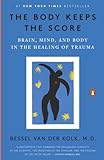
The Body Keeps the Score — Bessel van der Kolk (2014)
The most influential mental health book of the past decade. Van der Kolk’s central argument — that trauma is stored in the body and the nervous system, not merely in narrative memory — has reshaped how clinicians and researchers think about PTSD and its treatment. The book covers the history of trauma research, the biology of the stress response, and the case for somatic therapies. Essential reading for anyone who works with or cares for trauma survivors.
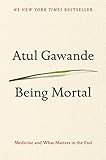
Being Mortal — Atul Gawande (2014)
Gawande’s case against modern medicine’s approach to dying. The book is simultaneously a critique of medical culture (the tendency to treat dying as a failure rather than a natural process) and a series of portraits of individuals navigating death — his patients, and his own father. Gawande argues that the quality of a death depends not on the quantity of medical intervention but on the degree to which the dying person retains autonomy and connection. One of the most important books about medicine and mortality written in this century.
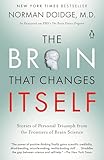
The Brain That Changes Itself — Norman Doidge (2007)
The definitive popular account of neuroplasticity. Doidge presents case studies of patients who have recovered from conditions previously considered permanent — strokes, blindness, chronic pain — through intensive rehabilitation that takes advantage of the brain’s capacity to reorganise neural pathways. The book also covers the darker side of neuroplasticity: how pornography and other intense stimuli can reshape the brain’s reward circuitry. The most accessible account of one of the most important scientific discoveries of the past fifty years.
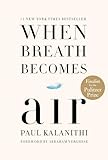
When Breath Becomes Air — Paul Kalanithi (2016)
Kalanithi was a neurosurgeon in his final year of residency when he was diagnosed with stage IV lung cancer. His memoir — written as he was dying and published posthumously — is simultaneously a meditation on mortality, a portrait of what draws people to medicine, and a philosopher’s account of what makes a life meaningful. The book is short, precise, and deeply moving; Kalanithi’s prose reflects both his medical training and his earlier study of literature.
Awakenings — Oliver Sacks (1973)
Sacks’s earliest major work and in some ways his most dramatic — the account of patients at Beth Abraham Hospital in New York who had been afflicted by encephalitis lethargica (sleeping sickness) and had been in a frozen, catatonic state for decades. When Sacks administered L-DOPA, the new Parkinson’s drug, many of these patients ‘awoke’ — briefly — before the drug’s side effects reasserted themselves. The book is a meditation on consciousness, on the relationship between biology and selfhood, and on the ethical responsibilities of medicine. Made into a film with Robert De Niro and Robin Williams.
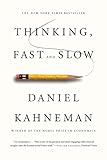
Thinking, Fast and Slow — Daniel Kahneman (2011)
Kahneman’s account of the two systems of thought — System 1 (fast, automatic, intuitive) and System 2 (slow, deliberate, rational) — is the most comprehensive popular account of cognitive psychology and behavioural economics available. The book synthesises decades of research by Kahneman and Amos Tversky on cognitive biases, heuristics, and the systematic ways in which human judgment departs from rationality. Dense in places, but the most important book in its field.
Lost Connections — Johann Hari (2018)
Hari’s account of depression — arguing that it is primarily a response to disconnection (from meaningful work, from community, from nature, from the future) rather than a chemical imbalance in the brain — is a readable and provocative challenge to the pharmaceutical model that has dominated psychiatric treatment. The book synthesises research that is largely ignored in mainstream discourse and proposes social rather than individual solutions to what is increasingly a social problem.
Why These Books
The brain sciences are unusually productive ground for popular writing because the failures of the brain illuminate its normal functioning in ways that nothing else can. When a patient loses the ability to recognise faces, or to feel pain, or to form new memories, the mechanisms that most people take for granted become visible. The books listed here use clinical cases, research findings, and personal narrative to make those mechanisms legible — and in doing so, they address the most fundamental questions available to any writer: what is consciousness, what is the self, and what does it mean to be human.
Frequently Asked Questions
What is the best book about the brain to start with?
The Man Who Mistook His Wife for a Hat (1985) by Oliver Sacks is the best starting point — a collection of clinical case studies that reads like fiction, about patients with neurological disorders that illuminate how the brain constructs the sense of self, reality, and identity. Sacks writes with compassion and precision; the book demonstrates that the study of neurological dysfunction is also the study of what it means to be conscious and human. The Body Keeps the Score (2014) by Bessel van der Kolk is the other essential starting point, focused on trauma and how it is stored in the body rather than just in memory.
What is The Body Keeps the Score about?
The Body Keeps the Score (2014) by Bessel van der Kolk is a comprehensive account of trauma and its effects — arguing that trauma is not primarily a disorder of memory or narrative but a physical condition that reorganises the nervous system, the stress response, and the body's relationship to the present moment. Van der Kolk draws on decades of clinical work with trauma survivors and research into PTSD, and advocates for therapies (EMDR, yoga, theatre, neurofeedback) that work through the body rather than through talk. The most influential mental health book of the past decade.
What is Being Mortal about?
Being Mortal (2014) by Atul Gawande is a surgeon and writer's account of how modern medicine fails dying people — how the medical system's orientation toward cure rather than care means that most people die in hospitals, surrounded by machines, rather than at home with the people they love. Gawande argues for a different model: one that prioritises quality of life over length of life, and asks dying people what they want rather than what medicine can offer. One of the most important books about death and the medical system available.
What is The Brain That Changes Itself about?
The Brain That Changes Itself (2007) by Norman Doidge is the most accessible account of neuroplasticity — the brain's capacity to reorganise itself in response to experience, injury, or rehabilitation. Doidge presents case studies of patients who have recovered from strokes, blindness, and other neurological conditions through intensive therapy, and explains the science of how neural pathways are formed and reformed. The book challenged the prevailing view that adult brains are fixed; it is now the standard popular account of neuroplasticity.