Best Books About Space: Essential Reading List
The best books about space — from A Brief History of Time and Astrophysics for People in a Hurry to Pale Blue Dot and The Elegant Universe. Space science at its most compelling.
By Elena Marsh
Books about space invite a particular kind of shift in perspective — from the human scale, where our problems feel enormous, to the cosmic scale, where they become invisibly small. The best space books don’t reduce human significance but recontextualise it: we are, as Sagan put it, star stuff contemplating the stars, and that is remarkable rather than diminishing.
The Essential Space Books
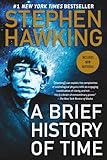
A Brief History of Time — Stephen Hawking (1988)
The most celebrated popular physics book ever written. Hawking covers the history of our understanding of the universe — from Aristotle through Newton to Einstein to Hawking’s own work on black holes — with no equations, using language that makes the concepts accessible without making them simple. The subjects include the Big Bang, black holes (and Hawking radiation, his most important contribution to physics), quantum mechanics, and the nature of time itself.
It is famous for being purchased by more readers than have finished it, but the chapters on black holes and time’s arrow are among the most mind-altering in popular science.
Astrophysics for People in a Hurry — Neil deGrasse Tyson (2017)
The most accessible introduction to modern astrophysics. Twelve short chapters cover the key topics — dark matter, dark energy, the Big Bang, the periodic table’s cosmic origins, quantum mechanics, and more — in prose deliberately designed for reading in brief intervals. Tyson’s gift is for the analogy that makes the incomprehensibly large or small suddenly intuitive, and the book’s brevity is a feature rather than a limitation: each chapter can be read in twenty minutes and provides a complete introduction to its topic.
Pale Blue Dot — Carl Sagan (1994)
The most humanistic space book. Sagan uses the Voyager 1 photograph of Earth as a tiny point of light — taken from six billion kilometres away — to develop an extended meditation on human significance, cosmic perspective, and the case for space exploration. The prose in the title chapter (“Look again at that dot…”) is among the finest in popular science: a passage that thousands of readers have described as life-changing.
String Theory and Quantum Reality
The Elegant Universe — Brian Greene (1999)
The clearest non-mathematical explanation of string theory — the attempt to unify general relativity with quantum mechanics through the hypothesis that the fundamental constituents of matter are one-dimensional strings vibrating at different frequencies. Greene explains the problem string theory is trying to solve, the theory itself, and the extraordinary implications (eleven dimensions, multiple universes) with unusual clarity. The book is demanding but never requires mathematics.
The Big Questions
Brief Answers to the Big Questions — Stephen Hawking (2018)
Hawking’s final book — assembled posthumously from his writings and lectures — addresses the questions he was most often asked: Is there a God? How did it all begin? Are there other intelligent beings? Should we colonise space? Will artificial intelligence surpass us? The answers are direct and specific, drawing on his lifetime of physics, and the book serves as both a scientific testament and a summary of Hawking’s views on the biggest questions facing humanity.
The Cosmic Perspective
The deepest reward of reading about space is not the accumulation of astronomical facts but the shift in perspective these books induce — what Carl Sagan and Neil deGrasse Tyson both call the cosmic perspective. This is the genre’s defining gift, and it explains why so many readers describe books like Pale Blue Dot as life-changing. To genuinely absorb the scale of the universe is to undergo a quiet revolution in how one understands one’s own existence. The Earth, seen from the vantage of these books, becomes what the Voyager photograph revealed: a single pixel suspended in a sunbeam, the entire stage of human history reduced to a mote of dust. Sagan’s meditation on that image is the genre’s most famous passage precisely because it draws out the moral consequence of the cosmic view — the pettiness of human conflict measured against the vastness, the preciousness and fragility of the only home we have, the case for humility and for cherishing one another. Crucially, the cosmic perspective need not diminish human significance, and the best of these writers insist that it does the opposite. We are, in Sagan’s formulation, a way for the universe to know itself: matter that has organized itself into consciousness capable of comprehending the cosmos that produced it. That is not a humbling reduction but an astonishing elevation. To finish these books is to look up at the night sky differently, and often to look at one’s own life differently as well.
Two Kinds of Space Book
Readers approaching this genre benefit from recognizing that space books come in two broad varieties serving different appetites, both well represented on this list. The first is the explanatory book, which aims to convey the actual physics — the structure of the universe, the nature of black holes and time, the frontiers of theory. Hawking’s A Brief History of Time is the towering example, an attempt to explain the deepest workings of the cosmos to readers without mathematics, and Greene’s The Elegant Universe extends this ambition to the dizzying frontier of string theory. These books reward and require concentration; they are trying to genuinely rewire the reader’s understanding of reality, and their famous difficulty is the difficulty of authentically grasping ideas that strain ordinary intuition. The second variety is the contemplative or perspective-giving book, which uses the science less as an end in itself than as a route to wonder, meaning, and reflection on the human place in the cosmos. Sagan’s Pale Blue Dot is the masterpiece of this mode, and Tyson’s Astrophysics for People in a Hurry offers an accessible blend of explanation and wonder calibrated for the time-pressed modern reader. Neither kind is superior; they simply do different work. The ideal space-reading diet includes both — the explanatory books to genuinely understand the universe, the contemplative books to feel what that understanding means.
A Reading Path Through the Cosmos
For readers building a space library, these books offer a natural progression from the accessible to the profound, and a few orienting principles help. Begin where the wonder is most immediate and the demands lightest: Tyson’s Astrophysics for People in a Hurry and Sagan’s Pale Blue Dot require no scientific background and deliver the cosmic perspective in its most stirring form, making them ideal gateways that create the appetite for more. From there, the reader ready to engage the actual physics can take on Hawking’s A Brief History of Time, approaching it with patience and without shame at rereading difficult passages — it is, after all, the book famous for being bought more often than finished, and the black-hole and time chapters reward persistence. Those who catch the deeper bug can press on to The Elegant Universe for the frontier of theoretical physics, or branch outward into the rich wider literature: Carlo Rovelli’s lyrical meditations on time and quantum gravity, Janna Levin and Katie Mack on cosmology, Mary Roach’s Packing for Mars for the human comedy of spaceflight, and the many superb accounts of the history of astronomy and the space program. The genre is vast and continually refreshed by new discoveries, but the books on this list are the essential foundation — the works that have done the most to bring the universe within reach of ordinary readers and to deliver the perspective that is space writing’s greatest gift.
Reading Order
Start accessible: Astrophysics for People in a Hurry → Pale Blue Dot → A Brief History of Time.
For depth: A Brief History of Time → The Elegant Universe → Brief Answers to the Big Questions.
For perspective: Pale Blue Dot → Astrophysics for People in a Hurry → The Order of Time (Carlo Rovelli).
Frequently Asked Questions
What is the best book about space for beginners?
Astrophysics for People in a Hurry by Neil deGrasse Tyson is the most accessible entry point — twelve short chapters covering the key concepts of modern astrophysics (dark matter, dark energy, the Big Bang, quantum mechanics) in prose designed to be read in small portions without requiring a science background. A Brief History of Time by Stephen Hawking is the most celebrated popular physics book ever written, though it is more demanding than Tyson's. Pale Blue Dot by Carl Sagan is the most humanistic — Sagan uses the famous photograph of Earth from Voyager 1 to meditate on humanity's place in the cosmos.
Is A Brief History of Time actually readable?
A Brief History of Time (1988) is readable but demanding — Hawking pitched it at the general reader and succeeded in eliminating equations, but the concepts (black holes, the shape of spacetime, quantum mechanics, the nature of time itself) are genuinely difficult. Many readers report that each chapter is clear when read but hard to retain; the book rewards rereading more than most popular science. It is estimated that 10 million copies have been sold, and it is estimated with equal confidence that fewer than 10% of buyers have finished it. This is not a criticism — half the book still repays the effort.
What is Pale Blue Dot about?
Pale Blue Dot (1994) takes its title from the famous photograph taken by Voyager 1 in 1990, in which Earth appears as a tiny point of light against the vastness of space. Carl Sagan uses the image as a meditation on human significance and insignificance — on what it means to be a civilisation on a 'mote of dust suspended in a sunbeam.' The book alternates between the history of space exploration, Sagan's vision of a spacefaring future, and extended passages of philosophical reflection on human nature and cosmic perspective. It is less a science textbook than an argument for a particular relationship between humans and the universe.
What is The Elegant Universe about?
The Elegant Universe by Brian Greene (1999) is an account of string theory — the attempt to unify general relativity (which describes gravity and the large-scale structure of the universe) with quantum mechanics (which describes the behaviour of particles at the smallest scales). Greene argues that string theory, in which the fundamental constituents of matter are not points but one-dimensional strings vibrating at different frequencies, may be the long-sought 'theory of everything.' The book is the clearest non-mathematical explanation of string theory for general readers.


