Best Books About Revenge: Novels of Vengeance, Justice, and Reckoning
The best novels about revenge — from The Count of Monte Cristo to Hamlet to Wuthering Heights. Books about vengeance, grievances, and the cost of settling scores.
Revenge is one of literature’s most ancient and most persistent themes — present in Greek tragedy, in Shakespeare, in the nineteenth-century novel, and throughout the modern thriller. The greatest literary treatments of revenge share a preoccupation with costs: what does it do to the person who plans and executes vengeance? what is lost in the process of settling scores? and is the satisfaction, when it comes, equal to what it required? The novels in this list range from the operatically satisfying to the psychologically devastating — from Dantès’s meticulous plot to Heathcliff’s three-decade campaign of destruction — and all of them take seriously the question of what revenge actually is and what it actually does.
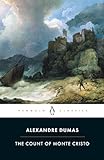
The Count of Monte Cristo — Alexandre Dumas (1844)
The greatest revenge narrative in fiction — and one of the great adventure novels in any language. Edmond Dantès, a young sailor on the point of happiness and success, is falsely accused of Bonapartist conspiracy by men who envy him and imprisoned in the Château d’If for fourteen years. He escapes, finds an enormous hidden treasure, and spends the following decades constructing an elaborate, multi-stage plan to ruin each of the men responsible.
Dumas executes his revenge plot with the precision of a thriller and the grandeur of an opera. The satisfactions are real and sustained; the novel’s ambivalence about what the count has become in the process of becoming the instrument of justice gives it depth beyond pure entertainment.
Hamlet — William Shakespeare (c. 1600)
Shakespeare’s greatest tragedy — and the most psychologically profound treatment of revenge in literature. Prince Hamlet of Denmark is commanded by his father’s ghost to avenge his murder by his uncle Claudius, who has married Hamlet’s mother and taken the throne. Hamlet cannot do it. The play traces his paralysis — his uncertainty about whether the ghost is telling the truth, his philosophical disgust with action, his awareness that revenge is also murder — and the catastrophic consequences that follow from the delay.
The play asks whether revenge is ever justified, whether Hamlet’s inaction is moral cowardice or ethical seriousness, and what it costs to dedicate a life to an act you cannot commit with certainty. There are no clean answers; that is the play’s greatness.
Wuthering Heights — Emily Brontë (1847)
The most emotionally devastating revenge narrative in the English novel. Heathcliff, orphaned as a child and brought to Wuthering Heights by Mr. Earnshaw, grows up between love and contempt — loved by Catherine, resented and humiliated by her brother Hindley. Catherine chooses Edgar Linton over Heathcliff for his respectability, and Heathcliff’s response is a three-decade campaign of revenge against the families that degraded him and chose against him — a campaign so total that it destroys everything it touches, including Heathcliff himself.
Brontë is unsparing about the cost of revenge built on love: Heathcliff’s obsession does not die when Catherine does; it intensifies until he cannot distinguish hatred from grief.
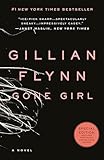
Gone Girl — Gillian Flynn (2012)
Flynn’s masterwork — and the most precisely plotted revenge narrative in contemporary fiction. Amy Dunne, whose disappearance on her fifth wedding anniversary is the novel’s premise, has constructed an elaborate frame of her husband Nick for her own murder. The novel is narrated in alternating voices — Nick’s, from the present; Amy’s, from her diary — and the slow revelation of what Amy has planned, and what has actually happened, is one of the most satisfying narrative reveals in recent thriller fiction.
The novel is interested in revenge as a response to the specific humiliation of a woman who has spent her life performing the ‘Cool Girl’ role and finding that it is still not enough to be chosen and kept. Amy’s revenge is proportionate to her particular grievance and entirely disproportionate in its scale.
Great Expectations — Charles Dickens (1861)
Dickens’s most psychologically complex novel contains Miss Havisham, the most extraordinary portrait of how the desire for revenge can consume a life. Jilted on her wedding morning, Miss Havisham stopped every clock in her house at the moment of betrayal — still in her wedding dress, the wedding cake rotting on the table — and has raised Estella specifically as an instrument to break men’s hearts in revenge for the one that broke hers. Her revenge is accomplished; it has also destroyed Estella (who cannot feel) and herself (who cannot live).
Pip’s own snobbish ungenerousness toward Joe and Biddy is also a form of revenge on his origins — and Dickens is equally clear about what it costs him.
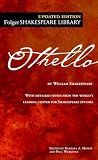
Othello — William Shakespeare (c. 1603)
Shakespeare’s most claustrophobic tragedy — and the most disturbing portrait of revenge conducted entirely through the manipulation of another person’s mind. Iago, passed over for promotion by Othello, revenge himself not through direct action but by planting the idea of Desdemona’s infidelity in Othello’s consciousness and watching it grow into an obsession that destroys everything. The revenge is Iago’s, but the murder is Othello’s; this is Iago’s genius, and his horror. The play is about how a person can be made to destroy what they love most.
Moby-Dick — Herman Melville (1851)
Ahab’s pursuit of the white whale is the most mythic revenge narrative in American literature — a quest so total that it becomes the organizing principle of an entire life and the destruction of an entire ship’s company. Ahab was maimed by Moby Dick; his response is to cross the world’s oceans to find and kill the creature, taking his crew with him on a journey that only he has chosen and that only one of them will survive. Melville is not interested in whether Ahab’s revenge is justified; he is interested in what revenge at this scale does to the human soul and those who are drawn into its orbit.
The Secret History — Donna Tartt (1992)
Tartt’s debut is structured as an inverted revenge narrative: we know from the first page that a murder has been committed by the narrator and his friends; the novel traces how they got there. Richard Papen, a scholarship student at a small Vermont college, falls in with a group of Greek students who have committed a killing during a Bacchanalian ritual; when their charismatic, reckless friend Bunny threatens to expose them, they kill him to protect themselves. The novel is about the slow revenge that guilt takes on the people who thought they could suppress it.
The Lovely Bones — Alice Sebold (2002)
Sebold’s novel narrates revenge from a position of absolute powerlessness: Susie Salmon, murdered at fourteen, watches from heaven as her family grieves, her killer evades justice, and her own desire for the living world she can no longer inhabit refuses to fade. The novel is about the impossibility of revenge when the person most wronged cannot act — and about how justice, when it comes, is inadequate to the enormity of what was done. One of the more unusual treatments of revenge in literary fiction: observed from outside, desired from a distance, and ultimately beside the point.
Reading Books About Revenge
The greatest revenge narratives share a scepticism about the satisfactions of vengeance — or, rather, an honesty about the fact that satisfaction, when it comes, does not restore what was lost. They are also studies in obsession: the person who dedicates themselves to revenge is also dedicating themselves to the original wound, keeping it open and present, refusing to move past it. Whether this is strength or self-destruction is the question most of these novels refuse to answer simply.
Frequently Asked Questions
What is the greatest revenge novel of all time?
The Count of Monte Cristo (1844) is the most satisfying and most operatically executed revenge narrative in literary history — Edmond Dantès's twenty-year plan to destroy the men who falsely imprisoned him is constructed with the precision of a thriller and the grandeur of an epic. Hamlet is the most psychologically profound treatment of revenge in any literature — a meditation on what it costs to dedicate yourself to an act you are not certain is justified. Wuthering Heights is the most emotionally devastating — Heathcliff's three-decade campaign against the families that separated him from Catherine is one of the most disturbing portraits of how love and grievance can destroy everything they touch.
What are some psychological revenge stories?
The most psychologically complex revenge narratives in fiction include Gone Girl (in which Amy Dunne's revenge against her husband is simultaneously meticulous and deeply self-destructive), The Secret History (in which a group of students cover up a murder and the cover-up becomes its own form of revenge on themselves), and Othello (in which Iago's revenge on Othello is conducted entirely through the manipulation of Othello's own mind). All three are interested less in the external mechanics of revenge than in what the act of planning and executing revenge does to the person doing it.
Is revenge a common theme in classic literature?
Revenge is one of the oldest and most persistent themes in literature — present in Greek tragedy (Medea, Electra, the Oresteia), in Shakespeare (Hamlet, Othello, The Merchant of Venice), in the nineteenth-century novel (The Count of Monte Cristo, Great Expectations, Wuthering Heights), and throughout modern fiction. The theme's persistence reflects something deep about human psychology: the sense that wrongs demand response, and the difficulty of establishing what response is proportionate and what crosses the line from justice to obsession. The greatest revenge narratives are interested in exactly that line and what happens when it is crossed.
Does revenge work out in novels?
Very rarely, and when it does, the cost is usually enormous. The Count of Monte Cristo achieves its revenge but at the price of Dantès's humanity — the novel's ending is ambiguous about whether the count has gained or lost more than he bargained for. Heathcliff destroys the families he targeted but is destroyed by the process. Ahab achieves his confrontation with the whale but loses his ship, his crew, and his life. The most honest revenge narratives acknowledge that the satisfaction of vengeance is real but temporary, and that the person who emerges from a life organized around revenge is not the person who began it.