Best Books About Power and Politics: Essential Reading
The best books about power and politics — from The Power Broker and Team of Rivals to 1984 and The Shock Doctrine. History, fiction, and analysis of political power.
By Oliver Kane
Books about power and politics range from the meticulous historical biography that shows how power is actually acquired (Caro on Moses, Goodwin on Lincoln) to fiction that imagines what power unchecked looks like (Orwell, Huxley) to contemporary analysis of how power is currently being exercised (Klein, the Path to Power). The books below are the essential reading across all three modes.
The Definitive Study
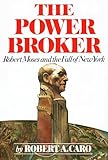
The Power Broker — Robert Caro (1974)
The most instructive book ever written about political power — Caro’s biography of Robert Moses, who built most of New York’s parks, bridges, and highways without ever being elected to anything. Moses’s story is the story of how power actually works: through the control of institutions (public authorities, which answer to no voter), the strategic accumulation of money and information, and the manipulation of politicians who are nominally his superiors. At 1,300 pages, the most demanding book in this list; also the most rewarding, and the one that most changes how you see the world after reading it.
Team of Rivals — Doris Kearns Goodwin (2005)
Goodwin’s study of Lincoln’s political genius — specifically his decision to appoint his three main rivals to his cabinet and his ability to manage men who believed themselves more qualified to be president. The most accessible of the serious political biographies and the most applicable to contemporary questions of leadership.
The Path to Power — Robert Caro (1982)
The first volume of Caro’s biography of Lyndon Johnson — covering Johnson’s Texas childhood, his first congressional campaigns, and his rise to power in Washington. Caro’s LBJ series (four volumes published, a fifth in progress) is the companion to The Power Broker in scope and ambition, and The Path to Power is the best entry: it establishes Johnson’s character (his hunger for power, his capacity for cruelty, and his genuine concern for the poor) in its formative context.
Fiction
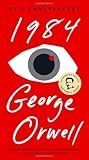
1984 — George Orwell (1949)
The foundational fictional account of totalitarian power — Orwell’s Oceania, where the Party maintains control through surveillance, propaganda, the constant rewriting of history, and the systematic torture of dissent, is the most complete fictional analysis of how authoritarian systems work. O’Brien’s explanation of power as its own end (the Party wants power not for any ideological purpose but purely for the pleasure of exercising it) is the most chilling political statement in fiction. Essential for anyone who wants to understand the vocabulary of political oppression.
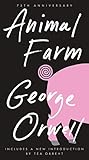
Animal Farm — George Orwell (1945)
Orwell’s political fable about a revolution that reproduces the oppression it overthrew — the animals of Manor Farm overthrow their human farmer, establish a republic, and gradually watch the pigs (who have taken on the role of revolutionary vanguard) reproduce the old hierarchies. “All animals are equal, but some animals are more equal than others” is the most concise statement in fiction of how revolutionary idealism is corrupted by the logic of power. At ninety pages, the fastest and most essential entry point to Orwell’s political thought.
Contemporary Analysis
The Shock Doctrine — Naomi Klein (2007)
Klein’s argument that neoliberal economic policy is implemented through crises — that the privatisation, deregulation, and public spending cuts associated with Milton Friedman’s Chicago School economics have been imposed on populations when they are too disoriented by disaster (natural or political) to resist. Klein traces this pattern from Pinochet’s Chile to Thatcher’s Britain to post-invasion Iraq. The most challenging and most influential political economy book of the past twenty years.
How Power Actually Works
The single greatest value of this reading list, and especially of its biographical centerpieces, is the unsentimental education it provides in how political power is actually acquired and exercised — as opposed to the sanitized civics-textbook version most people absorb. The textbook account describes a system of laws, elections, and formal institutions; the books here reveal the reality that operates beneath and around those forms. Robert Caro’s monumental studies are the supreme instruction in this. His biography of Robert Moses demonstrates how a man who never won an election came to wield more power over New York than any governor or mayor, by mastering the control of unelected public authorities, the strategic accumulation of money and information, and the patient manipulation of officials who were nominally his superiors. His life of Lyndon Johnson dissects the raw mechanics of ambition, persuasion, and ruthlessness through which power is genuinely won. What these books teach is that power flows not merely from formal position but from the command of institutions, money, information, relationships, and the willingness to use them — and that understanding politics requires looking past the official story to these underlying realities. This is knowledge of enormous practical value, because power operates by the same logic whether in government, business, or any organization. To read Caro is to acquire a permanent and clarifying lens through which the workings of power become visible everywhere, and to be far less naive about how the world is actually run.
What Fiction Reveals That Biography Cannot
While the biographies on this list show how power is acquired, the fiction reveals something the historical record struggles to capture: the inner nature of power, its psychology and ultimate logic, especially in its most absolute and corrupted forms. Orwell is the essential figure here, and his two great political works perform complementary diagnoses. Animal Farm anatomizes the process by which revolutionary idealism is betrayed and corrupted, showing with fable-like clarity how those who seize power in the name of equality reproduce the very oppression they overthrew — a pattern history confirms again and again but which fiction renders with unique force. 1984 goes deeper still, into the psychology of totalitarian power and its terrifying endpoint, and its most chilling insight is O’Brien’s revelation that the Party seeks power purely for its own sake, not as a means to any ideological end but as an end in itself, the boot stamping on the human face forever. This is a truth about power that documentary history can only circle around but that fiction can state directly, by imagining power taken to its logical extreme. The fictional works thus serve as a necessary complement to the biographies: where Caro and Goodwin show the concrete reality of power in actual lives, Orwell illuminates its essence and its dangers, providing the conceptual vocabulary — Big Brother, doublethink, “some animals are more equal than others” — through which generations have understood political oppression. To grasp power fully, one needs both the historical anatomy and the imaginative diagnosis.
Power and the Engaged Citizen
Beyond their fascination, the books on this list serve a genuinely civic purpose: they equip the reader to understand, scrutinize, and participate more effectively in political life, which depends on citizens who comprehend how power actually operates. A democracy in which citizens hold only the textbook understanding of politics is vulnerable, because those who genuinely grasp the levers of power — the Robert Moseses, the operators who work through unelected authorities, money, and information — can dominate those who do not. The education these books provide is therefore a form of empowerment. Caro’s revelations about how power accumulates and conceals itself make a reader better able to recognize when it is being abused; Klein’s analysis of how crises are exploited to push through policies that could not survive normal democratic scrutiny alerts citizens to a pattern they might otherwise miss; Orwell’s warnings train readers to detect the early signs of authoritarianism, the corruption of language, the rewriting of history, the demand for loyalty over truth. Together the books cultivate exactly the qualities an engaged citizenry needs: a clear-eyed understanding of how power works, a healthy skepticism toward official narratives, an alertness to its abuses, and the conceptual tools to think critically about the political forces shaping their lives. In an age of concentrated wealth, sophisticated manipulation, and recurring threats to democratic norms, this kind of political literacy is not a luxury but a necessity. The books gathered here are among the best available means of acquiring it, transforming the reader from a passive subject of power into an informed observer capable of holding it to account.
Reading Order
Essential foundation: Animal Farm → 1984 → The Power Broker.
Political biography: Team of Rivals → The Path to Power → The Power Broker.
Political economy: The Shock Doctrine → 1984 → The Power Broker.
Frequently Asked Questions
What is the best book about political power?
The Power Broker (1974) by Robert Caro is the definitive account of how power actually works — a biography of Robert Moses, the New York parks commissioner and road builder who shaped modern New York without ever being elected to anything, demonstrating how bureaucratic power can be acquired and maintained outside of democratic accountability. At 1,300 pages, it is demanding; it is also the most instructive book ever written about political power. For readers who want something shorter, The 48 Laws of Power (1998) by Robert Greene is the most accessible framework for understanding power dynamics.
What is The Power Broker about?
The Power Broker (1974) by Robert Caro is a biography of Robert Moses — the man who, between the 1930s and 1960s, built most of New York's parks, highways, bridges, and public housing. Moses was never elected to anything; he accumulated power through the strategic control of public authorities (quasi-governmental bodies that answer to no voter), the manipulation of elected officials, and the cultivation of press relationships. Caro's argument is that Moses's story reveals how power actually works: not through democratic accountability but through the control of institutions, money, and information. The book changed how political scientists and journalists think about urban power.
What is Team of Rivals about?
Team of Rivals (2005) by Doris Kearns Goodwin follows Abraham Lincoln's decision to appoint his three main rivals for the Republican presidential nomination — William Seward, Salmon Chase, and Edward Bates — to his cabinet. Goodwin's argument is that Lincoln's political genius lay in his capacity to manage men who thought they were more qualified than he was, to use their strengths while containing their ambitions, and to maintain his moral clarity about slavery while navigating the political constraints of a union that required the border states to remain neutral. The most readable of the political biographies in this list.
What does 1984 say about power?
1984 (1949) by George Orwell is the most influential fictional account of totalitarian power — Orwell's Oceania, in which the Party maintains control through surveillance, propaganda, the rewriting of history, and the torture of any potential opposition, is the most complete fictional analysis of how totalitarian systems work. O'Brien's explanation to Winston Smith of why the Party wants power (not for any ideological goal but purely for its own sake — 'Power is not a means; it is an end') is the most direct statement of political nihilism in fiction. The novel's concepts (Big Brother, doublethink, the memory hole, Room 101) have become the standard vocabulary for discussing political oppression.