Best Books About Habits and Behavior Change: Essential Reading
The best books about habits and behavior change — from Atomic Habits and The Power of Habit to Deep Work and Can't Hurt Me. Essential behavior change reading.
By Lena Fischer

Books about habits and behaviour change fall into three categories: scientific accounts of how habits are formed in the brain (Duhigg), practical frameworks for changing behaviour (Clear, Newport), and motivational memoirs of extreme self-transformation (Goggins). The best books in each category are below.
The Practical Framework
Atomic Habits — James Clear (2018)
The most widely read and most immediately applicable behaviour change book — Clear’s four-law framework (obvious, attractive, easy, satisfying for good habits; invisible, unattractive, difficult, unsatisfying for bad ones) provides a practical toolbox for building any habit. The book’s central insight — that identity precedes behaviour (you don’t build a writing habit; you become a writer, who writes) — is the most psychologically useful reframing of habit formation available. The best starting point for practical application.
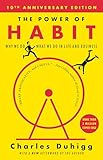
The Power of Habit — Charles Duhigg (2012)
The most scientifically rich account of habit formation — Duhigg explains the habit loop (cue, routine, reward), the role of the basal ganglia in automating behaviour, and the concept of ‘keystone habits’ (habits that trigger cascading changes in other areas of life). The stories (how Alcoa’s CEO transformed the company by focusing on one safety habit; how Tony Dungy turned the Tampa Bay Buccaneers around by making defensive plays automatic rather than deliberate) are the best in the habit literature.
Deep Work and Focus
Deep Work — Cal Newport (2016)
Newport’s argument that focused, distraction-free work on cognitively demanding tasks is the critical skill of the knowledge economy — and that most knowledge workers are systematically destroying this capacity through constant connectivity and shallow task-switching. The book is both a diagnosis (the current knowledge work environment actively prevents deep work) and a prescription (specific strategies for protecting blocks of focused time). The most intellectually serious productivity book.
So Good They Can’t Ignore You — Cal Newport (2012)
Newport’s earlier book — arguing against ‘follow your passion’ and for ‘build rare and valuable skills, then use them as career capital to build the work life you want.’ The most practically useful book for early-career readers uncertain about what to do. Newport’s concept of ‘career capital’ (the specific skills that make you valuable in your field) and ‘craftsman mindset’ (focusing on what you can offer rather than what the world can give you) are the most applicable frameworks for thinking about career development.
The Extreme End
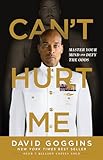
Can’t Hurt Me — David Goggins (2018)
The most viscerally compelling self-discipline book — Goggins’s transformation from an abused, overweight young man to Navy SEAL to ultramarathon athlete, driven by his conviction that the human capacity for suffering and effort is vastly greater than most people believe. The ‘40% rule’ (when you think you’re done, you’re at 40% capacity) is the most memorable concept in the book. More memoir than framework; the most motivationally effective book in this list for readers who need to believe that radical change is possible.
Systems and Checklists
The Checklist Manifesto — Atul Gawande (2009)
Gawande’s argument that checklists — simple, precise, sequential — are the most underused tool for preventing failure in complex, high-stakes environments. Drawing on aviation, surgery, construction, and finance, Gawande shows that most catastrophic failures are caused not by ignorance (not knowing what to do) but by ineptitude (failing to do what you know you should). The most practically actionable book in this list for professionals in any field.
Why Willpower Is the Wrong Strategy
The most valuable insight shared across the best books on this list — and the one that distinguishes serious behavior-change literature from motivational fluff — is that lasting change does not come primarily from willpower, motivation, or sheer effort, but from the design of systems, environments, and habits. This runs directly against the intuitive but mistaken belief that behavior change is fundamentally a test of character: that those who succeed simply want it more or try harder. The science says otherwise. Duhigg’s The Power of Habit explains why, revealing that much of behavior is automated by the brain into habit loops operating beneath conscious control, which means that relying on in-the-moment willpower to override deeply grooved patterns is a losing strategy. Clear’s Atomic Habits builds the practical implication into a complete system: rather than summoning willpower, you redesign your environment and routines so that good behaviors become obvious, attractive, easy, and satisfying, and bad ones become difficult — making the desired behavior the path of least resistance rather than a constant act of self-denial. Even Gawande’s checklists embody the principle, recognizing that experts fail not from lack of knowledge or motivation but from the predictable lapses of human attention, which a well-designed system can catch. The liberating conclusion is that those who succeed at change are usually not people with superhuman discipline but people who have arranged their lives so that less discipline is required. This reframing matters enormously, because it shifts the locus of change from the exhausting and unreliable project of becoming a stronger person to the achievable project of becoming a better designer of one’s own systems and surroundings.
Identity Over Outcomes
A second profound insight, articulated most powerfully by Clear but resonant throughout this literature, concerns the relationship between behavior and identity — the recognition that the most durable changes flow not from focusing on goals or outcomes but from a shift in how one sees oneself. The conventional approach to behavior change is outcome-focused: set a goal, such as losing weight or writing a book, and pursue it. Clear argues this gets the psychology backward. Goals are temporary and, once achieved, often fail to sustain the behavior that produced them; worse, they frame the desired behavior as a burden endured for a future reward rather than an expression of who one is. The more powerful approach is identity-based: rather than aiming to run a marathon, become a runner; rather than trying to write a book, become a writer who writes daily. When a behavior becomes part of one’s self-conception, it no longer requires constant motivation, because acting otherwise would mean betraying one’s sense of self. Each small action becomes a vote for the kind of person one is trying to be, and the accumulation of these votes gradually reshapes identity, which in turn makes the behavior self-reinforcing. This insight connects to the deeper theme of the genre: that lasting change operates at the level of systems and selves rather than isolated acts of will. The books that grasp this — and Atomic Habits most explicitly — offer something more valuable than tactics for hitting a target; they offer a method for becoming a different person, one small, identity-affirming action at a time, which is the only kind of change that truly endures.
Science, Tactics, and Inspiration
The behavior-change genre serves different needs through different kinds of books, and the wisest way to use this list is to understand which type addresses your particular obstacle. The scientific books, like Duhigg’s The Power of Habit, explain the underlying mechanisms — how habits form in the brain, why they persist, what the research reveals about changing them — and are ideal for readers who want to understand the why before the how, who find that genuine comprehension of the science motivates and equips them better than mere instruction. The practical-framework books, like Clear’s Atomic Habits and Newport’s work on focus and career, translate the science into concrete, actionable systems — specific strategies, rules, and structures that can be implemented immediately, ideal for readers who already believe change is possible and simply want a reliable method. The motivational books, like Goggins’s Can’t Hurt Me, work at the level of inspiration and belief, using extreme personal example to convince the reader that radical transformation is achievable and that human capacity far exceeds what most people assume — ideal for readers whose obstacle is not knowledge or method but conviction, who need to believe before they can begin. Each type has genuine value, and each suits a different person and moment. The reader struggling with behavior change is best served not by reading every book in the genre but by honestly diagnosing their actual obstacle — is it understanding, method, or belief? — and reaching for the type that addresses it. And underlying all of them is the genre’s most hopeful message: that the gap between the people we are and the people we wish to become is bridgeable, not through a miraculous surge of willpower, but through the patient, learnable craft of designing better habits, systems, and selves.
Reading Order
Start practical: Atomic Habits → The Power of Habit → Deep Work.
Career focus: So Good They Can’t Ignore You → Deep Work → Atomic Habits.
Complete: The Power of Habit → Atomic Habits → Deep Work → So Good They Can’t Ignore You → Can’t Hurt Me.
Frequently Asked Questions
What is the best book about habits?
Atomic Habits (2018) by James Clear is the most practical and most widely read book about habit formation — Clear's system (make habits obvious, attractive, easy, and satisfying; make bad habits invisible, unattractive, difficult, and unsatisfying) is the most actionable framework available. The Power of Habit (2012) by Charles Duhigg is the most intellectually engaging — the research behind habit formation (the cue-routine-reward loop, the basal ganglia, the role of keystone habits) is explained with more depth than Clear's book and with better stories.
What is Atomic Habits about?
Atomic Habits (2018) by James Clear argues that the key to lasting behaviour change is not motivation or willpower but systems — specifically, the aggregation of tiny improvements (1% better each day) that compound over time. Clear's four-law framework (make it obvious, make it attractive, make it easy, make it satisfying) provides a practical toolbox for building good habits and breaking bad ones. The book is the most widely applied of its genre and the most immediately actionable, though it covers less scientific depth than Duhigg's The Power of Habit.
What is Deep Work about?
Deep Work (2016) by Cal Newport argues that the ability to focus without distraction on cognitively demanding tasks is becoming both increasingly rare and increasingly valuable — and that cultivating this ability (what Newport calls 'deep work') is the key to producing work of exceptional quality. Newport distinguishes between 'deep work' (cognitively demanding, distraction-free, produces real value) and 'shallow work' (logistical, replicable, produces little unique value) and argues that most knowledge workers spend most of their time on shallow work. The most intellectually serious of the productivity books.
What is Can't Hurt Me about?
Can't Hurt Me (2018) by David Goggins is the most extreme of the habit and self-discipline books — a memoir of transformation from an abused, overweight young man to one of the world's toughest endurance athletes (Navy SEAL, 4,030 pull-ups in 17 hours, 100-mile ultramarathons). Goggins's central concept is the '40% rule': when you feel like you cannot continue, you are at 40% of your actual capacity, and the remaining 60% is accessible through deliberate discomfort. More motivational memoir than practical framework; the most viscerally compelling book in this list.