Best Books About Fathers and Fatherhood
The best books about fathers and fatherhood — from The Road and To Kill a Mockingbird to East of Eden and Stoner. Essential fiction about what it means to be a father.
Fatherhood is one of literature’s great subjects — the relationship that shapes us most profoundly, the love that is most difficult to express, and the failure that carries the longest consequences. The novels listed here approach fatherhood from every angle: the heroic father (Atticus Finch), the desperate father (the man in The Road), the damaged father (William Stoner), the absent father, the father who means well and fails anyway. Each illuminates something that memoir and self-help cannot: what it actually feels like, from inside the relationship, to try and sometimes fail to love well.
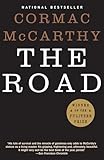
The Road by Cormac McCarthy (2006)
The most concentrated account of a father’s love in contemporary fiction — a post-apocalyptic novel stripped of everything except the relationship between a man and his son as they walk through a devastated America, keeping each other alive. The father’s entire inner world is organised around protecting the boy: every decision, every negotiation with danger, every moment of beauty or hope is filtered through the question of what this means for the child he is trying to keep alive. McCarthy writes love without sentimentality; his account of this particular love is among the most powerful in American literature. Pulitzer Prize winner.
To Kill a Mockingbird by Harper Lee (1960)
Atticus Finch is fiction’s most beloved father — a widowed lawyer in Depression-era Alabama who defends a Black man accused of raping a white woman, and who raises his daughter Scout through his example rather than his instruction. Atticus’s parenting philosophy — answer questions honestly, do not condescend to children, demonstrate moral courage — is the novel’s central argument about how adults form children’s characters. His relationship with Scout, narrated from her adult perspective looking back on a formative childhood, is one of the most emotionally satisfying in all of American fiction.
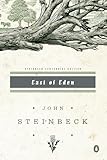
East of Eden by John Steinbeck (1952)
Steinbeck’s masterwork — a multigenerational family saga set in California’s Salinas Valley, structured around the biblical story of Cain and Abel, with fathers and sons at its centre. Adam Trask’s failure to love his twin sons equally — his preference for the good Aron and his coldness toward the complicated Cal — is the engine of the novel’s tragedy. The question of whether our natures are determined or whether we can choose to transcend them (the Hebrew word timshel — ‘thou mayest’ — is the novel’s central word) runs through every generation of fathers and sons.
Stoner by John Williams (1965)
The most quietly devastating portrait of a father — and of a man — in American fiction. William Stoner, the son of Missouri farmers, discovers literature at university and becomes an English professor, living his entire life within the narrow compass of a failed marriage, a difficult relationship with his daughter, and an intense, brief love affair. His inability to communicate what he feels — to his daughter especially — is not coldness but a kind of permanent interior blockage, and the novel’s account of Grace, his daughter, slowly damaged by neglect and need, is among the most precisely painful in the literature of fatherhood.
The Kite Runner by Khaled Hosseini (2003)
A novel about fathers and sons at multiple levels: Amir’s worshipful, disappointed relationship with his powerful father Baba; the class dynamics between Baba and Hassan’s father Ali; and Amir’s eventual chance at redemption through Hassan’s orphaned son Sohrab. The novel is Hosseini’s account of how failures between fathers and sons replicate across generations — how Amir’s betrayal of Hassan as a child becomes, decades later, his chance to become the protector he failed to be — and his portrait of Afghanistan before and during the Taliban makes the father-son drama a historical one as well.
American Pastoral by Philip Roth (1997)
The most devastating portrait of a father who tries everything and fails. Seymour ‘Swede’ Levov — handsome, decent, successful, devoted — raises his daughter Merry in what seems like an ideal American life, only to watch her become a domestic terrorist who bombs a post office to protest the Vietnam War. The novel is Roth’s meditation on the American Dream’s collapse: the father who lived it fully, produced it faithfully, gave his daughter everything, and still could not reach her. Pulitzer Prize winner.
The Corrections by Jonathan Franzen (2001)
A family novel organised around a failing father — Alfred Lambert, a retired railroad engineer with Parkinson’s disease and the emotional unavailability of his generation, whose three adult children are all damaged by his distance in different ways. The novel alternates between the children’s contemporary lives and the family’s past, gradually revealing how Alfred’s rigidity and emotional coldness shaped Chip, Gary, and Denise. Franzen’s portrait of a man who loved his family and could not show it — and of three adults who still need him and cannot reach him — is one of the most complete accounts of family dysfunction in American fiction.
The World According to Garp by John Irving (1978)
A novel about a son raised by a single mother — the legendary feminist Jenny Fields — who becomes a father himself and discovers that protecting the people you love is both the most important thing you can do and entirely beyond your control. Garp’s fatherhood is defined by anxiety and love in equal measure, and his eventual failure to protect his sons is the novel’s most devastating sequence. Irving’s portrait of a man who is a better father than he is a husband, and who cannot bear the accidents that destroy what he loves, is deeply felt.
Reading Books About Fatherhood
The literature of fatherhood rarely celebrates it simply: the most powerful novels in this mode — McCarthy, Roth, Williams, Franzen — are accounts of failure, of love that could not find expression, of children shaped by what their fathers could not give them. This is not because fatherhood is primarily a site of failure but because literature finds its deepest truth in the gap between intention and achievement, between the father a man means to be and the father he manages to become. Begin with The Road for the most concentrated emotional experience; begin with East of Eden for the most expansive; begin with Stoner for the most interior.
Frequently Asked Questions
What is the best book about fatherhood?
The Road (2006) by Cormac McCarthy is one of the most powerful accounts of a father's love in all of literature — a post-apocalyptic novel in which an unnamed man and his son walk through a devastated America toward the sea, with the father's singular purpose being to keep his son alive long enough to find safety. The love between them is the novel's entire emotional world. Atticus Finch in To Kill a Mockingbird is fiction's most celebrated father — wise, just, morally courageous; East of Eden traces fatherhood across generations as a meditation on legacy and inheritance.
What are the best novels about father-son relationships?
The Road is the most purely concentrated father-son novel — a world reduced to one relationship. East of Eden traces the father-son dynamic across generations, with Adam Trask's failures and Aron and Cal's competing needs for his love as its centre. The Kite Runner follows Amir's relationship with his own father and his eventual reckoning with his failures as a substitute father to Hassan's son. Stoner follows a man whose inability to connect emotionally damages his relationship with his daughter in ways that mirror his own damaged relationship with his parents.
What books are about difficult or failed fathers?
American Pastoral follows the collapse of Swede Levov's relationship with his daughter — a father's failure to understand or reach a child who becomes a terrorist. The Corrections shows three adult children reckoning with their failing father Alfred Lambert, who represents a generation of American men whose emotional unavailability damaged their families. The World According to Garp is about a son raised without a father who becomes a father himself and finds it equally difficult to protect the people he loves. Stoner is the most quietly devastating portrait of a man whose interior life remains permanently inaccessible to those who needed him.
Is The Kite Runner a book about fatherhood?
The Kite Runner (2003) is fundamentally about fathers and sons at several levels: Amir's relationship with his admired, disappointed father Baba; the class relationship between Baba and Hassan's father Ali; Amir's eventual relationship with Hassan's son Sohrab, which becomes an attempt to become the father he never was to Hassan. The novel traces how failure between fathers and sons cascades across generations and what redemption (if it is possible) might require.