Four characters navigate love, fidelity, and the weight of existence against the backdrop of the 1968 Soviet invasion of Prague, in Kundera's most celebrated philosophical novel.
David Hume's classic of empiricist philosophy. With elegance and devastating rigor, Hume examines the limits of human knowledge, the problem of induction, the idea of causation, and the credibility of miracles — a foundational and still-unsettling work that shaped all subsequent philosophy.
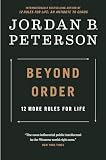
The follow-up to 12 Rules for Life, offering twelve new principles focused on navigating the dangers of too much order — rigid thinking, bureaucratic tyranny, and the stagnation of the over-controlled life.
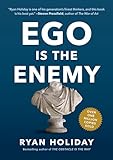
Ryan Holiday examines how ego — the sense of entitlement and inflated self-image — undermines people at every stage of life, from aspiration through success to failure.
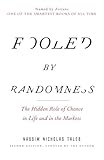
Nassim Taleb's first major book explores how humans systematically mistake luck for skill, especially in financial markets, and the psychological machinery that makes the mistake so persistent.
A barnstorming pilot meets a modern-day messiah who has quit saving people and just wants to fly, sparking a philosophical journey about belief, reality, and personal freedom. Through their conversations and a mysterious Messiah's Handbook, Bach weaves a fable about the unlimited potential of the human spirit.
Beginning with a woman's gesture in a swimming pool — a wave that contains an entire personality — Kundera meditates on the desire for immortality, the nature of fame, and the difference between the person and their image. Characters from the present alternate with Goethe and Bettina von Arnim from the nineteenth century, and the narrator himself appears as a character.
Aristotle asks: what is the good life for a human being? His answer — eudaimonia, often translated as happiness but better understood as flourishing — requires virtue, practical wisdom, and the right social conditions. The foundational text of virtue ethics and one of the most influential works in the history of moral philosophy.
The third volume in Ryan Holiday's Stoic trilogy argues that stillness — inner calm and focus — is the competitive advantage that all great achievers across history have cultivated.
A philosophical meditation on why we travel, what we hope to find, and why the reality so rarely matches the anticipation — structured around de Botton's own journeys and the writers, artists, and thinkers who have illuminated the meaning of travel.
Six philosophers — Socrates, Epicurus, Seneca, Montaigne, Schopenhauer, Nietzsche — applied to six common sources of human unhappiness: unpopularity, not having enough money, frustration, inadequacy, a broken heart, and difficulties.
Richard Dawkins makes the case that belief in a personal God is not merely wrong but irrational — that the existence of any supernatural creator is a scientific hypothesis that the evidence decisively refutes, and that religion is neither necessary for morality nor harmless in its effects.
A radical reimagining of the life of Christ — depicting Jesus as a man torn between the flesh and the spirit, tempted on the cross by a vision of the ordinary human life he might have lived.
Jim Nashe, a former firefighter driving aimlessly through America with his inheritance, picks up a young gambler named Pozzi — and after losing everything in a card game against two eccentric millionaires, they find themselves building a medieval wall in a Pennsylvania field to pay off their debt.
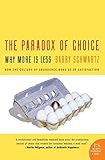
A psychologist argues that the explosion of choice in modern life, while seemingly liberating, actually produces anxiety, paralysis, and dissatisfaction.
In an overcrowded future Earth, colonists escape their misery through illegal hallucinations mediated by a corporate drug called Can-D. When the magnate Palmer Eldritch returns from Proxima Centauri with a new drug called Chew-Z, reality itself becomes uncertain — because Chew-Z hallucinations may not be hallucinations at all. Dick's most theologically disturbing novel.
Henry David Thoreau's classic account of the two years he spent living simply in a cabin he built beside Walden Pond. Part memoir, part nature writing, part philosophical manifesto, it is a foundational text of American self-reliance, simplicity, and conscious living.
Twenty-one meditations on pressing questions of our time — from artificial intelligence and political disillusionment to terrorism, nationalism, and the challenge of staying sane in the information age.
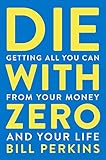
A provocative argument that optimizing for maximum wealth accumulation is the wrong goal — that the aim should be to use your money to create maximum life experiences before you die.
A journalist shipwrecked on the fictional island of Pala discovers a society that has successfully integrated Eastern and Western wisdom — meditation, psychedelics, rational education, and cooperative economics — into a functional utopia. Huxley's final novel is his deliberate answer to Brave New World.
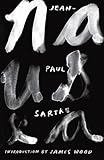
Jean-Paul Sartre's first novel and a foundational text of existentialism. Through the diary of Antoine Roquentin, a solitary historian gripped by a creeping 'nausea' at the sheer, meaningless existence of things, Sartre dramatizes the confrontation with a universe without inherent purpose.
Barnes meditates on death — his own, his family's, his writers' — with the clarity and wit that characterize his fiction. Not quite memoir, not quite philosophy, the book is a sustained confrontation with what it means to live knowing the end is coming.
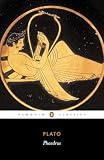
One of Plato's most beautiful and wide-ranging dialogues. In a rare outdoor setting, Socrates and the young Phaedrus discuss love, the soul, rhetoric, and writing — moving from the famous image of the soul as a charioteer to a profound critique of the written word itself.
Aristotle's analysis of tragedy — its elements, its purpose, and its effects. Defines tragedy as an imitation of a serious action producing catharsis through pity and fear. Identifies the six elements of tragedy (plot, character, thought, diction, melody, spectacle) and argues that plot is the most important.