Saramago retells the Gospels from a resolutely human perspective: Jesus is the son of a carpenter who carries guilt for being complicit in the Massacre of the Innocents, is seduced by Mary Magdalene, and discovers that God intends to use him not to redeem humanity but to expand his own power and territorial reach. A novel so controversial it was pulled from consideration for a Portuguese literary prize under government pressure.
Artur Sammler—Polish-Jewish, seventy years old, half-blind from a Nazi massacre he survived by crawling out of a mass grave—moves through 1960s New York observing the chaos of the counterculture with a survivor's cold clarity. A meditation on civilization, death, and what we owe each other.
A Swiss teacher abandons his life on impulse to follow a Portuguese philosopher's book to Lisbon, where he tries to reconstruct a life lived in the resistance against Salazar's dictatorship.
On a Friday noon in July 1714, the finest bridge in Peru collapses and sends five travellers to their deaths. Brother Juniper, who witnesses the accident, spends the next six years investigating their lives to determine whether their deaths were divine plan or pure accident.
A young Andalusian shepherd boy travels from Spain to the Egyptian desert in search of treasure. Along the way he meets a series of guides who teach him that the real treasure is found in pursuing your 'Personal Legend' — your dream.
A pilot stranded in the Sahara meets a mysterious prince from a tiny asteroid, whose observations about adults, love, and what truly matters illuminate everything the narrator had forgotten.
Gregor Samsa wakes one morning to find he has been transformed into a giant insect — and the story focuses less on the transformation than on his family's response to it.
bell hooks argues that our culture has confused love with attachment, need, and control — and that love, properly understood, requires will, intention, and commitment to another person's growth.
A curated collection of Naval Ravikant's Twitter threads, podcast appearances, and interviews on building wealth, achieving happiness, and developing judgment.
A guide to freeing yourself from the voice in your head and the patterns that limit your consciousness — drawing on mindfulness, yoga philosophy, and Vedantic thought.
A former self-help enthusiast argues that conventional time management is based on a false premise — and that accepting the radical finitude of our time is the only path to meaningful life.
A dialogue between a philosopher and a young man across five nights explores Alfred Adler's psychology of freedom — the idea that unhappiness is a choice, trauma is a story, and happiness requires the courage to be disliked.
Legendary music producer Rick Rubin offers a philosophical meditation on creativity — what it is, how it works, and how to live in a way that allows it to flourish.
Drawing on ancient Toltec wisdom, Don Miguel Ruiz identifies four agreements — be impeccable with your word, don't take anything personally, don't make assumptions, always do your best — that can transform life by dismantling the limiting beliefs we absorbed in childhood.
Robert Greene analyzes eighteen fundamental aspects of human psychology — from narcissism and envy to grandiosity and conformism — and shows how understanding them enables better navigation of people and situations.
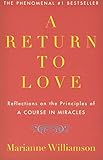
Marianne Williamson draws on A Course in Miracles to offer a vision of love as the only force powerful enough to heal relationships, careers, and the deepest wounds of the self.
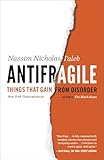
Nassim Taleb introduces the concept of antifragility — the property of systems that gain from disorder, stress, and volatility rather than merely surviving it.
A woman on the verge of death discovers a library between life and death where each book represents a different version of her life she could have lived.
Written in 1513, published posthumously — a guide for a new prince on how to acquire and keep power. Machiavelli argues that political survival requires abandoning conventional morality when necessary: it is better to be feared than loved, princes must know how to be beasts, and fortune favours the bold.
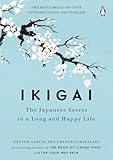
An exploration of the Japanese concept of ikigai — your reason for being, the thing that makes you want to get out of bed in the morning — through the lens of Japan's longest-lived communities.
Jonathan Livingston Seagull is a seagull who cares nothing for the daily scramble for fish and everything for the art of flight, pursuing perfection with an obsession that gets him banished from his flock. The book follows his journey from outcast to teacher as he discovers that the limits of flight mirror the limits we place on our own potential.