After a painful divorce, Elizabeth Gilbert spends a year travelling — eating in Italy, praying in India, and finding love in Bali — in this memoir that became one of the bestselling travel narratives of the century.
Michael Pollan's exploration of three psychoactive plant substances — opium, caffeine, and mescaline. Blending history, science, memoir, and participatory journalism, he examines the strange and arbitrary ways societies decide which plant drugs to celebrate, tolerate, or condemn.
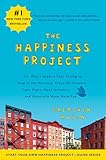
Gretchen Rubin spends a year methodically testing happiness-boosting strategies in twelve monthly themes — from decluttering to friendship to spirituality — and reporting what actually works.
Prince Harry's account of his life inside the British royal family, his grief at his mother's death, his marriage to Meghan Markle, and the decision to step back from royal duties.
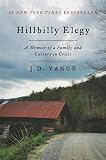
J.D. Vance traces his chaotic Appalachian upbringing — a drug-addicted mother, a stabilizing grandmother, a stint in the Marines — and his unlikely path to Yale Law School, offering a ground-level account of white working-class decline in America.
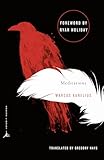
The private philosophical notebook of the Roman Emperor Marcus Aurelius — written for himself, never intended for publication — containing his Stoic practice across twelve books of thought.
Robert Caro's memoir of his career as a biographer — how he researches, how he writes, what he believes about the relationship between power and biography, and the decades he has spent trying to understand Lyndon Johnson.
Styron's memoir of his severe depression in 1985 — the illness he calls 'darkness visible' after a phrase in Milton — is the best literary account of clinical depression ever written: precise about its physical manifestations, honest about its irrationality, and clear-eyed about the inadequacy of the language available to describe it.
Seventeen chapters, each structured around a different near-death experience — from childhood illness to encounters with violent strangers to medical emergencies — that together form a fragmentary, non-chronological memoir of a life lived in proximity to death.
Nabokov's autobiography covers his aristocratic Russian childhood, his family's flight after the Revolution, and his years as an émigré writer in Europe — in prose of such concentrated beauty that it reads as much as poetry as memoir.
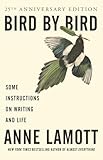
Beloved writer Anne Lamott offers funny, compassionate advice on the writing life — from dealing with the blank page to navigating publication — grounded in her personal experience as a novelist and teacher.
Atul Gawande's debut collection of essays explores the uncertainties, errors, and imperfections inherent in the practice of medicine — written from inside the operating room by a resident surgeon learning on real patients.
Saint-Exupéry's memoir-essay blends his experiences flying mail routes over Africa and South America with meditations on human dignity, solidarity, and what makes a life worth living — winner of the Grand Prix du roman de l'Académie française.
David Chang's memoir and cookbook tells the story of how a Korean-American chef opened a ramen shop with almost no money and built one of the most influential restaurant empires in American culinary history.
John Green reviews the human-centered planet on a five-star scale — from sunsets and Diet Dr Pepper to the QWERTY keyboard and his own anxiety. His first nonfiction book turns the absurd premise of rating everything into a moving meditation on hope, wonder, and being alive.
Anne Lamott's spiritual memoir traces her journey from alcoholism and despair to faith, motherhood, and community — a funny, honest, and fiercely unsentimental account of finding grace in the most ordinary places.
The first volume of Karl Ove Knausgaard's epic six-book autobiographical cycle My Struggle. Moving between childhood, adolescence, and the bleak aftermath of his father's death, Knausgaard turns the raw material of his own ordinary life into an addictive, searingly honest meditation on memory, family, and grief.
Ernaux's account of her mother — a woman who left the rural working class through running a café-grocery in Normandy, who was proud but not educated, who developed Alzheimer's late in life. Written after her mother's death, it is also a reckoning with class, ambition, and the distance that education creates.
Journalist David Sheff chronicles his son Nic's methamphetamine addiction from the first terrifying signs through years of recovery attempts, relapse, and survival — a memoir that examines addiction from the parent's perspective with unflinching honesty and reportorial rigor.
The second volume of Gerald Durrell's Corfu trilogy continues the story of the Durrell family's years on the Greek island. With the same warmth and comic genius as the first, it introduces more extraordinary animals and eccentric characters.
Nobel laureate Annie Ernaux's unflinching account of an illegal abortion in 1963 France. Reconstructing the weeks when, as a 23-year-old student, she sought to end an unwanted pregnancy, Ernaux writes a spare, precise, and harrowing record of a then-criminalized ordeal and the society that produced it.
Actor Ewan McGregor and his friend Charley Boorman ride motorcycles east from London through Europe, Ukraine, Russia, Kazakhstan, Mongolia, Siberia, and Alaska to New York — 31,000 miles through some of the most extreme terrain on earth.
Anne Lamott's follow-up to Traveling Mercies — personal essays on faith, doubt, aging, the Iraq War, her son's adolescence, and the ongoing attempt to live with grace when plan A has clearly failed.
Kazantzakis's spiritual autobiography — addressed to his Cretan ancestor El Greco — tracing his intellectual and spiritual journey from Crete through Athens, Paris, Mount Athos, Russia, and across the battlefields of ideas of the 20th century.