New Yorker editor Bill Buford quits his job to apprentice in Mario Batali's chaotic Babbo kitchen, then traces Italian cooking to its source — apprenticing with a Tuscan butcher and a pasta master in Emilia-Romagna.
Bruce Chatwin's account of travelling through Patagonia — the vast, wind-scoured southern cone of South America — in search of a piece of skin he remembered from his grandmother's cabinet, which turned out to belong to a mylodon.
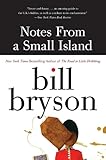
Before moving back to America after twenty years in Britain, Bill Bryson makes a farewell tour of the country that adopted him — by bus, train, and foot, from Dover to the Highlands — in search of what makes Britain lovably, infuriatingly, irreducibly itself.
Matt Haig recounts his collapse into panic disorder and depression at twenty-four and how, over years of struggle, he rebuilt his life. Funny, honest, and never falsely hopeful, it became a word-of-mouth sensation and one of the most-recommended mental health memoirs of its era.
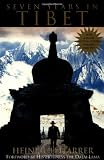
Austrian mountaineer Heinrich Harrer escapes a British prisoner-of-war camp in India during World War II and, after a twenty-one-month crossing of the Himalayas, reaches Lhasa — where he becomes a tutor and friend to the young Dalai Lama as the Chinese invasion closes in.
Nan Shepherd's masterpiece of nature writing, written in the 1940s but unpublished until 1977. A lifetime's intimate knowledge of Scotland's Cairngorm mountains distilled into luminous, sensuous, philosophical prose — not a tale of conquest but of being with a mountain, attending to it completely.
Dave Eggers, twenty-one, loses both parents to cancer within weeks of each other and becomes the primary guardian of his eight-year-old brother — a memoir that is also a meditation on memoirs and on the absurdity of claiming to capture grief in prose.
Peter Mayle and his wife abandon advertising careers in England to restore a farmhouse in the Luberon region of Provence — and spend a year navigating unpredictable tradesmen, extraordinary markets, and a way of life entirely organised around food.
Paul Theroux, one of the great travel writers in the English language, travels overland from Cairo to Cape Town — by bus, truck, ferry, and train — through some of the most troubled and beautiful countries in Africa, forty years after teaching there as a Peace Corps volunteer.
Found in the wreckage of the car that killed Camus in 1960, this unfinished novel is his most personal: the story of Jacques Cormery (Camus himself) growing up in poverty in Algeria, with a deaf illiterate mother, searching for his father who died in WWI before Jacques was one year old. Camus's lost masterpiece.
The fourth volume of Maya Angelou's autobiography — New York in the late 1950s, the Harlem Writers Guild, the civil rights movement, her friendship with Malcolm X and Martin Luther King Jr., and her years in Cairo and Accra.
In 1952, twenty-three-year-old medical student Ernesto Guevara and his friend Alberto Granado set off on a motorcycle to travel the length of South America — a nine-month, 8,000-mile journey that transformed the future revolutionary's understanding of his continent.
After her father's death, Ernaux wrote the book about him she had always been afraid to write: an account of a working-class Norman man who crossed from peasant to petit-bourgeois in one generation, and whose daughter crossed further still, into the educated bourgeoisie—and away from him forever.
A Moroccan sociologist's memoir of growing up in a traditional domestic harem in Fez in the 1940s — a world of courtyard gardens, female solidarity, strict boundaries, and the constant negotiation between tradition and the desire for freedom.
Wolff's memoir of his year in Vietnam as an Army Special Forces advisor — stationed in a provincial town, teaching Vietnamese soldiers, trying not to die. Written with the precision and moral seriousness of his fiction, it is among the best literary memoirs of the Vietnam War.
In June 1952, Ernaux's father tried to kill her mother. She was twelve. This book begins with that event and uses it to reconstruct everything about provincial Normandy in 1952: the class world that produced her, the shame that was her inheritance, the world she escaped by writing herself out of it.
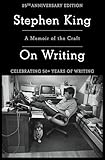
Part memoir, part writing guide, Stephen King reflects on his life, his near-fatal accident, and the craft principles that have made him one of the most productive writers in American literature.
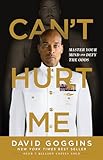
The memoir of Navy SEAL and ultramarathon runner David Goggins — from a traumatic childhood and an overweight, unfulfilled existence to becoming one of the world's elite endurance athletes.
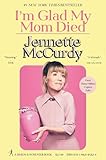
Former child actress Jennette McCurdy's unflinching memoir about her mother's emotional abuse, the exploitation of the child acting industry, and her path to recovery from eating disorders and trauma.
Known publicly as 'Emily Doe,' Chanel Miller reclaims her full identity and tells the complete story of the assault, trial, and aftermath of the Brock Turner case.
Nelson Mandela's autobiography traces his journey from a Transkei village through law, activism, 27 years of imprisonment, and his emergence to lead South Africa's democratic transition.
Oscar winner Viola Davis recounts her extraordinary journey from crushing poverty in rural Rhode Island to EGOT status, with unflinching honesty about trauma, shame, and self-worth.
The Nobel Peace Prize laureate tells the story of growing up in Pakistan's Swat Valley, her father's school, the Taliban occupation, and surviving a targeted assassination attempt at fifteen.
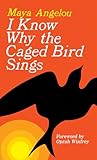
Maya Angelou's first autobiographical volume, covering her childhood in Stamps, Arkansas, her rape at eight years old, her years of traumatized silence, and her eventual recovery through literature and language.