The life of Jacob Frank (1726-1791), the most controversial figure in Jewish history: a charismatic false messiah who led his followers through Judaism, Islam, and finally Catholicism, crossing the borders of eighteenth-century Poland, Turkey, and Austria. Tokarczuk's National Book Award-winning magnum opus.
A group of pilgrims travelling to the shrine of Thomas Becket at Canterbury agree to tell stories to pass the time. Each tale reflects its teller — the Knight's romance, the Miller's bawdy fabliau, the Wife of Bath's self-portrait, the Pardoner's moral tale told by an immoral man. The foundational work of English literature.
London, the Blitz. Writer Maurice Bendrix begins an affair with Sarah Miles, wife of a civil servant. When Sarah suddenly ends the affair without explanation, Bendrix's jealousy drives him to hire a detective. What he discovers is not another lover but a bargain Sarah made with God. Greene's most personal novel: faith, jealousy, and the possibility of grace.
The Moskat family of Warsaw, from the late nineteenth century to 1939: the patriarch Reb Meshulam's descendants assimilate, secularize, intermarry, embrace Zionism, turn to communism, have affairs, go bankrupt—while Warsaw's Jewish world that contained them is being destroyed. Singer's most comprehensive novel, in the tradition of Thomas Mann's Buddenbrooks.
1949. A group of Soviet scientists and engineers—political prisoners with special technical skills—are housed in a sharashka (a prison research institute), the first circle of Dante's Inferno where the least tortured souls reside. Stalin wants them to build a voice-recognition device to identify phone calls. Three days over Christmas. Solzhenitsyn's most politically comprehensive novel.
Found in the wreckage of the car that killed Camus in 1960, this unfinished novel is his most personal: the story of Jacques Cormery (Camus himself) growing up in poverty in Algeria, with a deaf illiterate mother, searching for his father who died in WWI before Jacques was one year old. Camus's lost masterpiece.
Nick Guest, a gay Oxford graduate, lodges with the politically connected Fedden family in Notting Hill from 1983 to 1987 — the years of Thatcher's ascendancy, the AIDS crisis, and the cocaine boom. The novel is about beauty, class, and the illusion of belonging.
Katharina Blum spends one night with a man who turns out to be wanted by police. A tabloid newspaper begins destroying her reputation. At the end of the week, she shoots the journalist responsible. Böll's most pointed political satire—and a story of a woman driven to murder by systematic character assassination.
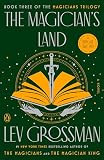
The conclusion of the Magicians trilogy. Exiled from Fillory and adrift in the ordinary world, Quentin Coldwater takes a dangerous job and begins to find, at last, a kind of mastery — even as Fillory itself faces the end of all things.
Five years in the life of Henry James, 1895 to 1900 — following the public failure of his play Guy Domville, his retreat to Lamb House in Rye, and his composition of the late novels. His suppressed homosexuality, his relationships with his family, his aesthetic choices, and the specific quality of his loneliness.
Marine biologist Dr. Ha Nguyen is sent to a remote island in Vietnam where a species of octopus may have developed language and culture — while a corporate entity races to exploit the discovery, and questions about the nature of intelligence grow urgent.
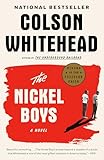
Based on the real Dozier School for Boys in Florida, two Black teenagers — Elwood Curtis and Turner — navigate brutal abuse at the Nickel Academy in 1960s Jim Crow America. Winner of the 2020 Pulitzer Prize for Fiction.
A Nobel-winning scientist convicted of sexual abuse writes his memoir from prison, describing the 1950 expedition that discovered a remote jungle tribe — and a population of apparently immortal humans.
Alternative history: Charles Lindbergh defeats FDR in the 1940 presidential election and signs a neutrality pact with Hitler. Told from the perspective of young Philip Roth's Jewish family in Newark as antisemitism becomes state-adjacent policy in America.
Miss Jean Brodie, teacher at the Marcia Blaine School for Girls in Edinburgh in the 1930s, dedicates herself to educating her chosen set of girls for life rather than for exams. She is charismatic, dangerous, and will be betrayed. Spark's masterpiece in 137 pages.
Julien Sorel, brilliant son of a provincial carpenter, rises through seduction, hypocrisy, and calculation — as tutor in the Rênal household, then as secretary to a Parisian aristocrat. His relationship with two women (Mme de Rênal and the volatile Mathilde de la Mole) ultimately destroys him.
In 1958 Black Earth County, Minnesota, the body of the town's most hated man is found in the Alabaster River — and Sheriff Brody Dern must navigate a community defined by its war wounds, its racial prejudices, and its many possible murderers.
In 1921, Protestant Anglo-Irish landowners prepare to leave Ireland for England. Eight-year-old Lucy Gault runs away to prevent them leaving; she is assumed drowned; her parents depart in grief. She grows up alone in the empty house. The novel follows the consequences across sixty years.
Five Lisbon sisters in a Michigan suburb in the 1970s. Told from the collective perspective of neighbourhood boys who were obsessed with the sisters — narrated twenty years after the girls all killed themselves in one calendar year. A mystery about the inner lives of girls the boys never understood and never will.
1845. A German explorer named Johann Ulrich Voss leads an expedition across the Australian continent that no European has crossed. In Sydney, he exchanges letters with a young woman, Laura Trevelyan, who comes to know him more truly than any member of his party. Based on the real explorer Ludwig Leichhardt, Voss is White's masterpiece—and Australia's greatest novel.
The Mulvaney family of upstate New York — prosperous, beloved, the kind of family other families point to — disintegrates after Marianne, the eldest daughter, is raped at her high school prom. Her rapist faces no consequences. Her family falls apart.
Jonathan Coe's savage, inventive satire of Thatcher's Britain. Commissioned to write the history of the monstrous Winshaw family — whose members profit from banking, arms, factory farming, media, and politics — a struggling writer uncovers a web of greed that mirrors a nation's corruption, building to a darkly comic country-house climax.
Mungo Hamilton, fifteen, grows up in a Glasgow housing estate in the early 1990s — caught between his Protestant gang community and a secret relationship with a Catholic boy named James.
An intellectual writer goes to Crete to manage a mine and encounters Zorba — a broad-chested, life-devouring man who teaches him what it means to live fully and without fear.