A novelist travels to Jeju Island in the middle of a snowstorm to care for her friend's injured bird — and confronts the buried history of the Jeju April Third Incident, the 1948 massacre in which tens of thousands of Koreans were killed.
Dave Eggers, twenty-one, loses both parents to cancer within weeks of each other and becomes the primary guardian of his eight-year-old brother — a memoir that is also a meditation on memoirs and on the absurdity of claiming to capture grief in prose.
Thomas Sutpen arrives in Jefferson, Mississippi in 1833 with a hundred slaves and a design: to build a dynasty. By the time Quentin Compson and his Harvard roommate Shreve piece the story together in 1910, the design has produced only catastrophe. Faulkner's most ambitious novel, told through multiple narrators across multiple decades.
Young Varguitas, an eighteen-year-old aspiring writer working at a Lima radio station, falls in love with his Aunt Julia (his uncle's ex-wife, fifteen years older). Meanwhile, the brilliant and possibly mad scriptwriter Pedro Camacho is turning out radio soap operas at an impossible rate—and slowly losing his mind. Vargas Llosa's most autobiographical and most comic novel.
Samantha Heather Mackey is an outsider in her MFA fiction writing program — until the popular clique called the Bunnies invites her in, and she discovers their workshop has a terrible, blood-soaked secret.
The first of Kate Atkinson's Jackson Brodie novels. Private investigator Jackson Brodie takes on three apparently unconnected cold cases — a missing child, a murdered young woman, an act of family violence — in a literary mystery that braids grief, coincidence, and dark comedy.
Kenzie and Gennaro are hired to protect a psychologist who has received death threats from a patient. As they investigate, they are drawn into a twenty-year pattern of murders in Dorchester and Charlestown — and into personal danger that will alter the series permanently.
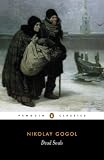
Chichikov travels through provincial Russia purchasing 'dead souls' — serfs who have died since the last census but are still recorded on landowners' rolls, and can therefore be used as collateral for loans. The scheme is comic, opaque, and darkly satirical. Gogol described the novel as the first part of a Russian Divine Comedy.
Miles Roby manages the Empire Grill in Empire Falls, Maine — a dying mill town owned entirely by the widow Francine Whiting. He has waited his whole life for things to resolve themselves. His marriage is failing, his teenage daughter is struggling, and the town is slowly emptying. Russo's Pulitzer Prize winner.
Arkady brings his friend Bazarov home to his father's estate. Bazarov is a nihilist — he believes in nothing except empirical science and rejects all authority, sentiment, and tradition. His conflict with the older generation, his unexpected passion for Madame Odintsova, and his death define the Russian novel's engagement with the question of what to believe.
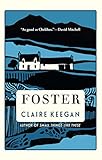
A young girl is sent to spend the summer with relatives in rural County Wexford, Ireland, in the 1970s, and discovers for the first time what it means to be cared for unconditionally.
Nine stories about love's permutations—the love that turns into hate, the love that survives betrayal, the love that arrives too late. The title story begins with a prank that accidentally produces love; others explore what happens when desire outlives its object or arrives in a person who cannot recognize it.
Eleven linked short stories following a nameless, druggy narrator through the American Midwest — car crashes, hospitals, petty crime, heroin, grace and violence in equal measure. Johnson's collection is one of the most acclaimed works of short fiction in American literature.
Michael K, a gardener with a harelip, pushes his dying mother through a South Africa wracked by civil war, trying to reach her childhood home. He grows pumpkins in a ruined farm and is repeatedly captured by different authorities who cannot understand why he doesn't want anything. Coetzee's Booker Prize winner.
Nedra and Viri Berland live a beautiful life in a house on the Hudson River with their daughters, friends, dinner parties, and winters in Europe. The novel follows their marriage across two decades as it slowly unravels — not through drama but through the accumulation of small divergences.
John Self, an English director of beer commercials, is flying between London and New York trying to make a film. He drinks, overeats, watches pornography, fights, spends money he does not have, and is being manipulated by forces he cannot see. Amis's monstrous comedy of the 1980s money culture — narrated in a prose of extraordinary comic energy by one of fiction's great unreliable slobs.
Eight stories in which secrets—known but unspoken, felt but unconfirmed, buried but still alive—shape the lives of women in small Ontario towns and further afield. Among Munro's richest collections, containing 'Carried Away' (often cited as one of the greatest stories in English) and the title story about a girl who vanishes on a hike.
The al-Jawad family navigates the 1920s: Al-Sayyid Ahmad indulges his secret life of pleasure while maintaining the facade of pious paterfamilias; his sons Yasin and Fahmy pursue their own paths; and Kamal—Mahfouz's autobiographical child—discovers philosophy, unrequited love, and the first disillusionment of adulthood. The second volume of the Cairo Trilogy deepens every character established in Palace Walk.
The third canticle of The Divine Comedy — Dante ascends through the nine spheres of Heaven with Beatrice, encounters the souls of the blessed, and culminates in the vision of God as a point of light and the rose of the redeemed. The most theologically demanding and most visually dazzling part of the poem.
In a Parisian boarding house, the ambitious young Eugène de Rastignac encounters two extremes: old Goriot, who has sacrificed everything for daughters who abandon him, and the criminal Vautrin, who offers a ruthless shortcut to success. The central novel of the Comédie humaine and Balzac's most concentrated study of money and society.
Alien visitors briefly landed on Earth, then departed, leaving behind six Zones filled with mysterious and lethal artifacts. Stalkers illegally enter the Zones to retrieve these artifacts for sale on the black market. A Soviet SF classic and the basis for Tarkovsky's film Stalker, exploring humanity's relationship with the incomprehensible.
A wealthy dilettante travels periodically to a hot-spring resort in snow country and carries on an affair with Komako, a young geisha. The novel accumulates in vignettes rather than plot, capturing the quality of light on snow, the sound of a shamisen, the impossibility of knowing another person. Kawabata's most celebrated work.
The final volume of the Cairo Trilogy follows the al-Jawad family into the 1940s as Al-Sayyid Ahmad ages and the third generation comes of age amid nationalism, political violence, and the approach of World War II. Kamal continues writing and wondering; his nephews Abdul Muni'm and Ahmad embrace the Muslim Brotherhood and Communism respectively. Egypt's political upheaval mirrors the family's fragmentation.