Nicholas Urfe, a young Englishman who has taken a teaching position on a remote Greek island, becomes entangled in the elaborate psychological games of Maurice Conchis, a wealthy and enigmatic recluse who stages increasingly disturbing theatrical scenarios — blurring the line between performance and reality.
Lucrezia de' Medici, married at fifteen to Alfonso II d'Este, Duke of Ferrara, suspects her new husband intends to kill her. O'Farrell reimagines the brief life of the young Duchess of Ferrara — likely the subject of Browning's 'My Last Duchess' — through a portrait sitting that becomes a meditation on art, survival, and female agency.
Moraes 'Moor' Zogoiby narrates his family's baroque history in Bombay across four generations — Jewish, Christian, Muslim, Hindu blood tangled in a story of art, crime, love, and political violence. Rushdie's return to the multigenerational family epic after The Satanic Verses is his warmest and most humorous novel, full of Bombay's culinary, linguistic, and cultural richness.
James Axton, a risk analyst working in Athens in the early 1980s, becomes entangled with a cult that commits murders based on alphabetical correspondences between victims' initials and the place-names where they are killed. DeLillo's most purely thriller-shaped novel is also his most explicit meditation on language: the cult's strange grammar of death is the extreme version of the novel's central question — what is the relationship between words and the world?
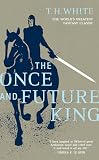
T.H. White's retelling of the Arthurian legends follows Arthur from his education by the wizard Merlin — who lives backwards through time — through the founding of the Round Table, the love triangle with Lancelot and Guinevere, and the final destruction of Camelot.
In 1959, Baptist preacher Nathan Price moves his wife and four daughters from Georgia to the Belgian Congo to serve as a missionary — and the novel, narrated by the five women whose lives he commands, traces the consequences of his rigid certainty against the backdrop of Congolese independence.
Albertine is living with the narrator in Paris, and he is consumed by jealousy, surveillance, and the impossibility of knowing another person's inner life — Proust's most claustrophobic and psychologically intense volume.
Martin Amis's debut novel, winner of the Somerset Maugham Award, follows Charles Highway — nineteen years old, vain, bookish, and obsessively calculating — as he pursues and wins Rachel, then discovers that getting what you want is not the same as wanting what you've got.
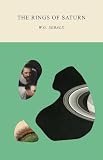
W. G. Sebald's hypnotic account of a walking tour along the Suffolk coast. As the narrator wanders a landscape of ruin and decline, his mind ranges across history, memory, and catastrophe — from silkworms to colonialism to the herring fisheries — in an unclassifiable meditation on time and loss.
Malachi Constant is the richest man in America, living proof that God favours the fortunate. He is then recruited into a Martian army, loses his memory, survives a pointless war on Earth, and winds up on Titan. The cosmic joke at the centre of The Sirens of Titan asks whether human history is meaningful or merely convenient — and the answer is bleak and funny in equal measure.
Isaac Bashevis Singer's masterful novel of seventeenth-century Poland. Jacob, a Jewish scholar enslaved after a massacre, falls in love with Wanda, the gentile woman who owns him, in a profound story of faith, forbidden love, and moral struggle by the Nobel laureate.
Tenar is taken from her family as a young child to become the High Priestess of the Tombs of Atuan — a buried labyrinth serving nameless, ancient powers. Her world is enclosed, complete, and entirely certain. Then Ged the wizard breaks in, and Tenar must decide whether to kill him or help him — and what that choice means for everything she has been.
In Money, Mississippi — the town where Emmett Till was murdered — a series of killings leave white supremacists dead alongside the mutilated body of a Black man who keeps disappearing from the morgue. Two Black detectives from the Mississippi Bureau of Investigation investigate while an elderly woman has been recording the names of lynching victims for fifty years.
Four characters navigate love, fidelity, and the weight of existence against the backdrop of the 1968 Soviet invasion of Prague, in Kundera's most celebrated philosophical novel.
The Turbin family in Kiev during the winter of 1918-1919, when the city changed hands multiple times between the Bolsheviks, the German-backed Hetmanate, and Petliura's forces. Bulgakov's first novel is the closest to autobiography — the family is his own, and the account of a cultivated Russian family facing the dissolution of their world is rendered with a warmth and grief the later work deliberately suppresses.
The second MaddAddam Trilogy novel — Toby and Ren, former members of the God's Gardeners environmental cult, survive the waterless flood that destroyed civilization. Their stories run parallel to the events of Oryx and Crake, seen from a different angle.
Tadeusz Borowski's devastating Auschwitz stories. Drawn from his own survival in the camps, these unflinching tales depict a world where the will to live overrides all compassion, and prisoners eat, work, and sleep yards from where others are murdered — a masterwork of Holocaust literature.
Lucy Snowe, a young Englishwoman of obscure circumstances, travels alone to the fictional city of Villette in Belgium, where she takes a teaching position at a girls' school and navigates love, professional ambition, and a psychological interior life of extraordinary intensity.
Anna Morgan, a young West Indian chorus girl in England, is kept by an older man and then abandoned, and drifts into a series of diminishments. Rhys's most autobiographical novel — the closest to her own experience of arriving in England from Dominica — is also her most economical: the prose is stripped to the bone, and the cold English world that Anna cannot navigate is rendered entirely through what it refuses to give her.
Odili, an idealistic young teacher, becomes entangled with the corrupt but charismatic Chief Nanga — a 'man of the people' who embodies the endemic corruption of post-independence African politics. Published in the year of Nigeria's first military coup, which it seemed to predict, the novel is Achebe's darkest and most politically prescient.
A Tokyo copywriter receives a photograph of a meadow with a strange sheep — one with a star on its back — and is blackmailed by a sinister political operative into finding it. The sheep chase takes him to Hokkaido, to a remote mountain hotel, and into territory that is no longer entirely real. The first major Murakami novel and the beginning of his characteristic blend of the mundane and the uncanny.
David Winkler, a hydrologist who has prophetic dreams, flees his family to prevent a drowning he has dreamed — and spends twenty-five years unable to return. Doerr's debut novel shows the same qualities as his later work: attention to natural science, prose of careful beauty, and concern with memory and guilt.
It's 1999 and Lincoln works the night shift reading flagged emails at a newspaper — intercepting private conversations between two friends, Beth and Jennifer, who have no idea anyone is reading. As Lincoln falls in love with Beth through her emails without ever meeting her, Rowell's debut raises uncomfortable questions about connection, voyeurism, and what it means to know someone.
In a small Turkish village in Anatolia, Christians and Muslims have lived together for centuries — until WWI, Gallipoli, the Greek-Turkish War, and the population exchanges of the 1920s destroy everything. A companion in scope and grief to Captain Corelli's Mandolin.