Dystopian fiction takes a single anxiety of the present — surveillance, conformity, ecological collapse — and follows it to its logical extreme. The best dystopias are not predictions but warnings, and the most enduring ones (1984, Brave New World, The Handmaid's Tale) feel more relevant with each passing decade.
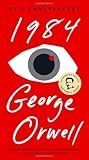
In the totalitarian super-state of Oceania, Winston Smith works for the Ministry of Truth, rewriting history to serve The Party. His secret rebellion — and its consequences — is one of the most important political novels ever written.
Snowman may be the last human alive after an engineered plague has wiped out humanity. Surviving among a tribe of genetically modified humanoids, he looks back on his friendship with the brilliant, catastrophic Crake — and the world they destroyed together.
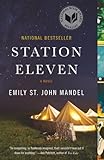
A flu pandemic obliterates civilization, and twenty years later a traveling Shakespeare company moves through the Great Lakes region, their story woven together with the pre-collapse lives of an actor whose death on opening night becomes the novel's pivot point.
Twelve-year-old Jonas lives in a Community where pain, conflict, and choice have been eradicated through Sameness — until the Ceremony of Twelve assigns him the singular role of Receiver of Memory, forcing him to carry the full weight of human history and exposing the quiet violence that keeps his world frictionless.
An unexplained epidemic of blindness sweeps through an unnamed city, and those afflicted are quarantined in a former asylum under military guard. One woman—the doctor's wife—alone can see, and she guides a small group through the collapse of all social order in a world suddenly without sight.
Women develop the ability to electrocute at will, and within a generation the global order inverts — a speculative inversion that asks not whether women would govern better but whether power itself is the problem.
In the World State of 632 AF (After Ford), human beings are hatched in hatcheries, conditioned from birth for their social function, and kept content by the pleasure drug Soma. There is no disease, no war, no poverty — and no freedom, no art, no genuine love. Bernard Marx begins to question whether happiness without meaning is worth having.
Todd, Viola, and the Spackle leader 1017 navigate three-way war on New World, with arrival of the Answer's ship adding a fourth power. The Carnegie Medal-winning conclusion to Chaos Walking is one of the great YA trilogy endings — costly, honest, and earned.
Todd Hewitt is the last boy in Prentisstown — a colony world where a germ has made everyone's thoughts audible as constant Noise — until he discovers a pocket of silence in the swamp and finds Viola, the first girl he has ever seen, whose ship crashed nearby.
In the months after a nuclear war has killed every living thing in the Northern Hemisphere, the survivors in Melbourne wait for the radioactive cloud to reach Australia. On the Beach follows a small group of men, women, and a US submarine commander as they face the end of all human life with quiet, heartbreaking dignity.
A civil war has ended apartheid. A white South African couple (the Smales) and their children flee Johannesburg with their Black servant July to his rural village. Now they live in his world, dependent on him, subject to his authority. Gordimer's most formally precise novel—the revolution imagined as a reversal of domestic power.
Cipriano Algor, an elderly potter, and his son-in-law discover that the vast commercial Center that dominates their world no longer wants pottery—it wants plastic replicas. As Cipriano's craft becomes obsolete, the family moves to live inside the Center, where beneath the shopping mall they discover something that rewrites everything they thought they knew about the world they inhabit.
Written in 1920–21, We follows D-503, a mathematician-engineer of the One State's Glass City where citizens are reduced to numbered ciphers under total surveillance — the novel that invented modern dystopia and quietly handed its blueprints to Orwell and Huxley.
The Republic is fracturing. Darrow is stranded on Mercury, his allies split between political factions tearing the Senate apart, and Lysander au Lune consolidates power with terrifying efficiency. The bloodiest, most brutal book in the saga — and the one that reveals what Pierce Brown is truly capable of.
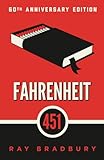
In a future where firemen burn books rather than extinguish fires, Guy Montag begins to question the society he enforces — and the books he has been trained to destroy.
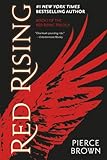
A young miner from Mars's lowest caste disguises himself as one of the ruling class and infiltrates their elite military academy to bring down the society that enslaved his people.
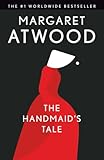
In the theocratic Republic of Gilead, women have been stripped of all rights and assigned to roles based on their fertility, one of whom narrates her life as a state-assigned Handmaid.
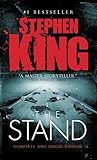
A superflu kills 99% of the human population, and the survivors are drawn into a final confrontation between the forces of good and evil across the ruins of America.
After her defiant act in the Hunger Games, Katniss Everdeen finds herself the symbol of a brewing rebellion — and is forced back into the arena for an unprecedented Quarter Quell.
In 2024, a teenage girl in a walled California community watches civilization collapse and begins developing a new religion as she leads survivors north toward safety.
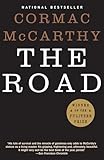
A father and son journey through a post-apocalyptic American landscape toward the coast, carrying the fire of their humanity against a world that has been stripped of it.
Set fifteen years after The Handmaid's Tale, three women's testimonies reveal how Gilead began to crumble from within, led by the most unlikely of architects.
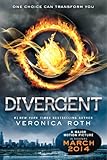
In a future Chicago divided into five virtue-based factions, sixteen-year-old Tris Prior must choose where she belongs — and discovers she may not belong anywhere.
1984 by George Orwell, Brave New World by Aldous Huxley, and The Handmaid's Tale by Margaret Atwood are the defining works of the genre. For modern dystopia, The Road by Cormac McCarthy and Station Eleven by Emily St. John Mandel are the most acclaimed recent entries.
Dystopian fiction depicts an oppressive, controlled society that functions all too well — the horror is the system itself. Post-apocalyptic fiction is set after a civilisational collapse and focuses on survival. Many novels, such as The Road, blend both.
Dystopian novels externalise present-day anxieties — about technology, government overreach, inequality, and climate — into vivid, story-driven worlds. They let readers rehearse worst-case futures safely, which is why each generation rediscovers the genre through the books that speak most directly to its fears.
Disclosure: Amazon links on this page are affiliate links. If you purchase through them we earn a small commission at no extra cost to you.
We use cookies to understand how visitors use our site (Google Analytics). No data is collected until you accept.
Privacy Policy