Political fiction dramatises the machinery of power — how it is won, wielded, and abused, and what it costs the people caught beneath it. From Orwell and Koestler to modern novels of revolution and statecraft, these books turn ideology into human story.
Ambassador Mahit Dzmare arrives at the Teixcalaan Empire carrying a political crisis — her predecessor was murdered — and a neurological implant containing that predecessor's memories. A Hugo Award-winning debut that combines a whodunit with a sophisticated examination of imperialism, identity, and the seduction of the metropole.
Salim, a Muslim of Indian descent from the East African coast, moves inland to run a shop at a bend in a great river in an unnamed post-independence African country. As the Big Man's regime lurches between modernization and authoritarianism, between ideology and violence, Salim's world becomes a study in the instability of everything—business, friendship, love, and selfhood—in a postcolonial state.
An unnamed young woman in an unnamed city during the Troubles is subjected to the unwanted attentions of a senior paramilitary figure known only as Milkman — and finds that the community, the paramilitaries, and even her family interpret this attention as complicity.
Nicolas Rubashov, a veteran of the Revolution and Old Bolshevik, is arrested by the Party he helped create and subjected to interrogation — a psychological unravelling that forces him to confront the logical endpoint of the ideology he has spent his life serving.
Lima in the 1950s under the Odría dictatorship. Santiago Zavala and Ambrosio, his father's former driver, talk for four hours in a bar called the Cathedral. Their conversation reconstructs the corruption of an entire society—told in multiple simultaneous timelines that interlace without warning. Vargas Llosa's most ambitious novel, which he called his best.
Rafael Trujillo, dictator of the Dominican Republic for thirty-one years, is assassinated in 1961. The novel weaves three narratives: Trujillo on his final day, the conspirators planning the ambush, and Urania Cabral returning to Santo Domingo forty years later to face what Trujillo did to her father—and to her. Vargas Llosa's most politically searing work.
1949. A group of Soviet scientists and engineers—political prisoners with special technical skills—are housed in a sharashka (a prison research institute), the first circle of Dante's Inferno where the least tortured souls reside. Stalin wants them to build a voice-recognition device to identify phone calls. Three days over Christmas. Solzhenitsyn's most politically comprehensive novel.
Katharina Blum spends one night with a man who turns out to be wanted by police. A tabloid newspaper begins destroying her reputation. At the end of the week, she shoots the journalist responsible. Böll's most pointed political satire—and a story of a woman driven to murder by systematic character assassination.
Rosa Burger is the daughter of Lionel Burger, a white South African Communist who died in prison for the anti-apartheid cause. What does it mean to be a martyr's daughter? To inherit a political identity you did not choose? To leave, as Rosa does, for Europe? Gordimer's most personal and most psychological novel, banned in South Africa upon publication.
A Soviet cancer ward in 1955, two years after Stalin's death. Oleg Kostoglotov, a former political prisoner with cancer, argues about history, morality, and medicine with his fellow patients—Communist functionaries, doctors, nurses—in a hospital that becomes a miniature of the Soviet state. The novel Solzhenitsyn was prevented from publishing in the USSR.
A magistrate in an unnamed empire at the edge of its territory has kept an uneasy peace with the barbarians beyond the frontier; when the Empire sends a colonel to extract confessions, the magistrate's complicity in the imperial project becomes something he can no longer suppress.
An unnamed Caribbean dictator—ancient, powerful, possibly immortal—is discovered dead in his palace. Six long chapters, each a single paragraph, circle around his life and reign from multiple perspectives, accumulating a portrait of absolute power, absolute loneliness, and absolute corruption.
A writer in rural China sends a series of letters to a Japanese playwright about his aunt—a village midwife and family planning enforcer under the one-child policy who delivered over ten thousand babies, then spent decades enforcing forced abortions and sterilizations. One of the most direct literary reckonings with China's one-child policy.
Mehring is a wealthy white industrialist who buys a farm outside Johannesburg—not to farm it but to own it, to have somewhere to be. When a Black man's body is found buried on his land and ignored by authorities, the body becomes the novel's center of gravity—insisting on its presence, waiting to be claimed. Gordimer's Booker Prize winner.
Ralph Singh, a politician from a fictional Caribbean island, writes his memoirs from a London hotel room, examining the disorder and inauthenticity of his life: his failed political career, his failed marriage, his failure to find any stable identity between the colonial world he was educated to admire and the island world he was meant to lead.
Set in the near future, a UN agency called the Ministry for the Future works to implement the Paris Agreement and prevent civilizational collapse. Robinson's most urgent novel combines economic analysis, political thriller, and climate science into an argument for why the future might still be saved.
Ka, a Turkish poet living in exile in Frankfurt, returns to Turkey to cover a string of suicides among young women and falls into a snowbound city—Kars, near the Armenian border—where a political coup is unfolding and the battle between secularism and political Islam is playing out in miniature. Three days, heavy snow, and a love affair that may or may not be real.
A young Romanian woman rides a tram to her regular interrogation by the Securitate—where she is accused of sewing notes into men's suits asking foreign buyers to marry her and take her out of Romania. The entire novel takes place during a single tram ride, the narrator's mind moving between memory, fear, and the peculiar clarity of someone accustomed to terror.
Chinese peasant farmers are ordered to plant garlic by the local government, producing a glut that the government then refuses to buy. When the farmers take their protest to the county seat, the response is brutal. Told in three voices—a blind street musician, a villager in prison, and a young woman—Mo Yan's most overtly political novel.
1980s London: Alice Mellings lives in a squat with a group of leftist radicals, cleaning up after them, cooking, begging money from her bourgeois parents, keeping the house. The group is drifting toward terrorism. Lessing's most explicitly political late novel—and a devastating portrait of idealism in decay.
A group of Romanian-German university students live under the suffocating surveillance of Ceaușescu's secret police, the Securitate. As friends disappear, are recruited as informers, or die in circumstances ruled suicide, the narrator—like Müller herself—survives by clinging to language, loyalty, and an almost ferocious attention to the physical world.
In the kingdom of Westeros, the death of King Robert Baratheon sets off a brutal power struggle among the great houses. Ned Stark, appointed the King's Hand, finds himself in a web of treachery that threatens not only his family but the entire realm — while beyond the Wall, an ancient threat stirs.
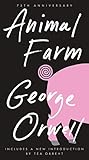
The animals of Manor Farm overthrow their human farmer, establish a democracy, and watch helplessly as the pigs gradually become indistinguishable from the humans they replaced.
Set fifteen years after The Handmaid's Tale, three women's testimonies reveal how Gilead began to crumble from within, led by the most unlikely of architects.
1984 by George Orwell, Darkness at Noon by Arthur Koestler, and All the King's Men by Robert Penn Warren are classics of the form. For modern political fiction, The Plot Against America by Philip Roth is among the most acclaimed.
Political fiction is fiction in which political events, systems, or ideologies are central to the plot and themes. It uses narrative to examine power, governance, justice, and resistance — often to critique real-world politics through the safety of story.
Dystopian fiction imagines an oppressive future society to warn about present trends. Political fiction may be set in the past, present, or future and focuses on the realistic dynamics of power and ideology rather than a speculative worst-case world.
Disclosure: Amazon links on this page are affiliate links. If you purchase through them we earn a small commission at no extra cost to you.
We use cookies to understand how visitors use our site (Google Analytics). No data is collected until you accept.
Privacy Policy