When a young woman's body is found in the library at Gossington Hall, the owners call on their friend Miss Jane Marple. Investigating from St Mary Mead, the village spinster must determine who the victim was before she can determine who killed her.
Plath's debut poetry collection, published when she was twenty-seven, reveals a poet of extraordinary technical command working in the shadow of her influences — Yeats, Dylan Thomas, Roethke — and beginning to discover the voice that would produce Ariel.
Giovanni Boccaccio's fourteenth-century masterpiece. As the Black Death ravages Florence, ten young men and women flee to the countryside and pass the time telling stories — one hundred tales of love, wit, fortune, lust, and folly that founded the European prose tradition.
Maggie Tulliver grows up on the River Floss, trapped between her fierce intelligence and her society's refusal of it, between loyalty to her beloved but conventional brother Tom and her own ungovernable desires — Eliot's most autobiographical and psychologically penetrating early novel.
James Axton, a risk analyst working in Athens in the early 1980s, becomes entangled with a cult that commits murders based on alphabetical correspondences between victims' initials and the place-names where they are killed. DeLillo's most purely thriller-shaped novel is also his most explicit meditation on language: the cult's strange grammar of death is the extreme version of the novel's central question — what is the relationship between words and the world?
Albertine is living with the narrator in Paris, and he is consumed by jealousy, surveillance, and the impossibility of knowing another person's inner life — Proust's most claustrophobic and psychologically intense volume.
A double agent for the Russian embassy in London is ordered to commit a terrorist act that can be blamed on anarchists. Conrad's London novel — simultaneously thriller, black comedy, and study of how political violence is always manipulated by those who profit from its effects.
Isaac Bashevis Singer's masterful novel of seventeenth-century Poland. Jacob, a Jewish scholar enslaved after a massacre, falls in love with Wanda, the gentile woman who owns him, in a profound story of faith, forbidden love, and moral struggle by the Nobel laureate.
Tadeusz Borowski's devastating Auschwitz stories. Drawn from his own survival in the camps, these unflinching tales depict a world where the will to live overrides all compassion, and prisoners eat, work, and sleep yards from where others are murdered — a masterwork of Holocaust literature.
Three veterans of the First World War try to build ordinary lives in the Weimar Republic while Nazi violence rises around them, and one of them falls in love with a woman dying of tuberculosis. Remarque's most romantic novel is also his most political — the personal tenderness and the historical catastrophe are inseparable, and the love story is written with the knowledge of what is coming.
Anna Morgan, a young West Indian chorus girl in England, is kept by an older man and then abandoned, and drifts into a series of diminishments. Rhys's most autobiographical novel — the closest to her own experience of arriving in England from Dominica — is also her most economical: the prose is stripped to the bone, and the cold English world that Anna cannot navigate is rendered entirely through what it refuses to give her.
Chopin's second collection of Louisiana stories deepens her exploration of desire, independence, and social constraint in the Creole and Cajun communities, with a new boldness in rendering women's inner lives.
An undercover narc in near-future California becomes addicted to the drug he's surveilling, losing his grip on his own identity in this partly autobiographical novel by Philip K. Dick.
A German soldier on the Eastern Front is given three weeks' leave, returns to his bombed city, falls in love, marries, and must return to the front. Remarque's most compassionate novel about the Second World War gives a German protagonist genuine humanity in a story almost no fiction had attempted: the ordinary German soldier who is neither hero nor monster, simply a man caught in what his country has done.
David Winkler, a hydrologist who has prophetic dreams, flees his family to prevent a drowning he has dreamed — and spends twenty-five years unable to return. Doerr's debut novel shows the same qualities as his later work: attention to natural science, prose of careful beauty, and concern with memory and guilt.
Eliot's first novel follows a carpenter in rural England, a young woman whose illegitimate child she kills in a moment of terror, and a Methodist preacher who bears witness to both — a profound exploration of how communities judge transgression and how love survives judgment.
After a wealthy man's funeral, his scatty younger sister blurts out that he was murdered — and the next day she is brutally killed herself. Was her remark idle nonsense, or did it sign her death warrant? Hercule Poirot infiltrates the grieving family to find out.
David Hume's classic of empiricist philosophy. With elegance and devastating rigor, Hume examines the limits of human knowledge, the problem of induction, the idea of causation, and the credibility of miracles — a foundational and still-unsettling work that shaped all subsequent philosophy.
Newly married, Anne and Gilbert settle in their dream home by the sea in Four Winds Harbour, where Anne befriends the tragic and beautiful Leslie Moore and the loveable ship's captain Jim Boyd.
An American family on holiday in Petra, Jordan, is controlled by a tyrannical matriarch, Mrs Boynton. When she is found dead at an archaeological dig, Poirot must determine which of her long-oppressed family members finally snapped.
Martin Arrowsmith, a doctor and scientist, moves through the American medical world — country practice, public health, pharmaceutical research — trying to maintain his commitment to pure science against the commercial and social pressures that corrupt everything around him. Lewis's Pulitzer Prize-winning novel is his most sympathetic — Arrowsmith is the only Lewis hero who earns genuine admiration — and the most thorough of his institutional satires.
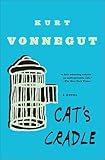
A writer researching the life of the atomic bomb's inventor discovers ice-nine — a form of water that freezes solid at room temperature — in the hands of dangerous and careless people. Vonnegut's darkest comedy.
George Orwell's first book: a memoir of destitution — months spent penniless in Paris, working as a plongeur in restaurant kitchens, and then weeks tramping between workhouses in England — written with the observational precision that would define everything that followed.
Elmer Gantry, a salesman who discovers that religious revivals are a better business than hardware, becomes a successful evangelist — fraudulent, lustful, charismatic, and eventually powerful. Lewis's most controversial novel provoked death threats and bans across the United States and remains the definitive account of American religious hypocrisy and the specific American type — the con man who believes his own con.