Cialdini's follow-up to Influence reveals that the most powerful moment in persuasion is the moment before the message — what you direct attention to immediately before a request shapes what people are receptive to.
Restaurateur Danny Meyer's part-memoir, part-business book on the power of hospitality. Drawing on the success of Union Square Cafe, Gramercy Tavern, and Shake Shack, Meyer lays out his philosophy of 'enlightened hospitality' — putting people first — as a guide to building any business worth caring about.
Newport argues against the popular advice to follow your passion — instead proposing that you become excellent at rare and valuable skills first, then leverage that excellence for the work you want.
The ancient Chinese military treatise attributed to Sun Tzu, comprising thirteen chapters on military strategy that have been applied to business, law, sports, and competitive endeavors for 2,500 years.
Coyle investigates what makes the world's best groups — the Navy SEALs, Pixar, the San Antonio Spurs, the US Women's Volleyball team — tick. The answer is culture: three specific skills that successful groups share and that anyone can learn to build.
David Schwartz argues that the size of your success is determined by the size of your belief — and provides practical techniques for cultivating bigger thinking in every area of life.
Daniel Pink uses surveys, psychological research, and interviews to argue that regret — typically treated as a negative emotion to be minimised — is actually one of our most useful and clarifying feelings, and that engaging with regret honestly can improve decision-making, performance, and sense of meaning.
Bethany McLean and Peter Elkind's definitive account of the rise and catastrophic fall of Enron. Through deep reporting, they trace how a celebrated energy giant became one of the largest corporate frauds in history, exposing the hubris, deception, and complicity that brought it down.
A practical, research-backed hiring system built on scorecard design, structured sourcing, and the four-part 'Who Interview,' designed to help leaders make better hiring decisions and dramatically reduce costly mis-hires.
Cialdini and co-authors Noah Goldstein and Steve Martin present fifty research-backed techniques for ethical persuasion, drawn from behavioral science and organized for immediate practical application.
Cal Newport argues that the inbox-driven, always-on workday is not a productivity system but an accident of history — one that fragments attention, exhausts cognitive resources, and can be replaced by intentionally designed workflows that produce far more output with less overhead.
How do artists and entrepreneurs create work that sells not for a season but for decades? Ryan Holiday examines the principles behind books, albums, films, and businesses that become classics — and the specific disciplines that separate creators of lasting work from those chasing momentary attention.
Grant Cardone argues that everything in life is a sale and that mastering the art of selling — yourself, your ideas, your products — is the most important skill you can develop.
New York Times reporter Mike Isaac's definitive account of Uber's spectacular rise and reckoning. From Travis Kalanick's ruthless ambition to the toxic culture, surveillance, and scandals that nearly destroyed the company, Super Pumped is a gripping, deeply reported portrait of Silicon Valley at its most aggressive.
A curated anthology of Fortune magazine articles spanning five decades, edited by Carol Loomis, that traces Warren Buffett's rise from obscure Omaha investor to the world's most celebrated businessman. The collection captures Buffett's evolving philosophy, sharp wit, and uncommon candor across a remarkable career.
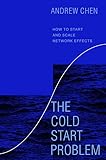
A comprehensive framework for understanding and building network effects — the most powerful and most misunderstood force in technology — from a partner at Andreessen Horowitz who has studied them across dozens of companies.
Reeves Wiedeman's gripping chronicle of WeWork and Adam Neumann. From a single co-working space to a $47 billion valuation and a catastrophic failed IPO, this is the story of a charismatic founder, the investors who enabled him, and one of the most spectacular corporate implosions of the startup era.
Andrew Kilpatrick's sprawling, encyclopedic biography of Warren Buffett chronicles the investor's life from childhood in Omaha through the building of Berkshire Hathaway into one of the world's most valuable companies. Updated across multiple editions, it serves as the most comprehensive single-volume reference on Buffett's personal and professional history.