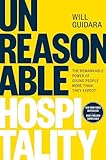
The former co-owner of Eleven Madison Park recounts how an obsessive commitment to making guests feel seen and celebrated transformed a failing restaurant into the best in the world.
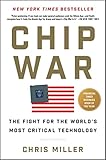
Economic historian Chris Miller traces the history of the semiconductor industry from the invention of the transistor to the US-China technology war, showing how computer chips became the defining resource of the twenty-first century.
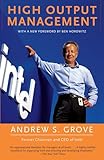
Intel CEO Andrew Grove's systematic guide to management as a measurable, improvable discipline, organized around the concept of managerial output and leverage.
The story of how Oakland A's general manager Billy Beane used statistical analysis to build a competitive baseball team on a fraction of the payroll of richer clubs.
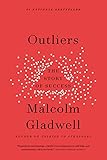
Malcolm Gladwell challenges the myth of the self-made success story, arguing that high achievers are the product of hidden advantages, extraordinary opportunities, and cultural legacies — not just individual talent and hard work.
A curated collection of Naval Ravikant's Twitter threads, podcast appearances, and interviews on building wealth, achieving happiness, and developing judgment.
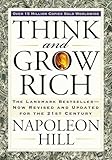
Napoleon Hill's classic distillation of the success principles he observed in over 500 self-made millionaires, including Andrew Carnegie, Henry Ford, and Thomas Edison.
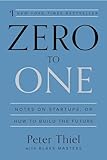
Peter Thiel — PayPal co-founder, first outside Facebook investor — argues that true progress comes from creating something genuinely new (0 to 1), not copying what already works (1 to n). A contrarian framework for building companies that matter.
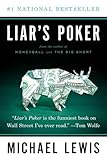
Michael Lewis's memoir of his years as a bond salesman at Salomon Brothers in the 1980s, capturing the greed and absurdity of Wall Street's most explosive decade.
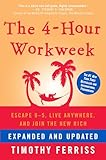
Tim Ferriss dismantles the assumption that the standard life script — work 40+ hours a week for 40 years, then retire — is either necessary or desirable. He outlines a practical system for outsourcing, automating, and liberating your work life to create what he calls 'lifestyle design'.
Gino Wickman presents the Entrepreneurial Operating System, a practical framework for helping small and mid-size businesses achieve clarity, accountability, and execution.
Donald Miller applies the seven universal elements of storytelling to marketing, arguing that businesses fail because they make themselves the hero rather than their customer.
Research professor Brené Brown argues that vulnerability — the willingness to be seen in all our uncertainty and imperfection — is not weakness but the foundation of courage, connection, and creativity.
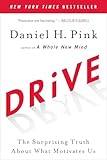
Daniel Pink argues that the science of human motivation has been ignored by business, which relies on carrot-and-stick incentives that actually undermine performance for complex work.
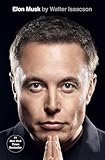
Walter Isaacson's biography of Elon Musk, based on two years of access and hundreds of interviews, covering Tesla, SpaceX, Twitter, and the tortured psychology behind his drive.
Intel CEO Andrew Grove introduces the concept of strategic inflection points — moments when the fundamentals of a business are changed by forces beyond its control — and explains how leaders can recognize and navigate them.
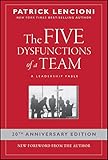
Through a business fable, Lencioni identifies the five core dysfunctions that prevent teams from achieving their potential and offers a practical framework for addressing them.
Harvard researcher Shawn Achor argues that happiness is not the result of success but its precursor, and presents seven practical principles for training your brain to capitalize on positivity.
MJ DeMarco challenges the conventional wisdom of slow, patient wealth-building and argues for building scalable businesses that generate wealth rapidly.