Daniel Pink argues that the Conceptual Age is replacing the Information Age, and that right-brain directed abilities — design, empathy, play, story, symphony, and meaning — are becoming the new competitive advantage.
Drawing on two decades of social science research and interviews with senior leaders, Brené Brown makes the case that courage — expressed through vulnerability, values clarity, trust, and learning to rise from failure — is the foundational skill of effective leadership.
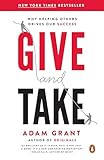
Adam Grant challenges the assumption that success requires self-promotion and strategic relationships, showing that the most successful people are often those who focus on giving rather than getting.
Organizational psychologist Adam Grant examines how individuals champion new ideas, overcome doubt and fear, and drive change in organizations and society.
Pulitzer Prize-winning journalist Charles Duhigg investigates the science of extraordinary communicators, discovering a framework of conversation types and the skills that allow people to genuinely connect across difference.
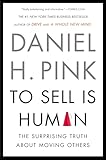
Daniel Pink argues that we are all in sales now — persuading, convincing, and moving others is a universal human activity, not just a profession — and explains the new science behind doing it well.
Keith Ferrazzi argues that professional success depends on the quality of your relationships and provides a system for building genuine connections rather than transactional networks.
Grant Cardone argues that the only way to achieve extraordinary results is to set targets 10 times higher than you think you need and take 10 times more action than seems necessary.
Twelve long-form New Yorker pieces from the 1950s and 60s profile corporate disasters, stock market panics, and the human behavior behind landmark business events — including the Ford Edsel failure, the 1962 market crash, and the Piggly Wiggly corner.
David Bach argues that building wealth requires not discipline but automation — setting up your savings, investments, and debt payments to happen without any decision-making, so that the system works even when motivation does not.
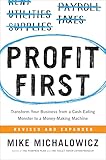
A cash management system for small business owners that reverses the traditional accounting formula — taking profit first and operating on the remainder to ensure businesses stay profitable.
A practical guide to customer interviews that actually work — teaching founders how to ask questions that reveal truth rather than generating the false validation that kills startups.
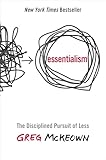
Greg McKeown makes the case for a radical new discipline: the pursuit of less, but better. Essentialism is the art of discerning what is essential and eliminating everything else — so you can make your highest possible contribution.
Doris Kearns Goodwin examines four American presidents — Lincoln, Theodore Roosevelt, FDR, and LBJ — asking how they developed the qualities of leadership and how they deployed those qualities in moments of crisis.
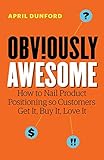
A step-by-step process for positioning technology products that cuts through the confusion about what positioning is, why it matters, and how to do it well.
Atul Gawande argues that the humble checklist is the most powerful tool available for reducing failure in complex environments — drawing on evidence from surgery, aviation, construction, and finance to make the case.
The definitive guide to modern technology product management — how the best product teams at companies like Amazon, Google, and Netflix discover and deliver products that customers love.
Eric Ries argues that startups can shorten their product development cycles and discover what customers actually want through validated learning, scientific experimentation, and iterative product releases. The Lean Startup changed how the world builds companies.
The Heath brothers identify the four villains of good decision-making — narrow framing, confirmation bias, short-term emotion, and overconfidence — and offer a four-step WRAP process for systematically overcoming them.
The untold story of how four friends — Jack Dorsey, Ev Williams, Biz Stone, and Noah Glass — created Twitter and then destroyed their friendships fighting for control of it.