A satirical counterfactual in which Africans enslaved Europeans — a white woman narrates her life in bondage in a world where the Atlantic slave trade ran in reverse, forcing a direct confrontation with the mechanics and logic of slavery.
A fictionalized account of Marilyn Monroe's life — reimagined as Norma Jeane Baker, a woman of extraordinary sensitivity and intelligence consumed and ultimately destroyed by the cultural construction called Marilyn Monroe that she inhabits but does not fully control.
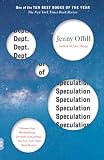
A marriage, told in fragments: notes, observations, aphorisms, overheard conversations, quotations from philosophers and astronauts. The wife is a writer. Her husband has an affair. The novel is about the collapse and possible reconstruction of a life built on a particular idea of love.
Saeed and Nadia meet in a city being overtaken by militants. Around the world, doors have appeared that transport people instantly to different countries. They flee through doors — from their home city to Mykonos to London to California — and the novel follows their relationship as migration transforms them both.
An aging writer in communist Hungary attempts to write a novel about a young man who survives the concentration camps—the same story told in Fatelessness. The meta-fictional frame explores what it means to write about the Holocaust from the distance of decades, and the cost of being a witness who survives.
Salim grows up in Zanzibar watching his family fall apart—his father withdrawing into silence, his uncle becoming politically prominent—and eventually comes to London to study, where an older Englishman named Mr. Mgeni becomes a surrogate father. A Gurnah coming-of-age story that draws on Shakespeare's Measure for Measure.
Two narratives, two times: a Renaissance fresco painter in 15th-century Ferrara; a contemporary Cambridge teenager grieving her mother. The two stories are printed in different orders in different editions — some readers encounter the Renaissance story first, others the contemporary one. The novel's question: how to be both past and present, both alive and dead.
Seven Shakespeare students at a prestigious arts conservatory navigate obsession, rivalry, and moral collapse until one of them turns up dead after a production of Othello — narrated a decade later from a prison cell.
Two interwoven stories: a fifteen-year-old boy runs away from Tokyo to Takamatsu in search of his identity, while an elderly man in Tokyo discovers a strange ability to commune with cats.
Macondo, 1928. A colonel, his daughter, and her son attend the burial of a doctor who has been shunned by the town for years. Told in three simultaneous interior monologues, this is García Márquez's first novel—and the first appearance of Macondo—written when he was nineteen.
Martha Quest, fifteen years old on a farm in Southern Rhodesia in the late 1930s, is furiously intelligent and furiously trapped—by her parents' colonial world, by the small-mindedness of white settler society, by being female. The first volume of Lessing's semi-autobiographical five-novel Children of Violence sequence.
Artur Sammler—Polish-Jewish, seventy years old, half-blind from a Nazi massacre he survived by crawling out of a mass grave—moves through 1960s New York observing the chaos of the counterculture with a survivor's cold clarity. A meditation on civilization, death, and what we owe each other.
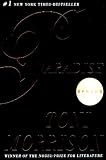
An all-Black Oklahoma town founded by freed slaves attacks a nearby convent housing women who have fled their former lives. The third novel in Morrison's Beloved trilogy, Paradise asks what happens when a community built to protect its own becomes as oppressive as the society it fled.
Ka, a Turkish poet living in exile in Frankfurt, returns to Turkey to cover a string of suicides among young women and falls into a snowbound city—Kars, near the Armenian border—where a political coup is unfolding and the battle between secularism and political Islam is playing out in miniature. Three days, heavy snow, and a love affair that may or may not be real.
On a private Caribbean island, a beautiful Black model named Jadine and a mysterious stranger named Son collide—she has assimilated into white wealth, he represents something older and more dangerous. Morrison's most openly confrontational novel about race, class, and the seductions of belonging.
A young Romanian woman rides a tram to her regular interrogation by the Securitate—where she is accused of sewing notes into men's suits asking foreign buyers to marry her and take her out of Romania. The entire novel takes place during a single tram ride, the narrator's mind moving between memory, fear, and the peculiar clarity of someone accustomed to terror.
Galip's wife Rüya disappears, along with her half-brother Celâl—Istanbul's most famous newspaper columnist. As Galip searches for them through the city's streets, tekkes, and archives, reading Celâl's old columns for clues, the line between searcher and searched-for begins to dissolve. Pamuk's most labyrinthine novel.
An elderly Briton couple journey across post-Arthurian Britain to find their son in a land afflicted by a strange mist of collective forgetfulness, eventually uncovering a buried atrocity that the forgetfulness was designed to conceal.
Harriet and David Lovatt build a perfect large family in the 1960s English countryside, filling their house with children and relatives. Then their fifth child, Ben, is born: strange, immensely strong, and not quite human. The novel tracks what happens to a family—and a marriage—when one member refuses all social and emotional norms.
Chinese peasant farmers are ordered to plant garlic by the local government, producing a glut that the government then refuses to buy. When the farmers take their protest to the county seat, the response is brutal. Told in three voices—a blind street musician, a villager in prison, and a young woman—Mo Yan's most overtly political novel.
1980s London: Alice Mellings lives in a squat with a group of leftist radicals, cleaning up after them, cooking, begging money from her bourgeois parents, keeping the house. The group is drifting toward terrorism. Lessing's most explicitly political late novel—and a devastating portrait of idealism in decay.
Lila Mae Watson is the first Black female elevator inspector in a segregated American city. When an elevator she has certified in good order falls in free-fall, she becomes a suspect in a larger conspiracy involving the city's two warring schools of elevator inspection: the Empiricists and the Intuitionists.
A group of Romanian-German university students live under the suffocating surveillance of Ceaușescu's secret police, the Securitate. As friends disappear, are recruited as informers, or die in circumstances ruled suicide, the narrator—like Müller herself—survives by clinging to language, loyalty, and an almost ferocious attention to the physical world.
Abbas, a Zanzibari man who came to England decades ago and built a family in Norwich, suffers a stroke and in its aftermath his children begin to discover that their father has been hiding a past he has never shared—a first family, an earlier life, a silence that was also a form of protection.