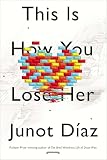
Editors Reads Verdict
This Is How You Lose Her is technically Díaz's most controlled work — nine stories that constitute a unified examination of how masculine self-sabotage operates, with prose shifts between registers timed with the precision of a musician.
What We Loved
- The second-person narration of the title story is one of the most effective uses of that mode in contemporary fiction
- The prose is at its most controlled — every register shift is precisely timed
- The portrait of Yunior's self-knowledge alongside his incapacity to change is psychologically exact
- The collection works as a unified whole — the stories illuminate each other
Minor Drawbacks
- The subject matter — male infidelity — may exhaust readers' sympathy before the collection ends
- Yunior's self-awareness about his behaviour can feel like a substitution for actual change
- Some stories feel like coda to *Oscar Wao* rather than standalone achievements
Key Takeaways
- → Self-awareness is not sufficient for self-correction — knowing why you do something does not stop you doing it
- → Dominican machismo is a set of behaviours passed down as damage, not chosen as a character
- → The second person in fiction can function as a form of self-accusation — 'you' is often 'I'
- → Love is most accurately understood as something men destroy rather than something they fail to find
| Author | Junot Díaz |
|---|---|
| Publisher | Riverhead |
| Pages | 213 |
| Published | September 11, 2012 |
| Language | English |
| Genre | Short Stories, Literary Fiction, Latino Literature |
How This Is How You Lose Her Compares
This Is How You Lose Her at a glance against 3 similar books readers weigh alongside it.
| Book | Author | Rating | Best for |
|---|---|---|---|
| This Is How You Lose Her (this book) | Junot Díaz | ★ 4.2 | Short Stories |
| Beloved | Toni Morrison | ★ 4.5 | Serious readers of literary fiction with the patience for challenging, |
| Drown | Junot Díaz | ★ 4.2 | Short Stories |
| The Brief Wondrous Life of Oscar Wao | Junot Díaz | ★ 4.4 | Readers of literary fiction interested in immigrant experience, Latin American |
This Is How You Lose Her Review
This Is How You Lose Her appeared in 2012, sixteen years after Drown and five years after The Brief Wondrous Life of Oscar Wao — a relatively sparse output for a writer of Díaz’s reputation, which created an unusual situation in which the collection was received as a major event. It is, in fact, Díaz’s most formally accomplished work: nine stories that function as a unified examination of a single question, executed with a technical control that the earlier collections, for all their brilliance, did not quite sustain throughout.
The question is: how does a man who can see exactly what he is doing — who can narrate his own infidelities with precision, who knows the cultural formation that produced his behaviour, who understands what he is losing — continue to do it anyway? Yunior, across most of these nine stories, is that man. He cheats on every woman he loves with a compulsiveness that is presented not as villainy but as a kind of structural incapacity — machismo not as a choice but as a language he was taught before he could refuse it.
The title story, narrated in the second person, is the collection’s technical showpiece: “you” is Yunior, but “you” is also the reader, implicating everyone who has ever done the version of this they were capable of. The second person works here as an act of self-accusation: Yunior talking to himself in the mode of self-examination, the “you” creating a distance from the behaviour that cannot quite be maintained. The other stories vary their distance from the same material — some earlier in Yunior’s life, some involving his brother rather than himself — and the cumulative effect is of watching a man circle a problem he cannot solve.
The prose is the achievement that most distinguishes this collection from Drown. The code-switching is present but more precisely controlled, the shifts between registers — formal to colloquial, English to Spanish, past to present — timed with the ear of a musician who knows exactly when to change key and why. This Is How You Lose Her is the book of a writer in full command of his instrument, applying that command to the most personal material he had yet attempted.
The Immigrant Experience Beneath the Romance
Though the collection’s surface subject is infidelity, its deeper subject is the immigrant experience that produces Yunior — the dislocation of a Dominican family in New Jersey, the absent and authoritarian father, the brother whose illness shadows several stories, the ceaseless negotiation between two cultures and two languages. Díaz uses the failed-relationship form to explore inheritance: what gets passed down from fathers to sons, from a homeland to a diaspora, from one generation’s wounds to the next. Yunior’s compulsive cheating is never separated from the family and the history that shaped him; it is presented as one symptom of a larger condition of rupture and longing.
This is why the stories accumulate into something larger than a study of a single flawed man. The collection is also a portrait of a community, a class, and a particular American experience — the working-class immigrant world that much American fiction renders invisible. Díaz writes it from the inside, with affection and unsparing honesty, in a voice that refuses to translate or soften itself for outside readers.
Díaz’s Voice and Its Place in American Fiction
This Is How You Lose Her confirmed Junot Díaz as one of the defining American voices of his generation — a writer who fused street vernacular, Spanish, science-fiction and comic-book references, and the high literary tradition into a prose style unlike anyone else’s. The collection was a finalist for the National Book Award and consolidated the reputation Díaz had built with the Pulitzer-winning The Brief Wondrous Life of Oscar Wao. For readers new to him, it is an ideal starting point: shorter and more immediately accessible than the novel, while showcasing the same voice and concerns.
It is worth reading alongside his debut collection, Drown, which introduces Yunior and the same New Jersey-Dominican world in a sparer, earlier register; the two books together trace both a character and a writer growing more complex over time. For anyone interested in contemporary American short fiction, the immigrant novel, or simply prose that sounds like nothing else, This Is How You Lose Her is essential.
Controversy and Reappraisal
No account of Díaz’s work is complete without acknowledging the questions that have since gathered around it. In the years after publication, allegations about Díaz’s own conduct prompted many readers to revisit the fiction with new scrutiny, and This Is How You Lose Her sits at the center of that reconsideration. The collection’s unsparing portrait of male self-sabotage reads differently in light of those questions — some readers find it a courageous act of self-examination, others an aestheticization of the very behavior it depicts. The book invites the debate. Its second-person address implicates author and reader alike, and it never lets Yunior off the hook even as it renders his charm and his pain with real sympathy.
However one weighs that context, the literary achievement is hard to dispute. Few writers have rendered the texture of a particular American world — working-class, immigrant, bilingual, masculine — with such precision and force, and fewer still have built a prose style so immediately recognizable. The collection’s influence on a generation of younger writers, who absorbed its code-switching confidence and its refusal to explain itself, has been substantial. This Is How You Lose Her remains a landmark of twenty-first-century American short fiction: a difficult, beautiful, morally complicated book that rewards exactly the kind of attentive, skeptical reading its narrator is incapable of giving the women in his life.
Our rating: 4.2/5 — Díaz’s most technically controlled work — a unified examination of masculine self-sabotage told with formal precision and considerable honesty.
Frequently Asked Questions
What is "This Is How You Lose Her" about?
Nine stories, most narrated by Yunior, about the serial infidelity that destroys his relationships. Díaz's second collection extends the world of Drown and Oscar Wao into a sustained examination of masculinity, Dominican machismo, and the specific ways men sabotage the love they need.
What are the key takeaways from "This Is How You Lose Her"?
Self-awareness is not sufficient for self-correction — knowing why you do something does not stop you doing it Dominican machismo is a set of behaviours passed down as damage, not chosen as a character The second person in fiction can function as a form of self-accusation — 'you' is often 'I' Love is most accurately understood as something men destroy rather than something they fail to find
Is "This Is How You Lose Her" worth reading?
This Is How You Lose Her is technically Díaz's most controlled work — nine stories that constitute a unified examination of how masculine self-sabotage operates, with prose shifts between registers timed with the precision of a musician.
Ready to Read This Is How You Lose Her?
Check the current price on Amazon.
Check Price on Amazon (paid link)Prices and availability are subject to change. See Amazon for current price.
Review last updated: