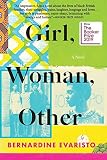
Editors Reads Verdict
Evaristo's Booker co-winner is an exhilarating celebration of the breadth and variety of Black British female experience — formally inventive, warm, often very funny, and impossible to put down once the pattern of connection between the twelve lives starts to reveal itself.
What We Loved
- The prose-poetry form creates an intimacy with each character that conventional prose rarely achieves
- Evaristo refuses to make any single story stand in for all Black British female experience
- The humour is genuine and consistent without softening the serious political content
- The late-novel genealogical revelations are both surprising and structurally satisfying
- The novel's political range — from radical feminism to conservative traditionalism — is genuinely wide
Minor Drawbacks
- The absence of conventional punctuation requires an adjustment period that some readers find alienating
- With twelve protagonists, some characters receive less page time than their stories seem to deserve
- The novel's density of connection may feel contrived to readers who prefer more naturalistic plotting
Key Takeaways
- → Form is not decoration — the choice to abandon conventional punctuation is itself an argument about who gets to define literary authority
- → Black British female experience is not a single thing but a vast range of positions, beliefs, generations, and desires
- → The invisible networks that connect women across class and generation are as powerful as the forces that divide them
- → Political identity is not fixed — people move through and between positions across a life
- → The stories we tell about ourselves are always partial, always shaped by what we need them to mean
| Author | Bernardine Evaristo |
|---|---|
| Publisher | Grove Press |
| Pages | 452 |
| Published | August 4, 2020 |
| Language | English |
| Genre | Literary Fiction, Verse Novel, Black British Fiction |
| Difficulty | Beginner |
| Best For | Readers who enjoy formally inventive literary fiction, interconnected story structures, and novels that engage seriously with questions of race, gender, class, and identity in contemporary Britain. |
How Girl, Woman, Other Compares
Girl, Woman, Other at a glance against 3 similar books readers weigh alongside it.
| Book | Author | Rating | Best for |
|---|---|---|---|
| Girl, Woman, Other (this book) | Bernardine Evaristo | ★ 4.3 | Readers who enjoy formally inventive literary fiction, interconnected story |
| Americanah | Chimamanda Ngozi Adichie | ★ 4.4 | Literary fiction readers interested in immigration narratives, race in America, |
| Homegoing | Yaa Gyasi | ★ 4.6 | Anyone interested in African and African-American history |
| Pachinko | Min Jin Lee | ★ 4.6 | Historical fiction readers interested in Korean and Japanese history, fans of |
The Form
Girl, Woman, Other announces its ambitions on the first page. The prose runs without full stops, sentences curling into and out of each other in long, unpunctuated waves that Evaristo has called “fusion fiction” — something between prose and poetry that owes something to both without being reducible to either. The effect, once the reader adjusts to it, is one of unusual intimacy: the narrative sits very close to each character’s interior, rendering thought and speech and observation in a single unbroken flow that makes the boundary between inner and outer life feel as permeable as it actually is.
The structure organises twelve lives into four groups of three, each group loosely linked by a relationship — a mother and daughter, a group of friends, colleagues — and each group’s section ending at the premiere of The Last Amazon of Dahomey, a play by Amma Bonsu at the National Theatre, which becomes the novel’s gathering point. Amma is the character we meet first, and the premiere gives the novel its temporal anchor: everything converges on that single night in London even as the individual stories range across decades and geographies.
This convergence at the premiere is not a thriller’s trick — the novel is not building to a revelation about the night itself. It is instead using the premiere as a way to insist that all twelve lives, however different, exist in the same world and have shaped each other in ways none of the characters fully understands. The formal choice to write without conventional punctuation reinforces this: there are no full stops between these lives because there are no full stops between these lives.
The Twelve Lives
One of Girl, Woman, Other’s most considered achievements is its refusal to make any of its twelve characters representative. The cast ranges from Amma, a radical Black feminist theatre director who has spent decades working outside the mainstream, to Penelope, a white woman who has convinced herself she is Black, to Bummi, a Nigerian immigrant who has built a cleaning business through extraordinary discipline and sacrifice, to Megan/Morgan, a young nonbinary person still working out what language fits their experience. Evaristo gives each character a distinct political position, class background, generation, and sexuality — and then refuses to adjudicate between them.
This political range is unusual and sometimes uncomfortable. The novel contains characters who would disagree furiously with each other, and Evaristo does not resolve those disagreements. A character who holds conservative, traditional views about gender and family is rendered with the same warmth and specificity as a character who holds radical feminist views about the same subjects. This is not moral relativism — the novel is clearly interested in justice — but it is a refusal to make the novel a simple argument, a refusal to collapse twelve lives into a single thesis about what Black British women are or should be.
The effect is that the novel feels genuinely capacious. It is a novel that contains multitudes, not because Evaristo is hedging her political commitments, but because she is insisting that the category of Black British womanhood is too large and various to be captured by any single representative figure.
Connection and Surprise
The twelve narratives of Girl, Woman, Other are connected in ways that become clear gradually, and the pleasure of reading the second half of the novel is partly the pleasure of recognising how the threads have been woven. Characters appear in each other’s stories without being named, relationships that seemed peripheral turn out to be central, and the novel’s geography — London, the north of England, the Caribbean, West Africa — begins to feel like a network rather than a set of separate locations.
The most striking connection comes late: a genealogical revelation that links several of the novel’s threads through a family history that none of the characters involved has access to. This revelation does not change what has already happened in the stories, but it reframes the invisible relationships between characters — the way people can be deeply connected to each other without knowing it, shaped by shared history they have been denied access to.
What Evaristo is arguing, through this structure, is that Black British women exist in networks of relation that class and geography and generation have made invisible. The characters in Girl, Woman, Other do not, for the most part, know how connected they are. But the reader knows, and that knowledge is itself a kind of argument: about the hidden architecture of community, about what it would mean to make those connections visible, and about what is lost when history separates people who share more than they know.
Our rating: 4.3/5 — A formally inventive, warmly humane novel that makes the breadth and variety of Black British female experience not a problem to be solved but a world to be inhabited.
A Chorus of Modern Britain
Bernardine Evaristo’s Booker Prize-winning Girl, Woman, Other is an exuberant, expansive novel that tells the interconnected stories of twelve characters — mostly Black British women, spanning generations, classes, and identities — to build a sweeping portrait of contemporary Britain. Each chapter centres on a different character, from an ageing playwright to a young non-binary social-media activist to a Northern farmer, and as their lives quietly intersect, Evaristo assembles a mosaic of experiences that together speak to questions of race, gender, sexuality, family, and belonging across more than a century of British life.
A Distinctive Form
The novel is written in a fluid, almost free-verse style, largely without full stops, that gives it a propulsive, conversational rhythm and allows Evaristo to move nimbly between voices and registers. Far from being a barrier, the form makes the book remarkably readable and intimate, drawing the reader directly into each character’s consciousness. The range of perspectives is the novel’s great strength: it resists any single story of Black British womanhood, insisting instead on multiplicity, contradiction, and individuality.
Why It Resonates
Girl, Woman, Other was widely celebrated for its warmth, its ambition, and its generous embrace of difference, and it reached a vast readership after its Booker win. It is political without being polemical, taking its characters seriously as individuals rather than as representatives, and it balances serious themes with humour, tenderness, and a genuine love of its people. As a portrait of modern Britain in all its diversity, and a formally inventive yet deeply accessible novel, it stands among the most acclaimed and beloved British books of recent years, a work that expands the sense of whose stories belong at the centre of the national literature.
Frequently Asked Questions
What is "Girl, Woman, Other" about?
Twelve interconnected characters — most of them Black British women — navigate love, work, identity, and belonging across several decades and social positions, from a theatre director's opening night to a ninety-three-year-old farmer in County Durham, in Evaristo's signature flowing prose-poetry.
Who should read "Girl, Woman, Other"?
Readers who enjoy formally inventive literary fiction, interconnected story structures, and novels that engage seriously with questions of race, gender, class, and identity in contemporary Britain.
What are the key takeaways from "Girl, Woman, Other"?
Form is not decoration — the choice to abandon conventional punctuation is itself an argument about who gets to define literary authority Black British female experience is not a single thing but a vast range of positions, beliefs, generations, and desires The invisible networks that connect women across class and generation are as powerful as the forces that divide them Political identity is not fixed — people move through and between positions across a life The stories we tell about ourselves are always partial, always shaped by what we need them to mean
Is "Girl, Woman, Other" worth reading?
Evaristo's Booker co-winner is an exhilarating celebration of the breadth and variety of Black British female experience — formally inventive, warm, often very funny, and impossible to put down once the pattern of connection between the twelve lives starts to reveal itself.
Ready to Read Girl, Woman, Other?
Check the current price on Amazon.
Check Price on Amazon (paid link)Prices and availability are subject to change. See Amazon for current price.
Review last updated: