Where to Start with Bernardine Evaristo: A Reading Guide
Where to start with Bernardine Evaristo — whether to begin with Girl, Woman, Other, Mr Loverman, or Blonde Roots. A complete reading guide to her novels.
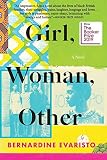
Bernardine Evaristo (born 1959) is the British novelist who in 2019 became the first Black woman to win the Man Booker Prize — sharing the award with Margaret Atwood for The Testaments, in a joint decision that broke the prize’s rule against sharing. Her work spans eight novels, novellas, and hybrid text-verse forms, and is united by its concern with Black British experience — its range, its internal diversity, its relationship to African and Caribbean heritage, and its position within the larger history of race in Britain. Her distinctive formal innovations (particularly the unpunctuated free verse/prose hybrid of her later work) are inseparable from her thematic concerns.
Where to Start: Girl, Woman, Other (2019)
The essential Evaristo — and the novel that finally brought her the wide recognition her work had long deserved. Twelve Black British women — connected, though often unknowingly — are followed across the twentieth and twenty-first centuries: Amma, a lesbian theatre director whose new play opens at the National Theatre; Dominique, her daughter, who has followed a lover to America and found herself in an abusive relationship; Carole, a banker who has pursued conventional success; Bummi, Carole’s Nigerian immigrant mother who scrubs hospital floors so her daughter can thrive; Shirley, a schoolteacher who has given her life to the profession; and seven more.
Evaristo renders each voice with precision in her distinctive style — unpunctuated, floating between prose and free verse, refusing the conventions that separate literary from vernacular — and the twelve stories together constitute a collective portrait of Black womanhood in Britain that is simultaneously a novel and a conversation across generations, classes, and sexualities.
Mr Loverman (2013)
Evaristo’s most warmly comic and most emotionally direct novel — narrated in alternating voices by Barrington Jedidiah Walker (Barry), a 74-year-old Antiguan British man who has lived his entire adult life concealing his love for his childhood friend Morris behind a marriage to Carmel, and by Carmel herself, who suspects the truth and is consumed by fury and grief. Barry’s voice is exuberant, funny, and deeply Antiguan in cadence; Carmel’s is equally precise and equally passionate in its different register.
The novel is a late-life coming-out story — Barry must finally choose between the concealment he has maintained for six decades and the honesty that would allow him to live as himself before it is too late. Evaristo makes both Barry and Carmel fully human; her sympathy is with both; the novel refuses to simplify the pain that hidden lives cause on every side.
Blonde Roots (2008)
Evaristo’s most formally audacious novel — a counterfactual history in which Africans colonised and enslaved Europeans, and Doris is a white ‘Europane’ enslaved in the West African empire of Aphrika. The novel systematically inverts the racial and cultural hierarchies of the transatlantic slave trade: Aphrika is the sophisticated, developed civilization; Europe is the ‘dark continent’ of savages requiring civilizing. The satirical inversion forces the reader to see the arbitrariness of the ideological frameworks that supported actual slavery — the construction of African inferiority was not a fact but a political choice.
More formally experimental and more overtly satirical than Evaristo’s other work — best approached after Girl, Woman, Other and Mr Loverman.
Why Girl, Woman, Other Is the Ideal First Book
For a reader new to Bernardine Evaristo, Girl, Woman, Other is the ideal first book because it is her Booker Prize-winning breakthrough and the fullest expression of her distinctive gifts, the inventive form, the vivid, polyphonic characterization, and the rich engagement with the lives of Black British women. Girl, Woman, Other follows the interconnected lives of twelve characters, mostly Black British women, across generations and Britain, in a vibrant, inventive, and deeply human novel. As an entry point it is ideal, for it is her most celebrated work and a perfect example of her inventive, character-rich, and humane fiction. It welcomes the newcomer with its vivid characters, its inventive form, and its rich humanity, drawing the reader into her distinctive vision. It is her most famous work and the one that best represents her gifts, so the new reader encounters Evaristo at her most characteristic. For the newcomer, then, Girl, Woman, Other is the natural and ideal starting point.
What to Expect as a New Reader
As a new reader, you can expect Girl, Woman, Other to be a vibrant, inventive, and deeply human novel. You can expect a polyphonic structure, for the novel follows twelve interconnected characters, mostly Black British women, each given their own chapter and voice. You can expect vivid characterization, for the characters span generations, backgrounds, and outlooks, each richly and distinctly drawn. You can expect an inventive form, for Evaristo writes in a fluid, free-flowing style with unconventional punctuation that gives the prose energy and momentum. You can expect rich engagement with the lives of Black British women, with race, gender, identity, and the changing of Britain over time. You can expect warmth, humor, and humanity alongside serious themes. You can expect an accessible, propulsive, and resonant read. Expect, in short, a vibrant, inventive, and deeply human novel, a superb introduction to Evaristo’s gifts.
Going Deeper After Your First Book
Once Girl, Woman, Other has introduced you to Evaristo’s gifts, the reader who wishes to go deeper can explore her other work, which is notably varied and inventive, ranging across novels in prose and verse, satire, and historical reimagining. Her earlier books include inventive verse novels and bold, genre-blending fiction that reimagines history and identity, while her memoir reflects on her life and her decades of writing, revealing the range of her imagination and her commitment to telling overlooked stories. Reading these after Girl, Woman, Other deepens your appreciation of Evaristo’s distinctive gifts, the inventive form, the vivid characterization, and the rich engagement with identity and history. Her characteristic inventiveness runs through her work. Building your reading journey through Evaristo is a matter of following her fiction from Girl, Woman, Other into her other novels and her memoir. The reader who begins here and continues will find one of the most inventive and vital voices in contemporary British literature.
Reading Bernardine Evaristo
Evaristo’s fiction is animated by a commitment to expanding the range of Black British experience represented in literature — the diversity of class, sexuality, generation, national origin, and aspiration within communities that literature has often treated as monolithic. Her formal innovations (the hybrid prose-verse, the multiple narrative voices, the alternating perspectives) are always in service of that diversity. Begin with Girl, Woman, Other for the most complete and celebrated statement of her vision; read Mr Loverman for the most emotionally direct; approach Blonde Roots for the most formally confrontational.
Frequently Asked Questions
Where should I start with Bernardine Evaristo?
Girl, Woman, Other (2019) is both the most widely read and the essential starting point — the Booker Prize-winning novel (joint winner with Margaret Atwood's The Testaments) that follows twelve Black British women across generations and social positions, from a lesbian theatre director in London to a 93-year-old former farmworker in the north of England, rendering each voice with precision and warmth in Evaristo's distinctive unpunctuated free verse/prose hybrid style. Mr Loverman is the best alternative for readers who want a more conventionally plotted novel; Blonde Roots for Evaristo's most formally inventive and politically confrontational work.
What is Girl, Woman, Other about?
Girl, Woman, Other (2019) follows twelve Black British women — interconnected, though often unknowingly — across different generations, regions, classes, sexualities, and relationships to their African and Caribbean heritage. Each section is told in a distinctive voice: Amma, a lesbian theatre director; Dominique, her daughter; Carole, who has pursued success in finance; Bummi, her Nigerian mother; Shirley, a schoolteacher; and eight more. The novel traces the connections between these women's lives and the larger history of Black women in Britain — their struggles, their creativity, their family conflicts, their love — with warmth and formal innovation. Winner of the Man Booker Prize in 2019.
What is Mr Loverman about?
Mr Loverman (2013) is narrated by Barrington Jedidiah Walker — Barry — a 74-year-old Antiguan British man living in Hackney who has been secretly in love with his childhood friend Morris for sixty years, maintaining his gay relationship while married to Carmel and raising daughters who are proud of their Antiguan heritage. The novel is told in alternating first-person voices — Barry's exuberant, comic Antiguan-accented narration and Carmel's increasingly furious account — and it is Evaristo's most warmly comic and most emotionally direct novel. A study of a man who has spent a lifetime hiding who he is and what he must now risk to live as himself.
What is Blonde Roots about?
Blonde Roots (2008) is Evaristo's most formally provocative novel — a counterfactual alternate history in which Africans enslaved Europeans, and Doris is a white 'Europane' enslaved in the West African empire of Aphrika and its Caribbean colony of New Ambossa. The novel is a satirical inversion of the transatlantic slave trade, using the racial categories of that history in reverse to defamiliarise them and force the reader to examine their assumptions about race, civilization, and the construction of inferiority. Evaristo's most politically confrontational work and her most formally experimental.