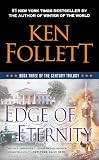
Editors Reads Verdict
Follett's vast trilogy reaches the modern world in a sprawling, eventful finale. The Cold War sweep is gripping, though the closer-to-present history and the enormous length make this the baggiest of the three.
What We Loved
- The Cold War canvas — civil rights, Berlin, Cuba, Vietnam — is rich and gripping
- Brings the three generations of families to a satisfying generational close
- Follett's momentum-driven storytelling remains as addictive as ever
Minor Drawbacks
- At over 1,100 pages it is the baggiest and most sprawling volume
- The recent history can feel more like a guided tour than the earlier books
Key Takeaways
- → The arc of the century bends through ordinary lives; the saga ends by showing how far its families have traveled
- → Freedom is contested on every front — civil rights, the Iron Curtain, the personal — and Follett ties them together
- → Generational saga is about inheritance: what each cohort passes to the next
| Author | Ken Follett |
|---|---|
| Publisher | Penguin |
| Pages | 1120 |
| Published | September 16, 2014 |
| Language | English |
| Genre | Historical Fiction, Saga, War |
| Difficulty | Beginner |
| Best For | Readers completing the Century Trilogy and fans of sweeping, multi-generational historical sagas. |
How Edge of Eternity Compares
Edge of Eternity at a glance against 3 similar books readers weigh alongside it.
| Book | Author | Rating | Best for |
|---|---|---|---|
| Edge of Eternity (this book) | Ken Follett | ★ 4.0 | Readers completing the Century Trilogy and fans of sweeping, multi-generational |
| Fall of Giants | Ken Follett | ★ 4.4 | Historical Fiction |
| The Pillars of the Earth | Ken Follett | ★ 4.5 | Historical fiction readers who love immersive, detailed epics and aren't |
| Winter of the World | Ken Follett | ★ 4.2 | Readers of sweeping historical sagas, fans of Fall of Giants continuing the |
Closing the Century
Edge of Eternity is the third and final volume of Ken Follett’s Century Trilogy, and it carries the saga from the building of the Berlin Wall through the great upheavals of the Cold War to the fall of the Iron Curtain. Across more than eleven hundred pages — the longest book in an already-vast trilogy — Follett follows the third generation of his five interrelated families through civil rights marches, the Cuban Missile Crisis, the assassinations of the 1960s, Vietnam, the rise of rock and roll, and the slow collapse of Soviet communism. It is a sprawling, eventful, and genuinely gripping finale, even if its enormous length and its proximity to the present day make it the baggiest and least disciplined of the three.
The structure remains what it has been throughout the trilogy. The grandchildren of the families introduced in Fall of Giants live their lives at the center of history’s great moments: an American family is woven into the civil rights movement and Washington politics; an East German family is trapped behind the Wall and dreams of escape; a Russian family navigates the machinery of the Soviet state; British and Welsh characters carry the saga’s political conscience into the era of protest and pop. Follett’s method — making the vast abstractions of the Cold War personal by placing his characters at the heart of every key event — is as effective here as ever, and the Cold War’s global drama gives him a rich, varied canvas to work with.
The Pleasures of the Sweep
For readers who have come this far, Edge of Eternity delivers the satisfactions the trilogy has always offered. Follett’s command of momentum is undimmed; the short, propulsive scenes and constant hooks make even this immense book read quickly. The Cold War material is inherently dramatic — the standoffs, the escapes, the assassinations, the slow thaw — and Follett mines it for all its tension. The civil rights storyline in particular gives the book some of its most powerful passages, dramatizing the movement’s courage and danger through characters the reader has come to care about.
There is also a real generational payoff in this final volume. The trilogy has, across three books, followed these families through the entire twentieth century, and Edge of Eternity is where the long arc completes. Watching the descendants of the characters from Fall of Giants reach the century’s end — seeing how far the families have traveled, what they have inherited and what they have passed on — gives the conclusion a genuine cumulative weight. The saga’s central idea, that history bends through ordinary lives and that each generation hands something to the next, lands most fully here, where the whole sweep can finally be seen.
The Weight of Length and Recency
The book’s flaws are mostly flaws of scale and proximity. At over eleven hundred pages, Edge of Eternity is the most sprawling volume of the trilogy, and it shows; there are stretches where the accumulation of historical events outpaces the dramatic need, where the book feels obligated to march through every milestone of the era whether or not the story requires it. The earlier volumes had the discipline of distance — the First and Second World Wars are settled history with clear shapes — but the Cold War decades, closer to the present and more diffuse, sometimes leave the narrative feeling more like a guided tour through recent history than a tightly plotted drama.
The familiar limitations of Follett’s approach persist as well. The characters remain vehicles for history as much as fully realized people; the prose is functional rather than fine; the moral framing is broad. None of this will surprise readers of the first two books, and those who enjoyed them will not be put off. But Edge of Eternity arguably stretches the method further than it comfortably goes, asking the interwoven-families structure to encompass more decades, more events, and more pages than the earlier volumes did.
A Fitting, If Overstuffed, Conclusion
For all that, Edge of Eternity is a worthy close to a remarkable popular-fiction achievement. The Century Trilogy as a whole is one of the most ambitious works of accessible historical fiction in recent decades — an attempt to dramatize an entire century through three generations of a handful of families — and this final volume brings that vast project home. It is overstuffed and overlong, and it lacks the dramatic concentration of Winter of the World, but it delivers the Cold War’s sweep with Follett’s reliable momentum and ties off the generational saga with satisfying finality.
Readers who have invested in the trilogy will want to see it through, and they will be rewarded with a conclusion that, whatever its excesses, honors the scope of what came before. It is popular history-as-melodrama at its most expansive — and, for the right reader, its most rewarding.
The Achievement of the Whole
Read on its own, Edge of Eternity is the weakest of the three Century novels; read as the close of the trilogy, it gains considerably in stature. What Follett attempted across these three books — to dramatize the entire twentieth century through five families and three generations, from the trenches of the First World War to the fall of the Berlin Wall — is genuinely audacious, the kind of sweeping popular-history project few novelists would dare. Edge of Eternity completes that arc, and in its final pages, as the descendants of the original characters reach the century’s end, the full scale of the design becomes visible. The trilogy is melodrama, broad and unsubtle, but it is melodrama in the service of a real ambition: to make the abstractions of modern history felt as lived experience. For the millions who have read all three books, the conclusion delivers the satisfaction of seeing an entire century, and an entire fictional family tree, brought home.
Final Verdict
Our rating: 4.0/5 — A sprawling, eventful Cold War finale that brings the Century Trilogy’s families to a satisfying generational close. The baggiest and longest of the three, occasionally more tour than drama, but gripping and immersive in Follett’s reliable way. A fitting end to an ambitious saga.
This completes the trilogy that began with Fall of Giants and continued in Winter of the World.
Frequently Asked Questions
What is "Edge of Eternity" about?
The conclusion of the Century Trilogy. Following the five families through the Cold War — civil rights, the Berlin Wall, the Cuban Missile Crisis, Vietnam, and the fall of the Iron Curtain — Ken Follett brings his century-spanning saga to a close.
Who should read "Edge of Eternity"?
Readers completing the Century Trilogy and fans of sweeping, multi-generational historical sagas.
What are the key takeaways from "Edge of Eternity"?
The arc of the century bends through ordinary lives; the saga ends by showing how far its families have traveled Freedom is contested on every front — civil rights, the Iron Curtain, the personal — and Follett ties them together Generational saga is about inheritance: what each cohort passes to the next
Is "Edge of Eternity" worth reading?
Follett's vast trilogy reaches the modern world in a sprawling, eventful finale. The Cold War sweep is gripping, though the closer-to-present history and the enormous length make this the baggiest of the three.
Ready to Read Edge of Eternity?
Check the current price on Amazon.
Check Price on Amazon (paid link)Prices and availability are subject to change. See Amazon for current price.
Review last updated: