Where to Start with William Shakespeare: A Reading Guide
Where to start with William Shakespeare — how to approach Hamlet, Macbeth, Romeo and Juliet, King Lear, and the rest of the canon. A complete reading guide for new and returning readers.
William Shakespeare (1564–1616) was an English playwright, poet, and actor who worked in London from approximately 1590 to 1613, writing 37 plays and 154 sonnets that have been in continuous performance and study for four centuries. He was a shareholder in the Globe Theatre and a member of the King’s Men theatrical company. His work covers every genre of his theatrical era — comedy, tragedy, history, romance — with a depth and range that has made him the central figure in the literary canon of every country where English is taught. He wrote Hamlet around 1600–1601, in the middle of his career; the great tragedies that followed — Othello, King Lear, Macbeth — were all written within the next five years.
Where to Start: Hamlet (c. 1601)
The essential Shakespeare — and the central work of English literature. Hamlet begins with a ghost on the battlements of Elsinore and becomes the most sustained exploration of consciousness in the Western canon. Prince Hamlet of Denmark returns from university to find his father dead and his mother married to his uncle Claudius, who has taken the throne. His father’s ghost reveals that Claudius murdered him and commands revenge. Hamlet spends the rest of the longest play in the canon doing almost everything except revenge.
What Shakespeare discovered in writing Hamlet was a new kind of literary interiority. Before Hamlet, the characters in English drama had thoughts; Hamlet is made of thought. His consciousness is the play’s subject — the tendency to observe his own reactions, to ask whether his emotions are genuine, to analyse the situation from multiple angles until action becomes impossible. “To be or not to be” is not a meditation on suicide in the narrow sense; it is a meditation on whether consciousness itself — the ability to foresee the consequences of action, to imagine what comes after — is compatible with action at all.
The play is also about language. Shakespeare gave Hamlet more language than any character in his work before or since — language that does not merely describe his situation but constitutes it. “The rest is silence,” his final words, are four words that carry the weight of everything he has been unable to do and everything he has refused to say.
Reading Order: The Great Tragedies
Macbeth (c. 1606) is the recommended second Shakespeare — his shortest and most concentrated tragedy, and the one with the clearest single argument: ambition is corruption is destruction. Macbeth is a brave soldier whose murder of his king, catalysed by the Witches’ prophecy and his wife’s ambition, sets in motion an irreversible moral dissolution. The play moves with terrifying speed, each scene tightening the trap until there is no exit. Lady Macbeth’s sleepwalking scene, the dagger in the air, Banquo’s ghost at the feast — these are among the most theatrically effective scenes in the canon. At approximately 2,000 lines, it is manageable as a first encounter with Shakespearean tragedy.
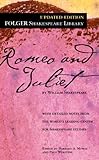
Romeo and Juliet (c. 1597) is Shakespeare’s most formally perfect tragedy and his most accessible. Two teenagers from feuding Verona families fall in love and die for it in five days. The structure is a machine for producing tragedy from the first line: the Prologue announces the outcome, and every subsequent choice the lovers make is both the only choice they could make and the choice that makes their death more certain. Juliet — practical, brave, and morally clear-eyed in ways Romeo is not — is Shakespeare’s finest young female character. The balcony scene is the most famous romantic encounter in literature; the tomb scene, when everything goes wrong in a series of avoidable near-misses, is among his most devastating.
King Lear (c. 1606) is Shakespeare’s greatest tragic achievement and his most demanding play — not recommended for a first encounter but essential for any serious engagement with the canon. An aging king divides his kingdom between his daughters based on their declarations of love, banishes his truthful youngest daughter, and descends into madness on the heath as his elder daughters strip him of everything. The play makes no accommodation for the reader’s or audience’s comfort: it ends in maximum carnage, without the redemptive death-in-order that Hamlet provides. It is the bleakest vision in English literature and, for many readers who return to it later, the deepest.
Othello (c. 1603) is the most psychologically tight of the tragedies — a play about jealousy and manipulation in which Iago engineers Othello’s destruction through the most economical means available: words. The play’s particular horror is the speed and completeness of Othello’s transformation from confidence to murderous certainty, and the ease with which Iago accomplishes it. If Hamlet is about the paralysis of consciousness, Othello is about its capture.
The Comedies
A Midsummer Night’s Dream is the recommended starting point for the comedies — a play about the arbitrariness of desire, the confusion of identity, and the relationship between art and enchantment, told through four intersecting plots in an Athenian wood. The mechanicals’ performance of Pyramus and Thisbe is the most extended piece of theatrical self-commentary in the plays. Much Ado About Nothing and Twelfth Night are the other standard comedy entries, both turning on mistaken identity and the comedy of people who love each other but cannot admit it.
The Histories
Henry V is the most accessible of the histories — a play about war, leadership, and the cost of conquest structured around the Battle of Agincourt. Henry IV Parts 1 and 2 provide the essential context: the formation of the prince who becomes the king, and the comic subplot of Falstaff, Shakespeare’s greatest comic creation.
For the full William Shakespeare bibliography, reviews, and biography, visit the William Shakespeare author page on Editors Reads.
Affiliate disclosure: Links to Amazon on this page are affiliate links. We earn a small commission at no extra cost to you.
Frequently Asked Questions
Where should I start with William Shakespeare?
Hamlet is where most readers should start — the most psychologically complex, most quoted, and most studied play in the English language. Prince Hamlet's paralysis in the face of required revenge generates the deepest questions in the canon about consciousness, action, and mortality, and the language is Shakespeare at his most concentrated. Read it in the Arden or Folger Shakespeare Library edition with facing notes, or watch the Kenneth Branagh (1996) or Laurence Olivier (1948) film versions first as orientation.
What order should I read Shakespeare's plays?
After Hamlet, the recommended order for the great tragedies is: Macbeth (his shortest and most intense — ambition and its costs), Romeo and Juliet (structurally perfect, the most accessible), King Lear (his greatest tragic achievement, not for first-time readers), and Othello (jealousy and manipulation at maximum compression). For the comedies: A Midsummer Night's Dream is the standard entry point, followed by Much Ado About Nothing and Twelfth Night. For the histories: Henry V is the most accessible, followed by Richard II and Henry IV Parts 1 and 2.
Is it better to read Shakespeare or watch him performed?
Both, ideally — but for a first encounter, watching a strong filmed performance before reading is often more useful. Shakespeare wrote for the stage, not the page, and hearing the language spoken by skilled actors makes its rhythms and meanings considerably more accessible than the page alone. For each major play there is at least one excellent film: Branagh's Hamlet (1996), McKellen's Macbeth (2024), Baz Luhrmann's Romeo + Juliet (1996), and the RSC's Lear with Ian Holm (1997) are all strong entry points. After a first viewing, the text rewards close reading.
What should I read alongside Shakespeare?
For context, James Shapiro's 1599: A Year in the Life of William Shakespeare is the most readable single-year biography of Shakespeare in the period when Hamlet was written. For depth, Harold Bloom's Shakespeare: The Invention of the Human is the major modern critical account of what Shakespeare did to the representation of consciousness in literature. For continuation, Christopher Marlowe's Doctor Faustus provides the immediate theatrical context from which Shakespeare developed, and Ben Jonson's Volpone shows what his contemporary peer did with similar materials.