Where to Start with Terry Pratchett: A Reading Guide
Where to start with Terry Pratchett — whether to begin with Guards! Guards!, Small Gods, Mort, or The Colour of Magic. A complete reading guide to Discworld.
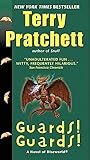
Terry Pratchett (1948–2015) is the most popular British novelist of the late twentieth century — the author of the Discworld series (41 novels set on a flat world carried through space on the backs of four elephants, standing on a giant turtle) and one of the most morally serious and formally sophisticated comic writers in the English language. His Discworld novels are simultaneously brilliant parodies of fantasy fiction and genuine investigations of death, justice, prejudice, religion, and humanity.
Where to Start
The Best Entry Point: Guards! Guards! (1989)
The most widely recommended starting point for adult readers — the novel that introduces Commander Sam Vimes, head of Ankh-Morpork’s Night Watch, who is one of Pratchett’s greatest and most developed characters. The plot (a dragon threatens Ankh-Morpork; the Night Watch must stop it) is the frame for Pratchett’s most fully developed comedy about institutions, power, and what ‘justice’ actually means in a city run by a Patrician who uses the various criminal guilds to maintain order. Immediately funny and immediately serious; the best entry to the City Watch sub-series.
The Standalone: Small Gods (1992)
The best standalone Discworld novel — and the most focused. The great god Om, reduced to a tortoise because his church has replaced genuine belief with institutional power, is found by Brutha, the only true believer in the Omian church. The novel is Pratchett’s most explicit meditation on religion and power, and his most concentrated philosophical argument. Completely self-contained; no prior knowledge of Discworld required; one of his very best.
The First Death Novel: Mort (1987)
The best entry to the Death sub-series — and the novel that introduces Death, one of Pratchett’s most beloved recurring characters. Mort becomes Death’s apprentice and begins doing the job in Death’s absence, but makes a catastrophic error by refusing to allow a young princess to die. The novel is simultaneously a comedy about death (Death himself, in Pratchett’s conception, is fascinated by humanity and finds it bewildering and wonderful) and a romance. More accessible than Guards! Guards!; lighter in tone; excellent for readers new to Discworld.
Reaper Man (1991)
The second Death novel and, for many readers, his finest. Death is unexpectedly given a human lifespan and must learn to live as a mortal in a small Discworld town, doing farm work and experiencing the things he has only previously overseen. Simultaneously, the dead are unable to die and begin accumulating in cities. The novel is Pratchett’s most directly emotional — his account of what a fully conscious awareness of mortality might make human life look like is both funny and genuinely moving.
Wyrd Sisters (1988)
The best entry to the Witches sub-series — a sustained riff on Shakespeare’s Macbeth and Hamlet, in which three Discworld witches (Granny Weatherwax, Nanny Ogg, and the theatrical Magrat Garlick) must navigate the politics of a kingdom where the rightful king has been murdered. Pratchett’s parody of Shakespeare is both very funny (for readers who know the plays) and completely accessible (for readers who don’t); the three witches are among his most fully developed recurring characters.
Monstrous Regiment (2003)
One of Pratchett’s most directly political novels — and the best standalone in his late-career work. Polly joins an army regiment in disguise to find her brother, and gradually discovers that many of her fellow soldiers have the same secret. The novel is Pratchett’s most direct engagement with gender, military culture, and the relationship between institutions and the people they claim to serve. More topical than the classic Discworld novels; requires no prior knowledge of the series.
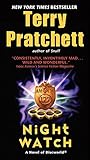
Night Watch (2002)
Many fans’ choice as Pratchett’s masterpiece — the novel in which Commander Vimes is sent back in time to the Ankh-Morpork of thirty years earlier and must train his younger self in how to be a good cop during a revolution. The novel is Pratchett at his most ambitious: simultaneously a time-travel thriller, a meditation on history and violence, and his most emotionally powerful account of what justice means when institutions fail. Requires familiarity with Vimes from the earlier City Watch novels; best read after Guards! Guards! and Men at Arms.
Why Guards! Guards! Is an Ideal First Book
For a reader new to Terry Pratchett, Guards! Guards! is an ideal first book because it is among the most widely recommended entry points to his beloved Discworld series and a perfect expression of his distinctive gifts, the brilliant comic wit, the sharp satire, and the deep humanity beneath the humor. Guards! Guards! introduces the City Watch of the great city of Ankh-Morpork and its weary, decent commander, Sam Vimes, in a hilarious, satirical, and warm-hearted comic fantasy. As an entry point it is ideal, for it begins one of the most beloved strands of Discworld and a perfect introduction to Pratchett’s comic genius. It welcomes the newcomer with its brilliant wit, its sharp satire, and its deep humanity, drawing the reader into his distinctive vision. It is among his most recommended starting points, so the new reader meets Pratchett at his most characteristic. For the newcomer, then, Guards! Guards! is an excellent starting point.
What to Expect as a New Reader
As a new reader, you can expect Guards! Guards! to be a hilarious, satirical, and warm-hearted comic fantasy. You can expect brilliant comic wit, for Pratchett is one of the funniest writers in the language, with sparkling jokes, footnotes, and comic invention. You can expect sharp satire, for Pratchett uses his fantasy world to satirize society, power, and human nature. You can expect a beloved setting and characters, for the novel introduces the City Watch of Ankh-Morpork and its weary, decent commander, Sam Vimes. You can expect deep humanity, for beneath the comedy lies real warmth, wisdom, and moral seriousness. You can expect an inventive, richly imagined comic world. You can expect a delightful, accessible, and rewarding read. Expect, in short, a hilarious, satirical, and warm-hearted comic fantasy, a perfect introduction to Pratchett’s gifts.
Going Deeper After Your First Book
Once Guards! Guards! has introduced you to Pratchett’s gifts, the natural next step is to continue the Discworld series, the vast, beloved comic fantasy universe to which it belongs. Discworld is made up of several strands following different characters, the City Watch, the witches, the wizards, Death, and others, each a delight, and many readers continue with the Watch books following Sam Vimes or branch into the other strands. The books can largely be read by strand or in publication order. Beyond Discworld, the reader can explore Pratchett’s other work, including his collaboration with Neil Gaiman and his books for younger readers. His characteristic strengths, the brilliant wit, the sharp satire, and the deep humanity, run throughout. Building your reading journey through Pratchett is a matter of continuing Discworld along its strands and exploring his wider work. The reader who begins here will find one of the funniest, wisest, and most beloved authors in modern fantasy, with a vast universe to explore.
Reading Terry Pratchett
Pratchett’s genius is the integration of comedy and moral seriousness — the ability to make a joke that is simultaneously very funny and genuinely illuminating about the human condition. His footnotes (a distinctive feature of the Discworld novels) are often the best jokes in the book and sometimes the most serious arguments; his comic timing is as precise as any stand-up comedian’s; his sympathy for every character — including the villains — is one of the qualities that makes his fiction so warm. Begin with Guards! Guards! or Small Gods; read as many as you like; there are forty-one.
Frequently Asked Questions
Where should I start with Terry Pratchett?
Guards! Guards! (1989) is the most widely recommended starting point for adult readers — the first of the City Watch sub-series, in which the Night Watch of Ankh-Morpork (a disreputable city guard) is joined by the young Carrot Ironfoundersson and must deal with a dragon. It introduces Commander Vimes, one of Pratchett's greatest characters, and demonstrates his mature method — the comic fantasy that is simultaneously a serious meditation on justice, law, and what it means to be human. Mort (1987) or Small Gods (1992) are the best alternatives for readers who want standalone Discworld novels.
Do I need to read Discworld in order?
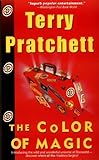
Discworld does not need to be read in order — each novel is substantially self-contained, and readers can begin with any of the sub-series (City Watch, Death, Witches, Rincewind, the Industrial Revolution novels) or with any recommended starting point. The interconnection between the novels is supplementary rather than necessary: characters reappear, the world develops, but each novel tells its own complete story. The Colour of Magic is the first Discworld novel but not the best starting point; readers who begin there are often put off by the somewhat different tone of the early novels. Begin with Guards! Guards! or Small Gods instead.
What is Small Gods about?
Small Gods (1992) is Pratchett's most focused single-novel statement about religion, power, and belief. The great god Om — who has been reduced to a small tortoise because almost no one truly believes in him any more (they believe in the Church rather than the god) — is found by Brutha, a simple novice who is the only true believer in the Omian church. The novel is Pratchett's most direct engagement with religion as a human institution and his most explicitly philosophical Discworld novel. Completely standalone; one of his very best.
Is Terry Pratchett just a funny fantasy writer?
Terry Pratchett is one of the most morally serious writers in British fiction of the past fifty years, whose comedy is the vehicle for sustained engagement with justice, prejudice, power, death, and what it means to be human. His Discworld novels use the fantasy setting to address questions that realistic fiction would approach more cautiously: what does it mean to be 'merely human' in a world full of more powerful beings? what is the relationship between law and justice? how do institutions corrupt the ideals they were created to embody? The comedy is real and is genuinely funny; the seriousness beneath it is equally real.