Where to Start with Ralph Ellison: A Reading Guide
Where to start with Ralph Ellison — whether to begin with Invisible Man, Shadow and Act, or Juneteenth. A complete reading guide to the great American novelist.
Ralph Ellison (1914–1994) was the American novelist who published one finished novel — Invisible Man (1952), which won the National Book Award and is regularly described as one of the greatest American novels of the twentieth century — and spent the next forty years attempting to complete a second novel he never finished. His influence on American literary culture extends far beyond his output: his essays collected in Shadow and Act (1964) and Going to the Territory (1986) are among the finest in American criticism, and his argument that African American culture — and especially jazz and blues — is the central achievement of American civilisation has shaped how writers and critics have thought about American culture ever since.
Where to Start: Invisible Man (1952)
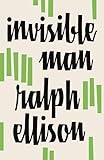
There is no other starting point. Invisible Man is one of the supreme achievements in American fiction — formally dazzling, politically precise, and comprehensive in its examination of what it means to be a Black man in mid-century America whose humanity is systematically unacknowledged. The unnamed narrator begins as an eager young man ready to succeed within the system; each encounter — with the white philanthropists who fund his college, with the Brotherhood that recruits him, with the various ideologies that want to use him — teaches him that no organisation is capable of seeing him as an individual rather than a symbol.
The novel’s form is as ambitious as its subject: it draws on the Black vernacular tradition, on jazz and blues, on the picaresque novel, on the modernist interior monologue, on political satire. The result is a book that operates simultaneously as a realistic narrative, an allegorical meditation on American race relations, and a formal tour de force. Among the most important American novels of any century.
Shadow and Act (1964)
Ellison’s essay collection — the essential companion to the novel. Written over twenty years, the essays cover three broad areas: African American music (the argument that jazz and blues are the central achievements of American culture), literary criticism (Ellison’s relationship to Hemingway, Faulkner, Dostoevsky, and the tradition), and autobiography (the Oklahoma of his childhood, his formation as a writer). The essays on music are among the finest in American critical writing; the autobiographical pieces are essential for understanding the intelligence behind the novel.
Best read after Invisible Man, to which it provides the most illuminating possible context.
Juneteenth (1999)
Ellison’s posthumous second novel — assembled after his death from forty years of manuscript — is flawed, incomplete, and magnificent in patches. The central situation is unlike anything else in American fiction: a white senator who was raised as a Black child by a Black preacher in the South is shot on the floor of the Senate and, lying near death, remembers his childhood with Reverend Hickman. The relationship between Hickman and the man he raised is among the most morally complex in American fiction. The prose, when it comes fully alive, matches Invisible Man in its power and formal invention.
Best understood as a magnificent fragment rather than a finished novel — extraordinary for devoted readers of Invisible Man, but not the place to begin.
Why Invisible Man Is the Essential First Book
For a reader new to Ralph Ellison, Invisible Man is the essential first book because it is his masterpiece, a landmark of American literature, and, as the work on which his reputation chiefly rests, the fullest expression of his distinctive gifts, the rich prose, the formal ambition, and the profound engagement with race, identity, and American life. Invisible Man follows an unnamed Black narrator’s journey through a hostile and bewildering America, from the South to Harlem, as he struggles to be seen and to understand himself, in a powerful, inventive, and deeply influential novel. As an entry point it is both natural and essential, for it is his defining work and the clearest window onto his vision. It welcomes the newcomer with its compelling narrator, its rich and inventive prose, and its profound themes, drawing the reader into one of the great American novels. It is his masterpiece, so the new reader encounters Ellison at his finest. For the newcomer, then, Invisible Man is the natural and essential starting point.
What to Expect as a New Reader
As a new reader, you can expect Invisible Man to be a powerful, inventive, and richly written novel. You can expect a compelling narrator, for the novel follows an unnamed Black narrator who feels himself invisible, unseen as a full human being by the society around him. You can expect a journey through America, for the novel follows him from the South to Harlem through a series of vivid, often surreal episodes. You can expect rich, inventive prose, for Ellison blends realism with symbolism, surrealism, and the rhythms of African American music and oratory. You can expect profound themes, for the novel explores race, identity, invisibility, and the search for selfhood in America. You can expect formal ambition and a powerful emotional and intellectual force. You should expect a substantial, demanding novel that rewards attention. Expect, in short, a powerful, inventive, and richly written novel, an essential introduction to Ellison’s gifts.
Going Deeper After Your First Book
Once Invisible Man has introduced you to Ellison’s gifts, the reader who wishes to go deeper can explore his other writing, recognizing that his towering reputation rests above all on his single, monumental novel. His essays, gathered in acclaimed collections, offer brilliant reflections on literature, music, race, and American culture, revealing the breadth of his intellect, while his unfinished second novel, published posthumously, offers a glimpse of the work he labored on for decades. Reading these after Invisible Man deepens your appreciation of Ellison’s distinctive gifts, the rich prose, the formal ambition, and the profound engagement with race, identity, and American life. His characteristic concerns run through his work. Building your reading journey through Ellison is a matter of following him from Invisible Man into his essays and his other writing. The reader who begins here will have encountered one of the great American novels and one of the most important writers in American literature.
Reading Ralph Ellison
Ellison is, uniquely among major American authors, a writer whose entire achievement rests almost entirely on a single book — but that book is one of the three or four most important American novels ever written. His insistence that Black American culture is not marginal to American culture but constitutive of it, that jazz and blues are not entertainment but the central expression of American experience, has reshaped how we understand American literature. Begin with Invisible Man; there is no other beginning.
Frequently Asked Questions
Where should I start with Ralph Ellison?
Invisible Man (1952) is the only real starting point — it is one of the supreme achievements in American literature, the novel for which Ellison won the National Book Award, and one of those books that changes permanently how you read American fiction. The unnamed narrator's journey from the South through Harlem and into an underground 'invisibility' is one of American literature's great picaresque narratives, told in a prose of extraordinary formal invention. There is nothing else quite like it. Shadow and Act, his essay collection, is the essential companion and the best second book.
What is Invisible Man about?
Invisible Man (1952) follows an unnamed Black man from his graduation speech at a Southern Black college through his encounters with various organisations — a Black college administration, white Northern philanthropists, the Communist-like Brotherhood — none of which are capable of seeing him as an individual rather than a symbol. The novel is structured as a series of disillusionments, each stripping away another layer of the narrator's belief that assimilation or political engagement can grant him real visibility. It ends with the narrator underground, writing — and with the question of what a man does when he accepts his invisibility still open.
What is Shadow and Act about?
Shadow and Act (1964) is Ellison's collection of essays on literature, music, and American identity — written over twenty years, covering jazz and blues, the influence of Hemingway and Faulkner and Dostoevsky, and the Oklahoma of his childhood. The essays on music are among the finest ever written on American jazz, arguing that African American musical culture is the central achievement of American civilisation. The literary essays situate Invisible Man within the great tradition of world literature and explain Ellison's aesthetic and intellectual position with a clarity that illuminates the novel retrospectively.
Why did Ralph Ellison only publish one novel?
Ellison spent forty years working on his second novel, which he never completed. A devastating fire in 1967 destroyed much of his manuscript; he continued working on the project for the rest of his life, but never arrived at a final form. After his death in 1994, his literary executor assembled a version published as Juneteenth (1999), later expanded as Three Days Before the Shooting (2010). Juneteenth contains extraordinary writing — the central relationship between the Black minister Reverend Hickman and the white senator he raised is among the most morally complex in American fiction — but is unmistakably incomplete. Invisible Man remains his singular, definitive achievement.