Where to Start with Olga Tokarczuk: A Reading Guide
Where to start with Olga Tokarczuk — whether to begin with Flights, Drive Your Plow Over the Bones of the Dead, or The Books of Jacob. A complete reading guide.
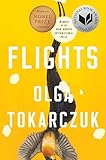
Olga Tokarczuk (born 1962) is the Polish novelist who received the Nobel Prize in Literature in 2019 — awarded belatedly for 2018, the year she also won the International Booker Prize for Flights. Her fiction is formally unconventional, philosophically serious, and animated by a deep concern with marginalized perspectives (women, animals, the stateless, the eccentric, the dead) and with the arbitrariness of the boundaries — national, conceptual, bodily — by which we organize the world. She is one of the most formally inventive serious novelists currently writing, and her translator Jennifer Croft has made the English versions of her work into independent literary achievements.
Where to Start: Flights (2007)
The essential Tokarczuk — and one of the most formally distinctive novels of the twenty-first century. Winner of the International Booker Prize in 2018, it is structured as a constellation of connected fragments: a man whose wife and child vanish during a Croatian island holiday; a woman transporting Chopin’s preserved heart across Europe; a seventeenth-century Dutch anatomist who preserves his amputated leg as an act of scientific devotion; and throughout, a narrator reflecting on movement, transit, and the human body as the one geography we all inhabit. The pieces are of varying length — some a paragraph, some thirty pages — and they repeat and develop without ever resolving into conventional plot.
The novel is Tokarczuk’s most complete statement of her vision: fragmentary, warm, interested in the strange and the marginal, and animated by the conviction that the world is more interesting than any single narrative can contain.
Drive Your Plow Over the Bones of the Dead (2009)
Tokarczuk’s most immediately gripping and most accessible novel — a literary thriller narrated by Janina Duszejko, a retired engineer in her sixties who lives alone in a remote Polish village, translates William Blake with a friend, casts astrological charts for her neighbours, and is possessed by a passionate concern for the welfare of animals. When the local hunting club’s members begin turning up dead, Janina suspects the animals they have hunted are exacting revenge, and she attempts to present this theory to a deeply sceptical police force.
The novel is simultaneously a murder mystery (expertly constructed), a portrait of an unforgettable narrator, and a serious argument about how humans have chosen to treat the natural world. Funny, dark, and deeply strange.
The Books of Jacob (2014)
Tokarczuk’s most ambitious and most demanding work — an 900-page historical novel about Jacob Frank (1726–1791), a Jewish mystic who claimed to be the reincarnation of the false messiah Sabbatai Zevi and led his followers through mass conversion first to Islam and then to Catholicism, overturning the communities of Poland, Turkey, and the Habsburg Empire in the process. Told from multiple perspectives across fifty years, in multiple languages, and designed to disorient the reader’s sense of direction (it can be read from back to front), it is the fullest statement of Tokarczuk’s historical and philosophical imagination.
Essential for dedicated readers; not a starting point. Best approached after Flights and Drive Your Plow.
Why Flights Is an Ideal First Book
For a reader new to Olga Tokarczuk, the Nobel Prize-winning Polish novelist, Flights is an ideal first book because it is among her most acclaimed works and a fine expression of her distinctive gifts, the fragmentary, inventive structure, the intellectual curiosity, and the profound meditation on travel, the body, and human restlessness. Flights is a novel made of interconnected fragments, stories, and reflections loosely woven around the themes of travel, movement, and the human body, in a form as inventive as its ideas. As an entry point it is ideal, for it is one of her best-known books and a perfect example of her inventive, intellectually rich, and distinctive fiction. It welcomes the newcomer with its fascinating fragments, its intellectual curiosity, and its inventive form, drawing the reader into her distinctive vision. It is among her major works and a fine representation of her gifts, so the new reader encounters Tokarczuk at her most characteristic. For the newcomer, then, Flights is an excellent starting point.
What to Expect as a New Reader
As a new reader, you can expect Flights to be an inventive, fragmentary, and intellectually rich novel. You can expect an unconventional structure, for the novel is made of many interconnected fragments, stories, and reflections rather than a single linear plot. You can expect themes of travel and movement, for the fragments are loosely woven around travel, restlessness, and the human body. You can expect intellectual curiosity, for Tokarczuk ranges widely across history, science, philosophy, and anecdote. You can expect inventive form, for the novel’s structure is as original as its ideas. You can expect beautiful, thoughtful prose and a meditative, exploratory mood. You can expect a novel that rewards an open, curious reader willing to follow its movements. You should expect a non-linear work that prizes reflection over plot. Expect, in short, an inventive, fragmentary, and intellectually rich novel, a fine introduction to Tokarczuk’s gifts.
Going Deeper After Your First Book
Once Flights has introduced you to Tokarczuk’s gifts, the reader who wishes to go deeper can explore her other novels, which continue her inventive structures, her intellectual curiosity, and her distinctive vision across very different kinds of story. Her acclaimed novel that blends a murder mystery with meditations on nature, animals, and ethics offers a more propulsive entry into her concerns, while her monumental historical epic and her other fiction reveal the range and ambition of her imagination. Reading these after Flights deepens your appreciation of Tokarczuk’s distinctive gifts, the inventive structure, the intellectual curiosity, and the profound, exploratory vision. Her characteristic qualities run through her work. Building your reading journey through Tokarczuk is a matter of following her fiction from Flights into her other novels. The reader who begins here and continues will encounter one of the most inventive and intellectually rich contemporary novelists, and a Nobel laureate.
Reading Olga Tokarczuk
Tokarczuk’s fiction is built on the conviction that the world resists single-perspective narratives — that any adequate account of reality must be fragmented, multiple, and willing to inhabit perspectives (the old woman’s, the animal’s, the dead man’s, the mystic’s) that conventional fiction marginalizes. Her prose, in Jennifer Croft’s translations, is warm and precise; her philosophical preoccupations (borders, bodies, movement, the margins of history) give her work a coherence that its formal fragmentation might seem to threaten. Begin with Flights for the most complete formal statement; begin with Drive Your Plow for the most immediately pleasurable. Approach The Books of Jacob when you are ready for the most demanding and the most complete.
Frequently Asked Questions
Where should I start with Olga Tokarczuk?
Flights (2007, translated 2017) is both the most widely accessible and the best starting point — a novel structured as a constellation of connected fragments about travel, the human body, and the nature of movement, which won the International Booker Prize in 2018. It is Tokarczuk's most formally distinctive work and the one that most completely represents her particular vision: fragmented, philosophical, warm toward human strangeness. Drive Your Plow Over the Bones of the Dead is the best alternative for readers who want a more conventionally plotted novel; The Books of Jacob for her most encyclopaedic and most historically grounded — but also her most demanding.
What is Flights about?
Flights (2007) is not a novel in the conventional sense but a constellation of pieces — fragments of narrative, philosophical meditations, anatomical history, travel writing, and character studies — unified by the theme of movement, transit, and the human body. Stories recur and develop: a man's wife and child disappear during a holiday on a small Croatian island; a woman carries a jar containing the heart of Frédéric Chopin from Paris to Warsaw; a Dutch anatomist prepares the body of his deceased friend for permanent display. The connecting tissue is the narrator's reflection on what it means to travel, to be always in motion, to refuse to be anchored. Winner of the International Booker Prize in 2018.
What is Drive Your Plow Over the Bones of the Dead about?
Drive Your Plow Over the Bones of the Dead (2009, translated 2018) is Tokarczuk's most accessible novel — a murder mystery set in a remote Polish village near the Czech border, narrated by Janina Duszejko, an elderly woman who lives alone, translates William Blake with a friend, casts horoscopes, and is deeply concerned with the welfare of animals. When villagers begin turning up dead — and the deaths seem connected to hunting — Janina suspects that the animals themselves are taking revenge. The novel is simultaneously a literary thriller, a meditation on animal rights, and a portrait of an eccentric, passionate, utterly distinctive narrator.
What is The Books of Jacob about?
The Books of Jacob (2014, translated 2021) is Tokarczuk's most ambitious and most demanding novel — an 900-page historical epic about Jacob Frank, the eighteenth-century Jewish mystic and false messiah who led his followers through mass conversion to Islam and then to Christianity, causing enormous theological and political upheaval across Poland, Turkey, and Austria. The novel is told from multiple perspectives across decades, moves between languages (Polish, Yiddish, Hebrew, German), and is designed to be read from back to front as well as front to back. For dedicated readers who want Tokarczuk's fullest and most encyclopaedic statement.


