Where to Start with Octavia Butler: A Reading Guide
Where to start with Octavia Butler — whether to begin with Kindred, Parable of the Sower, or Dawn. A complete reading guide to Butler's science fiction novels.
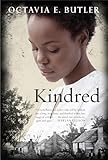
Octavia Butler (1947–2006) is the most significant Black science fiction writer of the twentieth century — a novelist whose work used the conventions of speculative fiction to explore race, power, gender, and survival with a directness and moral seriousness that transformed the genre. Her major novels — Kindred, the Parable series, the Xenogenesis trilogy — are among the most important works of American science fiction, and her influence on contemporary Afrofuturism and speculative fiction is incalculable. She was the first science fiction writer to receive the MacArthur Fellowship.
Where to Start
The Essential Entry Point: Kindred (1979)
The best first Butler — and one of the most important American novels of the twentieth century. Dana’s repeated, involuntary journeys back to the antebellum South to save her slaveholder ancestor are Butler’s vehicle for rendering the reality of slavery from the inside: not as historical narrative but as lived experience, with all the psychological complexity, survival calculation, and moral compromise that enslaved people actually faced. The novel refuses the comfort of distance; Dana’s modern consciousness in the antebellum world forces the reader to inhabit choices that feel simultaneously impossible and necessary.
The Dystopian Masterwork: Parable of the Sower (1993)
The best starting point for readers who want Butler’s speculative dystopia. Lauren Olamina’s journey through a disintegrating California — her hyperempathy (she feels others’ pain), her developing philosophy of Earthseed, and her extraordinary capacity for leadership — is Butler’s most complete account of how communities form and sustain themselves in the absence of larger social structures. Written in 1993, the novel’s portrait of American collapse — climate catastrophe, corporate towns, extreme inequality, the failure of government — has been described by many readers as the most accurate prediction of the twenty-first century in science fiction.
Parable of the Talents (1998)
The sequel to Parable of the Sower — and for many readers the richer novel. Set in the 2030s, the novel follows Lauren’s Earthseed community as it faces the rise of a Christian nationalist president who promises to ‘make America great again’ and whose followers attack and destroy the community. The novel is narrated partly by Lauren and partly by her daughter Asha Vere, who resents her mother’s dedication to Earthseed and eventually reconstructs the community’s history through Lauren’s journals. Butler’s most politically explicit novel and her most emotionally complex.
Dawn (Xenogenesis) (1987)
The first volume of the Xenogenesis trilogy — the most formally ambitious of Butler’s major works. Lilith Iyapo is one of the few human survivors of nuclear war, preserved by the alien Oankali who have reconstructed Earth. The Oankali want to merge with humans, trading DNA and reshaping both species; Lilith must choose between extinction and a transformation that will change what human beings are. The novel raises Butler’s most extreme questions about identity, autonomy, and survival — whether survival on terms that fundamentally alter you is still survival — and refuses to answer them comfortably. Best approached after Kindred.
Why Kindred Is the Ideal First Book
For a reader new to Octavia Butler, Kindred is the ideal first book because it is among her most acclaimed and accessible works and a powerful expression of her distinctive gifts, the bold use of speculative premises to confront real history, the emotional power, and the profound engagement with race, power, and survival. Kindred follows a Black woman in the 1970s who is repeatedly, involuntarily pulled back in time to the antebellum South to save a slaveholding ancestor, an experience that renders the reality of slavery with unforgettable force. As an entry point it is ideal, for it is one of her best-known novels and a perfect example of her gift for using speculative fiction to illuminate the deepest human and historical truths. It welcomes the newcomer with its gripping premise, its emotional power, and its profound themes, drawing the reader into her vision. It is among her most celebrated works and a fine representation of her gifts, so the new reader encounters Butler at her most powerful. For the newcomer, then, Kindred is the natural and ideal starting point.
What to Expect as a New Reader
As a new reader, you can expect Kindred to be a gripping, powerful, and profoundly affecting work of speculative fiction. You can expect a bold premise, for a Black woman in the 1970s is repeatedly, involuntarily pulled back in time to the antebellum South. You can expect an unflinching confrontation with history, for the time travel becomes a vehicle for rendering the brutal reality of slavery with immediacy and force. You can expect emotional power, for the novel’s stakes are intimate and harrowing. You can expect profound themes, for the book explores race, power, survival, complicity, and the long reach of history. You can expect accessible, propulsive storytelling that grips the reader. You should be prepared for harrowing material, including the violence of slavery, handled with seriousness. Expect, in short, a gripping, powerful, and profoundly affecting work of speculative fiction, an unforgettable introduction to Butler’s gifts.
Going Deeper After Your First Book
Once Kindred has introduced you to Butler’s gifts, the reader who wishes to go deeper can explore her other novels and stories, which continue her bold speculative premises, her emotional power, and her profound engagement with power, difference, and survival. Her acclaimed Parable novels offer a prescient, harrowing vision of a near-future America and a new faith, while her other series and novels explore alien contact, genetic and bodily transformation, and the dynamics of power and adaptation, always with her characteristic depth. Reading these after Kindred deepens your appreciation of Butler’s distinctive gifts, the bold use of speculative fiction to confront real human and historical truths, the emotional power, and the engagement with race, power, and survival. Her characteristic concerns run through her work. Building your reading journey through Butler is a matter of following her fiction from Kindred into her Parable novels and her other series. The reader who begins here and continues will encounter one of the most important and visionary writers in science fiction.
Reading Octavia Butler
Butler’s fiction consistently asks questions about power — who has it, how it is maintained, and what happens to those who don’t — and about survival: the compromises that people make to survive in systems that are designed to destroy them. Her science fiction elements are not decorative but essential: time travel allows her to render slavery from the inside; alien contact allows her to ask what ‘humanity’ actually means when it is confronted with something genuinely different. Her prose is plain and direct; her plots are constructed with care; her moral seriousness is absolute. She is one of the essential American novelists.
Frequently Asked Questions
Where should I start with Octavia Butler?
Kindred (1979) is the best starting point — a time-travel narrative in which a contemporary Black woman is repeatedly pulled back in time to antebellum Maryland to save her white slaveholder ancestor, and in which the experience of slavery is rendered with an immediacy and psychological complexity that historical fiction rarely achieves. It is Butler's most accessible novel, her most immediately gripping, and the one that most clearly establishes her central concerns: power, race, the body, and survival. Parable of the Sower is the best starting point for readers who want her dystopian work.
What is Kindred about?
Kindred (1979) follows Dana, a Black woman living in 1976 Los Angeles, who is repeatedly and involuntarily transported back in time to antebellum Maryland, where she is connected to Rufus Weylin, the white son of a plantation owner. Each time Rufus's life is in danger, Dana is pulled back; each time she is in danger of death herself, she is returned to the present. Rufus is Dana's ancestor — a man who will become a slaveholder and who will rape a Black woman to produce Dana's family line. The novel forces Dana (and the reader) to inhabit the reality of slavery from the inside, and to understand the survival calculations that enslaved people made. One of the most important American novels of the twentieth century.
What is Parable of the Sower about?
Parable of the Sower (1993) is set in a near-future United States of 2024-2027 — a society that has collapsed through climate change, corporate capture of government, and extreme inequality, in which the protagonist Lauren Olamina, a young Black woman with hyperempathy (she feels others' pain as her own), survives the destruction of her community and walks north through California with a growing group of followers, teaching her philosophy of Earthseed. Butler wrote the novel in 1993 and its portrait of a disintegrating America is now regularly described as prophetic. The best starting point for readers who want Butler's dystopian work.
Is Octavia Butler the most important Black science fiction writer?
Octavia Butler is widely considered the most important Black science fiction writer of the twentieth century and one of the most significant science fiction writers of any background. She was the first science fiction writer to win a MacArthur Fellowship (the 'genius grant'), and her work — which confronted questions of race, gender, power, and the body with a directness that was unusual in the genre — has had enormous influence on subsequent Afrofuturism and on speculative fiction broadly. Her central insight — that science fiction's capacity to make strange the familiar could be used to explore the actual lived experience of Black Americans under slavery and racism — is one of the most significant ideas in the genre's history.


