Where to Start with Mikhail Bulgakov: A Reading Guide
Where to start with Mikhail Bulgakov — whether to begin with The Master and Margarita, The Heart of a Dog, or The White Guard. A complete reading guide.
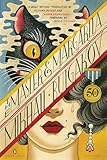
Mikhail Bulgakov (1891–1940) is one of the great figures of Russian literature — a writer who produced his masterwork in secret, knowing it could never be published in his lifetime, and whose best novels are simultaneously brilliant satires of Soviet society and profound explorations of good and evil, cowardice and courage, love and art. His work was suppressed throughout his life; The Master and Margarita, his greatest achievement, was first published twenty-seven years after his death.
Where to Start: The Master and Margarita (written 1930s, published 1967)
The essential Bulgakov — and one of the most extraordinary novels in any language. The Devil arrives in Soviet Moscow and proceeds to expose, with merciless comedy, every variety of Soviet hypocrisy, corruption, and moral cowardice. Simultaneously, in ancient Jerusalem, Pontius Pilate condemns the philosopher Yeshua Ha-Nozri in an act of cowardice he will regret for eternity. The two narratives are connected by the manuscript of the Master — a writer destroyed by Soviet literary bureaucracy — and by Margarita, who makes a bargain with the Devil to save her lover and his work.
The novel is a masterpiece of several distinct kinds simultaneously: savage satire, Gothic fantasy, love story, philosophical fiction. Its central argument — that cowardice is the greatest of all sins — is one of the most serious moral statements in twentieth-century fiction, delivered through one of its most extravagant comic inventions.
The Shorter Classic: The Heart of a Dog (1925)
The best Bulgakov for readers who want something shorter — a novella of under 150 pages that is among the funniest and most pointed political satires of the Soviet period. Professor Preobrazhensky, cultured and contemptuous of the proletarian revolution, transforms a stray dog into a man who embodies everything the professor most despises: aggressive, politically ambitious, and perfectly adapted to Soviet bureaucratic life. The contrast between the professor’s civilised world and the creature he has accidentally produced is the mechanism of a sustained argument about what the Bolshevik experiment was actually creating.
The White Guard (1925)
Bulgakov’s first novel — a semi-autobiographical account of a White Russian family in Kiev during the chaotic winter of 1918–19, when the city changed hands repeatedly between German-backed Hetmanate forces, Ukrainian nationalists, Bolsheviks, and the White Army. The Turbin family — educated, decent, devoted to each other and to a Russia that is disappearing — face the collapse of the world they grew up in. The novel is Bulgakov’s most personal and most directly emotional work: less satirical than his later fiction, more elegiac, and deeply sympathetic to those who found themselves on the losing side of history.
Why The Master and Margarita Is the Ideal First Book
For a reader new to Mikhail Bulgakov, The Master and Margarita is the ideal first book because it is his masterpiece, one of the great novels of the twentieth century, and the fullest expression of his distinctive genius, the combination of biting satire, brilliant fantasy, and profound depth. The Master and Margarita imagines the devil arriving in Soviet Moscow, unleashing chaos and exposing the absurdities and hypocrisies of Soviet society, while weaving in a love story and a retelling of the story of Pontius Pilate, all in a dazzling blend of satire, fantasy, and philosophy. As an entry point, it offers the fullest expression of Bulgakov’s gifts, the biting satire, the brilliant fantastical invention, and the profound engagement with art, power, good, and evil. It welcomes the newcomer with its dazzling invention, its satire, and its depth, drawing the reader into a brilliant and unforgettable novel. It is his masterpiece and the one that best represents his genius, so that the new reader encounters Bulgakov at his finest. For the newcomer, then, The Master and Margarita is the natural and ideal starting point.
What to Expect as a New Reader
As a new reader, you can expect The Master and Margarita to be a dazzling, satirical, and profound novel, blending biting satire, brilliant fantasy, and philosophical depth. You can expect biting satire, for the novel imagines the devil arriving in Soviet Moscow and, through the chaos he unleashes, exposes the absurdities, hypocrisies, and oppressions of Soviet society with savage wit. You can expect brilliant fantastical invention, for the novel is full of magic, the supernatural, and the bizarre, including the devil’s memorable retinue, rendered with exuberant imagination. You can expect profound depth, for beneath the satire and fantasy the novel engages the great questions of good and evil, art and power, truth and cowardice, and weaves in a love story and a haunting retelling of the story of Pontius Pilate. You can expect a rich, complex, and unforgettable novel that rewards engagement. Expect, in short, a dazzling, satirical, and profound novel blending satire, fantasy, and philosophy, a brilliant introduction to Bulgakov’s genius.
Going Deeper After Your First Book
Once The Master and Margarita has introduced you to Bulgakov’s genius, the reader who wishes to go deeper can explore his other fiction, which continues his combination of satire, fantasy, and depth, often informed by his experience of life and art under a repressive regime. His other works include satirical and fantastical novellas and stories that expose the absurdities of Soviet life, as well as fiction reflecting his concern with the fate of the artist and the suppression of truth under tyranny. Reading these after The Master and Margarita deepens your appreciation of Bulgakov’s distinctive gifts, the biting satire, the brilliant fantastical invention, and the profound engagement with art, power, good, and evil. His characteristic gifts run through his fiction, and the reader who has been dazzled by The Master and Margarita will find them across his work. Building your reading journey through Bulgakov’s work is a matter of following his satirical, fantastical fiction from his masterpiece into his other novellas and stories. The reader who begins with The Master and Margarita and continues through his work will encounter a master of satire and the fantastic.
Reading Mikhail Bulgakov
Bulgakov is the supreme satirist of the Soviet period — a writer whose comedies of Moscow life (bureaucrats trying to obtain apartments, literary functionaries jostling for position, citizens bewildered by revolutionary social arrangements) are among the funniest in Russian literature, and whose philosophical depths are among the most serious. The best approach is to begin with The Master and Margarita and then read The Heart of a Dog — the two complement each other perfectly, the grand philosophical satire and the tight comic novella, and together they constitute one of the most remarkable careers in twentieth-century fiction.
Frequently Asked Questions
Where should I start with Mikhail Bulgakov?
The Master and Margarita (written 1930s, published 1967) is both the essential starting point and Bulgakov's undisputed masterpiece — one of the greatest novels of the twentieth century, in which the Devil arrives in Soviet Moscow with his retinue and causes chaos, while a parallel narrative set in ancient Jerusalem follows Pontius Pilate and Yeshua Ha-Nozri. It is satirical, philosophical, romantic, and profoundly strange. The Heart of a Dog (1925) is the best starting point for readers who want something shorter — a darkly comic novella about a Moscow surgeon who transplants a human pituitary gland into a stray dog.
What is The Master and Margarita about?
The Master and Margarita follows two interwoven stories: in contemporary Soviet Moscow, Professor Woland (the Devil) arrives with his bizarre retinue — including a giant black cat and a sinister assistant — and systematically exposes the corruption, cowardice, and greed of Soviet society, while the mysterious Margarita sacrifices everything to save her lover the Master and his manuscript. In the parallel Jerusalem narrative, Pontius Pilate interrogates and condemns the philosopher Yeshua Ha-Nozri (Jesus). The novel is simultaneously a satire of Soviet bureaucracy, a love story, a work of theological fiction, and a meditation on cowardice as the greatest human sin.
What is The Heart of a Dog about?
The Heart of a Dog (1925) is a darkly comic novella in which Professor Philip Philipovich Preobrazhensky, a brilliant Moscow surgeon, conducts an experiment: transplanting a human pituitary gland and testes into Sharik, a stray dog. The dog gradually becomes human — coarse, aggressive, and politically ambitious — and joins the proletarian bureaucracy. The novella is Bulgakov's most direct satire of the Soviet experiment: the dog-turned-man is a caricature of the New Soviet Man that Bolshevik social engineering claimed to be producing. Suppressed in the Soviet Union until 1987.
Is The Master and Margarita difficult to read?
The Master and Margarita is not difficult in terms of prose — Bulgakov writes with clarity and wit, and the satirical Moscow sections are immediately accessible and very funny. The novel's complexity is structural and thematic: the two timelines (Moscow and Jerusalem) illuminate each other through parallels and contrasts that become clearer on rereading. The first reading is enormously pleasurable; subsequent readings reveal the layers of meaning. A good translation is essential — the Pevear and Volokhonsky translation is widely recommended, as is Michael Glenny's earlier version.


