Where to Start with Madeleine L'Engle: A Reading Guide
Where to start with Madeleine L'Engle — whether to begin with A Wrinkle in Time, A Wind in the Door, or A Swiftly Tilting Planet. A complete guide to the Time Quintet.
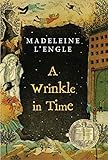
Madeleine L’Engle (1918–2007) was the American novelist whose A Wrinkle in Time (1962) — rejected by twenty-six publishers before finding a home — won the Newbery Medal, became one of the most widely read children’s science fiction novels in the English language, and launched a five-book series (the Time Quintet) that combined quantum physics, Christian theology, and interstellar adventure in a way that no children’s fiction before or since has matched. L’Engle wrote prolifically across fiction, memoir, and spiritual reflection; the Time Quintet is her essential work and the books for which she is remembered. She believed that children’s fiction could and should grapple with the largest questions — about good and evil, love and sacrifice, the nature of the universe — without simplifying them.
Where to Start: A Wrinkle in Time (1962)
The essential L’Engle — and one of the most important science fiction novels ever written for young readers. Meg Murry is awkward, angry, and convinced she is stupid. Her younger brother Charles Wallace is a prodigy so advanced that his school thinks he is intellectually impaired. Their father, a physicist, has been missing for over a year.
Three extraordinary beings — Mrs Whatsit, Mrs Who, and Mrs Which — explain to Meg, Charles Wallace, and their friend Calvin that they must travel to rescue Meg’s father. The vehicle is the tesseract: a wrinkle in time that allows instantaneous travel across the universe. Their destination is Camazotz, a planet governed by IT — a disembodied brain that has achieved absolute control over its population through the eradication of individuality.
The novel combines astrophysics (the fifth dimension, time travel, the geometry of space) with Christian theology (Mrs Whatsit has the shape of a fallen star; the battle against IT is explicitly a battle between light and darkness) in a way that takes both seriously. L’Engle’s central argument — that love is the force that resists totalitarian control, that individuality is sacred, that knowing someone truly is an act of spiritual resistance — is made not through abstraction but through specific, vivid action.
Twenty-six publishers rejected the novel, finding it too long, too complex, and too strange for children. It won the Newbery Medal and has never been out of print.
A Wind in the Door (1973)
The direct sequel — Charles Wallace dying from a cellular illness, Meg travelling inside his body. More intimate and more emotionally intense than A Wrinkle in Time; L’Engle’s most direct argument about what it means to truly know and be known.
A Swiftly Tilting Planet (1978)
Charles Wallace through time, preventing nuclear war. L’Engle’s most ambitious entry in the series; won the National Book Award.
Many Waters (1986)
A divergent entry — Meg’s twin brothers, Sandy and Dennys, are sent back to the time of Noah. More biblical in focus and lighter in tone; a strong standalone within the series.
Why A Wrinkle in Time Is the Ideal First Book
For a reader new to Madeleine L’Engle, A Wrinkle in Time is the ideal first book because it is her most beloved and celebrated novel, the opening of her Time Quintet, and the fullest expression of her distinctive gifts, the blending of science fiction, fantasy, and spiritual and moral depth. A Wrinkle in Time follows a girl named Meg who, with her brother and a friend, travels across space and time to rescue her missing father, confronting a great cosmic evil. As an entry point it is the natural place to begin, for it is her masterpiece and the start of her finest sequence, a book that has enchanted and inspired readers for generations. It welcomes the newcomer with its imaginative adventure, its memorable heroine, and its depth of theme, drawing the reader into a story that combines wonder with serious ideas about love, courage, and good and evil. It is her most famous work and the start of the Time Quintet, so the new reader begins where her vision opens. For the newcomer, then, A Wrinkle in Time is the natural and ideal starting point.
What to Expect as a New Reader
As a new reader, you can expect A Wrinkle in Time to be an imaginative, heartfelt, and thoughtful blend of science fiction and fantasy. You can expect a cosmic adventure, for the novel sends its young heroes traveling across space and time to rescue a missing father and confront a great cosmic evil. You can expect a memorable heroine, for Meg is flawed, brave, and deeply relatable, growing into her own strength over the course of the story. You can expect a blend of genres, for L’Engle mixes science-fictional ideas with fantasy, wonder, and a strong spiritual and moral dimension. You can expect serious themes, for the novel explores love, courage, individuality, and the battle between good and evil. You can expect warmth, imagination, and emotional depth. Expect, in short, an imaginative, heartfelt, and thoughtful blend of science fiction and fantasy, a captivating introduction to L’Engle’s gifts.
Going Deeper After Your First Book
Once A Wrinkle in Time has drawn you into its world, the natural next step is to continue the Time Quintet, following Meg, her brother, and their family through the subsequent novels as the series develops its blend of science fiction, fantasy, and spiritual depth. The quintet is best read in order, for its characters, themes, and imagined universe build across the books. Beyond it, the reader who has loved L’Engle’s gifts can explore her many other novels and writings, including her interconnected works following the same families and her reflections on faith, art, and creativity. Her characteristic qualities, the imaginative blending of genres, the moral and spiritual depth, and the warmth, run through her work, and the reader captivated by A Wrinkle in Time will find them across it. Building your reading journey through L’Engle is a matter of continuing the Time Quintet and exploring her wider work. The reader who begins with A Wrinkle in Time will find one of the most imaginative and beloved storytellers in children’s and young-adult literature.
Reading Madeleine L’Engle
Begin with A Wrinkle in Time and read the Time Quintet in order — each book requires the previous one. The first three (through A Swiftly Tilting Planet) are the most widely read and the most essential.
For the full Madeleine L’Engle bibliography, reviews, and biography, visit the Madeleine L’Engle author page on Editors Reads.
Affiliate disclosure: Links to Amazon on this page are affiliate links. We earn a small commission at no extra cost to you.
Frequently Asked Questions
Where should I start with Madeleine L'Engle?
A Wrinkle in Time (1962) is the essential starting point — L'Engle's novel about Meg Murry, her genius brother Charles Wallace, and their friend Calvin travelling through a tesseract to rescue Meg's missing father from a dark intelligence controlling the universe. The novel was rejected by twenty-six publishers before finding a home; it won the Newbery Medal, became one of the most widely read children's science fiction novels ever written, and launched the Time Quintet. Begin here.
What is the Time Quintet?
The Time Quintet (also called the Time Trilogy or Wrinkle in Time Quintet) consists of five connected novels: A Wrinkle in Time, A Wind in the Door, A Swiftly Tilting Planet, Many Waters, and An Acceptable Time. The first three are the most widely read and follow Meg, Charles Wallace, and Calvin through interstellar and temporal adventures in which the battle between light and darkness is always personal as well as cosmic. The series is best read in order; each book requires the previous one.
What is A Wind in the Door about?
A Wind in the Door (1973) is the second Time Quintet novel, in which Charles Wallace is dying from a cellular illness and Meg must travel inside his body to fight the enemy at the mitochondrial level. The novel is smaller in scale than A Wrinkle in Time but more emotionally intense; the central message about the importance of knowing another person by their true name is L'Engle's deepest spiritual argument in the series.
What is A Swiftly Tilting Planet about?
A Swiftly Tilting Planet (1978) is the third novel — Charles Wallace travelling through time, inhabiting different people across centuries, to prevent a nuclear war in the present. L'Engle's most historically ambitious entry in the series; each temporal sequence is a complete mini-narrative. Won the National Book Award.