Where to Start with Jeff VanderMeer: A Reading Guide
Where to start with Jeff VanderMeer — whether to begin with Annihilation, Authority, or Acceptance. A complete reading guide to the Southern Reach trilogy.
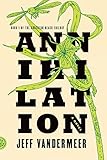
Jeff VanderMeer (born 1968) is the American author of weird fiction and ecological horror whose Southern Reach trilogy — Annihilation, Authority, and Acceptance (all 2014) — won the Nebula Award for Best Novel (for Annihilation) and established him as the leading voice in literary weird fiction of the twenty-first century. VanderMeer’s work explores the intersection of ecology, transformation, and the unknown; his fiction is characterised by a refusal to explain its central mysteries and by prose that achieves genuine uncanniness without resorting to conventional horror devices. Annihilation was adapted into a 2018 film by Alex Garland; the film captures the novel’s atmosphere while departing significantly from its plot.
Where to Start: Annihilation (2014)
The essential VanderMeer — and one of the most unsettling novels in contemporary science fiction. The biologist — who never gives her name — is part of the twelfth expedition into Area X, a section of the southern coastline that has been sealed off from the rest of the world for decades. Previous expeditions have returned changed, failed to return, or returned and shortly died. The biologist and her three colleagues (the anthropologist, the surveyor, the linguist) enter without maps or technology, under hypnotic compulsion they are barely aware of.
What they find in Area X resists description. There is a lighthouse. There is a tower that descends into the earth, which is not on their maps. The tower’s interior walls are covered in biological material that is simultaneously fungal and textual. Something in the brightness of the light inside the tower changes people. The biologist is changed in ways she doesn’t fully understand, and her journal — which is the novel — may or may not be reliable.
VanderMeer creates genuine dread through restraint: the biologist observes everything with scientific precision and understands nothing. The natural world of Area X (the birds, the insects, the vegetation) is described with the same clinical attention as the inexplicable. The horror is ecological and epistemological — the sense that the world does not operate on human terms, and that our methods of understanding are inadequate to what is here.
Authority (2014)
The second book — a complete formal departure from Annihilation. Control, the new director of the Southern Reach, arrives to find the agency as mysterious and as dysfunctional as Area X itself. The perspective shifts from inside Area X to the organisation trying to understand it, and the institutional horror of the Southern Reach proves as unsettling as the geographical horror of Area X. The biologist is present as a returned expedition member; what she has become is central to the novel’s dread.
Acceptance (2014)
The trilogy’s conclusion — multiple perspectives, including within Area X, across different time periods, assembling a partial picture of how Area X came to be and what it is doing. VanderMeer provides enough for the reader to construct a theory without providing a definitive explanation; the ambiguity is deliberate and correct. The only satisfying conclusion for a trilogy that began with irreducible mystery.
Borne (2017)
VanderMeer’s standalone ecological science fiction novel — set in a ruined city dominated by a gigantic flying bear called Mord, following a scavenger named Rachel who finds a biotech creature she names Borne and raises as a kind of child. A different approach to the same themes as the Southern Reach trilogy: ecology, transformation, and what it means to care for something you cannot fully understand.
Why Annihilation Is the Ideal First Book
For a reader new to Jeff VanderMeer, Annihilation is the ideal first book because it is his breakout novel, the opening of his acclaimed Southern Reach trilogy, and the fullest expression of his distinctive gifts, the eerie atmosphere, the strange and unsettling imagination, and the haunting blend of science fiction, horror, and the uncanny. Annihilation follows an expedition into a mysterious, transformed wilderness known as Area X, where nature has gone strange and the rules of reality seem to dissolve, in a haunting and atmospheric novel. As an entry point it is the natural place to begin, for it launches his most celebrated work and a perfect introduction to his weird, atmospheric fiction. It welcomes the newcomer with its eerie atmosphere, its strange imagination, and its haunting mystery, drawing the reader into one of the most acclaimed works of recent weird fiction. It begins his finest sequence, so the new reader meets his world where it begins. For the newcomer, then, Annihilation is the natural and ideal starting point.
What to Expect as a New Reader
As a new reader, you can expect Annihilation to be an eerie, atmospheric, and unsettling work of weird fiction. You can expect a haunting premise, for the novel follows an expedition into a mysterious, transformed wilderness known as Area X. You can expect an eerie atmosphere, for VanderMeer creates a pervasive sense of dread, strangeness, and the uncanny. You can expect a strange imagination, for nature in Area X has gone strange, and the rules of reality seem to dissolve. You can expect a blend of science fiction, horror, and the weird, refusing easy explanation. You can expect a haunting, ambiguous mystery that resists tidy answers. You can expect spare, atmospheric, and immersive prose. You should expect strangeness and unease rather than conventional resolution. Expect, in short, an eerie, atmospheric, and unsettling work of weird fiction, a haunting introduction to VanderMeer’s gifts.
Going Deeper After Your First Book
Once Annihilation has drawn you into Area X, the natural next step is to continue the Southern Reach trilogy, following the mystery of Area X through the subsequent books as the strangeness deepens and the larger picture emerges, though never into easy explanation. The trilogy is best read in order, for it builds its haunting mystery across its volumes. Beyond it, the reader who has been gripped by VanderMeer’s gifts can explore his other weird and inventive fiction, including his other novels of strange, transformed worlds and his celebrated, genre-defining work of the new weird. His characteristic strengths, the eerie atmosphere, the strange imagination, and the blend of science fiction, horror, and the uncanny, run throughout. The reader unsettled and intrigued by Annihilation will find more of its strangeness across his work. Building your reading journey through VanderMeer is a matter of completing the Southern Reach trilogy and exploring his wider weird fiction. The reader who begins here will find one of the most distinctive voices in contemporary weird fiction to follow.
Reading Jeff VanderMeer
Begin with Annihilation — read it in a single sitting if possible, as the accumulation of unease is most effective without interruption. Read Authority and Acceptance in order; the trilogy requires the full sequence to be fully experienced. Read Borne as a standalone complement after the trilogy.
Frequently Asked Questions
Where should I start with Jeff VanderMeer?
Annihilation (2014) is the only starting point — the first book in the Southern Reach trilogy, following a four-woman expedition into Area X, a mysterious region where previous expeditions have returned changed, failed to return, or returned and died. Annihilation won the Nebula Award for Best Novel and is among the most unsettling and most formally inventive science fiction novels of the past decade. The narrator, who identifies herself only as 'the biologist', is a masterwork of unreliable first-person narration. The novel is short (less than 200 pages) and can be read in a single sitting.
What is Area X?
Area X is a mysterious zone that has been sealed off from the rest of the world, where the rules of normal reality no longer apply. The Southern Reach, a secret government agency, has been sending expeditions into Area X for decades; they have returned with evidence of things that cannot be explained by any known science. The nature of Area X — what it is, what it wants, what it does to those who enter — is the central mystery of the trilogy. VanderMeer deliberately does not provide clean answers; Area X is best understood as a zone of ecological horror and psychological transformation rather than a puzzle with a solution.
What is the reading order for the Southern Reach trilogy?
The Southern Reach trilogy should be read in order: Annihilation (2014), Authority (2014), Acceptance (2014). All three were published in the same year. Each book takes a radically different perspective and a different narrative approach: Annihilation is the biologist's first-person journal inside Area X; Authority follows the new director of the Southern Reach as he tries to understand the agency and the returned expedition members; Acceptance alternates between multiple perspectives, including within Area X. The three books form a single work that can only be understood in sequence.
Is VanderMeer's writing difficult or demanding?
VanderMeer writes in the tradition of weird fiction — a genre characterised by the presence of forces that exceed human comprehension, described in language that deliberately refuses the clarity of conventional horror. Annihilation is deliberately disorienting: the narrator withholds her name and much contextual information; Area X resists description in normal terms; events are reported with a clinical precision that makes them more rather than less unsettling. Readers who prefer fiction that explains itself will find VanderMeer difficult; those who appreciate fiction that creates genuine mystery and unease without resolution will find his work among the most compelling in contemporary science fiction.