Where to Start with J.D. Salinger: A Reading Guide
Where to start with J.D. Salinger — whether to begin with The Catcher in the Rye, Franny and Zooey, or Nine Stories. A complete reading guide.
J.D. Salinger (1919–2010) was the American novelist and short story writer whose The Catcher in the Rye (1951) became one of the most widely read and controversial novels in American literary history — assigned in high schools and banned from them, beloved and argued over by generations of readers who either recognised themselves completely in Holden Caulfield or found his self-pity exhausting. Salinger published prolifically in the late 1940s and early 1950s, largely in The New Yorker, and then famously retreated into a reclusive New Hampshire life, publishing his last work in 1965 and spending the remaining forty-five years of his life refusing interviews, declining adaptations, and — as posthumous revelations have confirmed — continuing to write. He is one of the most significant American writers of the twentieth century who also wrote less than almost any comparable figure in the canon.
Where to Start: The Catcher in the Rye (1951)
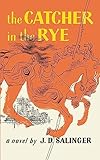
The essential Salinger — and one of the most influential coming-of-age novels in the English language. Holden Caulfield has just been expelled from Pencey Prep. It is December, a few days before Christmas, and instead of going home to face his parents he wanders around New York City for two days, calling people he doesn’t quite want to see, visiting a prostitute he doesn’t want to sleep with, and spending most of his narration explaining why almost everything he encounters is phony.
Holden’s voice is one of the most distinctive in American fiction: sardonic, digressive, self-interrupting, full of qualifications and repetitions, and capable of sudden, devastating honesty. He is also profoundly unreliable — his contempt for phoniness is paired with his own continuous performance; his grief for his dead brother Allie underlies everything he says without being fully articulated; his love for his sister Phoebe and his fantasy of being a catcher in the rye — saving children from falling off a cliff they can’t see — is the novel’s most direct statement of what he actually wants.
Published in 1951, the novel was immediately popular and immediately controversial. It has never been out of print.
Franny and Zooey (1961)
Salinger’s most spiritual work — the Glass siblings grappling with the question of whether genuine seeking is possible in a phony world. Franny’s breakdown and Zooey’s response; Salinger’s most emotionally complete work after The Catcher in the Rye.
Nine Stories (1953)
Salinger’s short story collection — including ‘For Esmé — with Love and Squalor’ and ‘A Perfect Day for Bananafish.’ Some of the finest American short stories of the twentieth century; essential for any reader who wants the full range of his work.
Raise High the Roof Beam, Carpenters (1963)
Two long stories about the Glass family — ‘Raise High the Roof Beam, Carpenters’ and ‘Seymour: An Introduction.’ Salinger’s most formally experimental work; for devoted readers who want to complete the Glass family cycle.
Why The Catcher in the Rye Is the Ideal First Book
For a reader new to J.D. Salinger, The Catcher in the Rye is the ideal first book because it is his most famous and influential novel and the fullest expression of his distinctive gifts, the unforgettable voice, the emotional authenticity, and the searching portrait of adolescent alienation. The Catcher in the Rye follows Holden Caulfield over a few disillusioned days in New York after he is expelled from school, in a novel narrated in one of the most distinctive voices in American fiction. As an entry point it is ideal, for it is his defining work and a perfect example of his voice-driven, emotionally resonant storytelling. It welcomes the newcomer with its unforgettable narrator, its emotional honesty, and its cultural resonance, drawing the reader into one of the defining novels of adolescence and alienation. It is his most celebrated work and the one that best represents his gifts, so the new reader encounters Salinger at his most characteristic. For the newcomer, then, The Catcher in the Rye is the natural and ideal starting point.
What to Expect as a New Reader
As a new reader, you can expect The Catcher in the Rye to be a voice-driven, emotionally authentic, and searching novel of adolescence. You can expect an unforgettable narrator, for Holden Caulfield’s distinctive, colloquial, disillusioned voice carries the entire novel and has influenced generations of writers. You can expect a portrait of alienation, for the novel captures teenage disaffection, loneliness, and the sense of a world full of phoniness. You can expect emotional authenticity, for beneath Holden’s cynicism lies real vulnerability, grief, and longing. You can expect a loose, episodic structure, following Holden over a few aimless days in New York. You can expect themes of innocence, loss, and the difficulty of growing up. You can expect a short, accessible, and resonant novel that has spoken to many young readers. Expect, in short, a voice-driven, emotionally authentic, and searching novel of adolescence, a defining introduction to Salinger’s gifts.
Going Deeper After Your First Book
Once The Catcher in the Rye has introduced you to Salinger’s gifts, the reader who wishes to go deeper can explore his other published work, which is small in volume but much admired, centered on the brilliant, troubled Glass family. His collection of stories includes some of his finest and most famous short fiction, while his other books follow the Glass siblings in stories of spiritual searching, family, and disillusionment, marked by the same distinctive voice and emotional depth. Reading these after The Catcher in the Rye deepens your appreciation of Salinger’s distinctive gifts, the unforgettable voices, the emotional authenticity, and the searching engagement with alienation and the spirit. His characteristic qualities run through his small body of work. Building your reading journey through Salinger is a matter of following his fiction from The Catcher in the Rye into his stories and the Glass family books. The reader who begins here and continues will encounter one of the most distinctive and influential voices in American fiction.
Reading J.D. Salinger
Begin with The Catcher in the Rye — it stands alone and is the essential Salinger. Read Franny and Zooey for the Glass family’s emotional and spiritual centre. Nine Stories can be read at any point; it contains some of his finest work. All four books together represent a small but extraordinarily concentrated body of fiction.
J.D. Salinger Books in Order →
For the full J.D. Salinger bibliography, reviews, and biography, visit the J.D. Salinger author page on Editors Reads.
Affiliate disclosure: Links to Amazon on this page are affiliate links. We earn a small commission at no extra cost to you.
Frequently Asked Questions
Where should I start with J.D. Salinger?
The Catcher in the Rye (1951) is the essential starting point — Salinger's novel narrated by Holden Caulfield, a sixteen-year-old recently expelled from prep school, wandering New York City over two days and nights while trying to articulate what it is about the adult world that strikes him as unbearably phony. The novel has been one of the most widely read and argued-about books in the American literary canon since its publication; its voice — sardonic, grieving, self-deceiving, genuinely funny — has influenced American fiction and the YA tradition it helped invent.
What is Franny and Zooey about?
Franny and Zooey (1961) consists of a short story and a novella, both originally published in The New Yorker. Franny Glass is suffering what might be a breakdown at a college football weekend, clutching a book about the Jesus Prayer and unable to explain why everything feels hollow. The subsequent novella is her brother Zooey's attempt, over a long afternoon in their New York apartment, to reach her. Salinger's most explicitly spiritual work, concerned with whether religious seeking is genuine or a form of the very phonyness it claims to reject.
What are Nine Stories about?
Nine Stories (1953) is Salinger's short story collection — including 'A Perfect Day for Bananafish,' 'For Esmé — with Love and Squalor,' and 'Uncle Wiggily in Connecticut.' The stories introduce several characters who will appear in the Glass family novellas; they are some of the finest American short stories of the twentieth century, and 'For Esmé' is considered one of the best stories about the aftermath of war in the language.
Is there an order to read Salinger's books?
The Catcher in the Rye stands alone and can be read at any time. For the Glass family works — Nine Stories (which introduces Seymour Glass), Franny and Zooey, and Raise High the Roof Beam, Carpenters and Seymour: An Introduction — reading in publication order gives the richest experience, as Salinger's investment in the Glass family deepens and the works become more explicitly interconnected. Most readers encounter The Catcher in the Rye first and then the Glass family works in any order.