Editors Reads
Literary FictionClassic

J.D. Salinger

American · b. 1919

4 books reviewed Avg rating 4.3 / 5Top rating 4.4 / 5

American novelist whose The Catcher in the Rye became one of the most widely read and banned novels in twentieth-century American literature, defining adolescent alienation.

J.D. Salinger published The Catcher in the Rye in 1951 and spent much of the rest of his long life retreating from the fame it generated. The novel follows Holden Caulfield, a sixteen-year-old recently expelled from prep school, over two days in New York City — a brief window of suspension between adolescence and adulthood, between performance and authenticity, between connection and isolation. Holden’s voice — sardonic, hypersensitive, compulsively observant, desperately lonely — was unlike anything in American fiction and became one of the most imitated narrative voices of the twentieth century.

The novel’s power comes from Salinger’s refusal to resolve Holden’s contradictions. Holden hates “phoniness” while performing constantly; he longs for connection while pushing people away; he mourns the loss of innocence while understanding that his own innocence is already compromised. Salinger holds all of this without judgment and with tremendous technical control. The first-person voice, colloquial and urgent, was a deliberate choice that influenced writers from John Updike to Kurt Vonnegut.

The honest assessment is that The Catcher in the Rye is a novel many readers experience powerfully at a particular age and reassess differently later. Some find Holden tiresome on second reading; others find the novel deepens. What doesn’t diminish is the technical achievement — and the fact that a seventy-year-old novel about a teenager still lands for readers encountering it for the first time says something significant about what Salinger understood.

4 Books Reviewed

Nine Stories book cover

Nine Stories

by J.D. Salinger

4.4

Nine stories including 'A Perfect Day for Bananafish,' 'For Esmé — with Love and Squalor,' and 'The Laughing Man.' Salinger's story collection is the best American short fiction of the postwar period — each story structured as an epiphany that withholds its epiphanic content, leaving the reader in the resonant space of what is not quite said.

Check Price on Amazon (paid link)
Franny and Zooey book cover

Franny and Zooey

by J.D. Salinger

4.3

Two stories: 'Franny,' in which a young woman has a breakdown at a Yale football weekend while clutching a book about the Jesus Prayer, and 'Zooey,' in which her brother attempts to help her recover. The Glass family — seven exceptionally intelligent siblings raised on comparative religion — are Salinger's sustained meditation on the problem of being too smart for the ordinary world.

Check Price on Amazon (paid link)
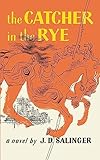
The Catcher in the Rye book cover
Bestseller

The Catcher in the Rye

by J.D. Salinger

4.3

Holden Caulfield, expelled from his fourth prep school, wanders New York for three days before a breakdown — narrating his alienation with an intensity that defined adolescent literary voice.

Check Price on Amazon (paid link)
Raise High the Roof Beam, Carpenters and Seymour: An Introduction book cover
4.1

Two stories about Seymour Glass: 'Raise High the Roof Beam, Carpenters,' narrated by Buddy on Seymour's wedding day when he fails to appear, and 'Seymour: An Introduction,' in which Buddy tries and fails to describe his brother. The second story is a meditation on the impossibility of capturing a person in language, and a portrait of obsessive love as a form of artistic blockage.

Check Price on Amazon (paid link)

Reading Guides & Lists

Disclosure: Amazon links on this page are affiliate links. If you purchase through them we earn a small commission at no extra cost to you.

Skip to main content