Where to Start with J.D. Vance: A Reading Guide
Where to start with J.D. Vance — how to approach Hillbilly Elegy, his essential memoir of Appalachian family and working-class decline. A complete reading guide.
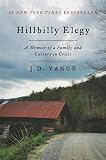
J.D. Vance (born 1984) is an American author, venture capitalist, and politician who published Hillbilly Elegy in 2016 — the year he graduated from Yale Law School — before the presidential election made it a national phenomenon. The memoir was published as a personal account of his Appalachian family history; its reception as a key to understanding Donald Trump’s support base in 2016 transformed its cultural significance in ways Vance could not have predicted. He subsequently entered politics, becoming a US Senator for Ohio in 2023 and the Republican Vice Presidential candidate in 2024.
Where to Start: Hillbilly Elegy (2016)
The essential Vance — and one of the most widely read American memoirs of recent years. At its best, Hillbilly Elegy is a vivid, specific, and unsparing account of a particular American childhood. The characters are memorable: Mamaw — Vance’s grandmother, foul-mouthed, fierce, and entirely reliable — is one of the most vividly drawn figures in recent memoir. His mother’s cycle of addiction and abusive relationships is rendered with the complicated love of someone who has tried to understand rather than merely condemn. The texture of Appalachian working-class life — the specific pride, the specific shame, the specific ways poverty and instability manifest in family dynamics — is rendered with the credibility of someone who lived it.
Vance’s account of his own adolescence is equally honest: the shoplifting, the rage, the period of floating without direction, and the near-miraculous stabilisation that the Marines provided. His path from Middletown to Yale Law is presented not as a triumphant escape but as an estrangement that cost as much as it gave — the social and cultural distance between his origin and his destination creating a loneliness in both directions.
Where the book becomes contested is in its analysis. Vance argues that the working-class white decline he observed was substantially driven by cultural dysfunction — a lack of work ethic, family instability, what he describes as a culture of learned helplessness. Critics, including sociologists and economists, have argued that this analysis understates the structural causes (deindustrialisation, wage stagnation, the specific losses of the Rust Belt economy) and overstates the cultural ones in ways that align conveniently with conservative political narratives. The personal testimony and the political analysis are separable; readers can find the memoir valuable while challenging the argument.
The book is best read as what it is: one man’s honest account of his own life and his attempt to make sense of it, with the limitations of that perspective clearly in view.
Why Hillbilly Elegy Is the Ideal First Book
For a reader new to J.D. Vance, Hillbilly Elegy is the ideal first book because it is his singular and defining work, the memoir that brought him to prominence and the fullest expression of his account of the world he came from. Hillbilly Elegy recounts Vance’s upbringing in a working-class family with roots in Appalachia, and through his personal story it offers a portrait of the white working class, its struggles, its culture, and its challenges, that resonated widely and provoked extensive discussion. As an entry point, it is the natural and essential place to begin, for it is Vance’s defining book, the memoir that made his name and that best represents his account of his origins. It welcomes the newcomer with its personal story, its vivid portrait of a particular world, and its broader reflections, drawing the reader into a widely discussed memoir. It is his singular work and the fullest expression of his story, so that the new reader encounters Vance’s account directly. For the newcomer, then, Hillbilly Elegy is the natural and ideal starting point, the memoir that brought him to prominence and that offers his portrait of the world he came from.
What to Expect as a New Reader
As a new reader, you can expect Hillbilly Elegy to be a personal memoir that is also a portrait of a particular American world, the white working class with roots in Appalachia. You can expect a personal story, for the memoir recounts Vance’s own upbringing, his family, his struggles, and his path out of difficult circumstances. You can expect a portrait of a community and culture, for through his personal story Vance offers a broader portrait of the white working class, its struggles, its values, and its challenges. You can expect reflection and argument, for the memoir is not merely personal narrative but contains Vance’s reflections and views on the causes of the struggles he describes, which provoked extensive discussion and debate. You should approach the book’s broader claims as one perspective among others, engaging with them thoughtfully. You can expect a readable, candid, and widely discussed memoir. Expect, in short, a personal memoir that is also a much-discussed portrait of the white working class, a candid introduction to Vance’s account of the world he came from.
Going Deeper After Your First Book
Once Hillbilly Elegy has introduced you to Vance’s account of his origins and the world he came from, there is, within his published books, no further volume to turn to, for Hillbilly Elegy is his singular and defining work. The reader who wishes to go deeper into the subjects the memoir raises, the struggles of the white working class, the realities of Appalachia, and the broader questions of class, community, and American life, can turn to the wider literature on these subjects, reading other accounts, studies, and perspectives that complement, complicate, and contextualize Vance’s memoir. Such reading can deepen and broaden your understanding of the realities that Hillbilly Elegy describes, offering further perspectives on a complex and contested subject. Within Vance’s own work, however, Hillbilly Elegy is the whole, the single memoir that brought him to prominence. Building your reading journey from Hillbilly Elegy is a matter of carrying its subjects into the wider literature on class, community, and American life. The reader who begins with Hillbilly Elegy will have encountered the memoir and the portrait of the world he came from that made his name.
Reading J.D. Vance
Hillbilly Elegy is Vance’s only published book. It stands alone and requires no prior reading.
For the full J.D. Vance bibliography, reviews, and biography, visit the J.D. Vance author page on Editors Reads.
Affiliate disclosure: Links to Amazon on this page are affiliate links. We earn a small commission at no extra cost to you.
Frequently Asked Questions
Where should I start with J.D. Vance?
Hillbilly Elegy (2016) is Vance's only published book — his memoir of growing up in Appalachian Ohio, raised by a drug-addicted mother and stabilised by his fierce grandmother (Mamaw), and his unlikely path from adolescent chaos to Yale Law School. Published before the 2016 election, it became one of the most widely read attempts to understand the white working-class experience and its political implications.
What is Hillbilly Elegy about?
Hillbilly Elegy traces Vance's childhood in Middletown, Ohio (and summers in Jackson, Kentucky, his family's Appalachian home) — a world of economic decline, family instability, his mother's cycle of addiction and abusive relationships, and the fierce, profane loyalty of his grandmother who served as his primary stable figure. The book is part memoir of a specific family and part analysis of what Vance presents as a cultural crisis in working-class white America: the combination of economic loss, weakened institutions, and what he describes as cultural dysfunction.
Is Hillbilly Elegy politically controversial?
Hillbilly Elegy became politically loaded after the 2016 election, when it was widely cited as an explanation for Trump's Appalachian support. The memoir's personal narrative is generally admired; its analytical argument — that cultural dysfunction is a primary driver of working-class decline, with insufficient attention to structural and economic causes — has been challenged by critics including Thomas Frank, Arlie Hochschild, and many others. Vance's subsequent political career (he became a US Senator and Vice Presidential candidate) has retrospectively coloured how the book is received. Both the memoir's value and its analytical limits are real.
What should I read after Hillbilly Elegy?
After Hillbilly Elegy, Arlie Hochschild's Strangers in Their Own Land offers a comparable ground-level account of white working-class identity in Louisiana from a more sociological and less personal perspective. Thomas Frank's What's the Matter with Kansas? provides the structural economic analysis that critics argue Hillbilly Elegy underemphasises. Robert Putnam's Our Kids: The American Dream in Crisis covers the same social mobility breakdown with more empirical rigour across multiple communities.