Where to Start with Gustave Flaubert: A Reading Guide
Where to start with Gustave Flaubert — whether to begin with Madame Bovary, Sentimental Education, or Three Tales. A complete reading guide to Flaubert's novels.
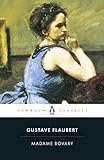
Gustave Flaubert (1821–1880) is the most technically consequential novelist in European literary history — the writer who invented the modern novel as a formal entity. His principle that prose should be as carefully crafted as poetry (the mot juste, the exact word), his perfection of free indirect style (the technique by which a narrator can render a character’s thought from the inside without the intrusion of quotation marks or ‘she thought’), and his refusal of authorial sentimentality or moral instruction set the standard for every serious novelist of the subsequent century and a half. Henry James, Joseph Conrad, Kafka, Proust, Chekhov — all acknowledged his centrality. He spent five years writing Madame Bovary (about two pages a week); his perfectionism was both his genius and his agony.
Where to Start: Madame Bovary (1857)
The foundation text of literary realism — and the novel from which the modern European novel descends. Emma Bovary, raised on romantic novels and educated above her rural station, marries Charles, a decent but entirely unromantic country doctor, and finds provincial married life in Normandy intolerable. She has an affair with the cynical landowner Rodolphe; then with the timid law clerk Léon; she buys luxury goods she cannot afford on credit; she lies systematically to her husband; and she destroys herself, her husband, and their daughter in the collapse of the gap between the life she imagined and the life she lived.
Flaubert refuses to judge Emma and refuses to sympathise with her: his prose renders her interior with precision and distance simultaneously, in what has been called the most perfect achievement of free indirect style in fiction. Tried for obscenity upon publication; acquitted; immediately recognized as the greatest French novel of the century.
Sentimental Education (1869)
Flaubert’s most panoramic and most bitter novel — his account of a generation’s failure, both political and personal. Frédéric Moreau arrives in Paris in 1840 with vague ambitions and immediately falls in love with Mme Arnoux, the wife of an art dealer. He spends twenty years pursuing this love — and every other ambition — with insufficient determination. The novel follows the generation of 1848 through its revolutionary hopes and their catastrophic failure, using Frédéric’s passivity as the embodiment of a historical moment when everything was possible and nothing was achieved.
The final scene — in which Frédéric and his friend agree that their best memory is a brothel visit they were too afraid to complete — is Flaubert at his most devastating. Sentimental Education is the great novel of disappointed hope.
Three Tales (1877)
Flaubert’s three late masterpieces in miniature — each a demonstration of his formal range. ‘A Simple Heart’ follows Félicité, a devout servant woman in Normandy whose love gradually contracts over decades from a nephew to a parrot, which she conflates at death with the Holy Ghost: Flaubert’s most tender work, and an act of imaginative sympathy with a woman of no education and entirely ordinary piety. ‘The Legend of Saint Julian Hospitator’ retells a medieval legend in the style of a stained-glass window. ‘Hérodias’ renders Salome’s dance and John the Baptist’s beheading with the compressed intensity of a painting.
Three Tales is an excellent introduction to Flaubert’s range, and ‘A Simple Heart’ is among the greatest prose works in any language.
Bouvard and Pécuchet (unfinished, 1881)
Flaubert’s final, unfinished novel — an encyclopaedic satire of human stupidity in which two Parisian copy-clerks retire to Normandy and attempt, in sequence, every field of human knowledge (agriculture, medicine, chemistry, history, philosophy, religion), failing at each one catastrophically. The novel was unfinished at Flaubert’s death and was intended to end with a vast anthology of human clichés. It is his most overtly comic and most misanthropic work — the Quixote of the bourgeois era — and despite its incomplete state it is genuinely funny and entirely absorbing for readers who share Flaubert’s fascination with systematic human foolishness.
Why Madame Bovary Is the Ideal First Book
For a reader new to Gustave Flaubert, Madame Bovary is the ideal first book because it is his masterpiece, one of the most influential novels ever written, and the fullest expression of his distinctive gifts, the precise and beautiful prose, the perfect craftsmanship, and the unflinching psychological and social realism. Madame Bovary follows the romantic, dissatisfied Emma Bovary, a provincial doctor’s wife whose longing for passion and a grander life leads her to ruin, in a perfectly crafted, psychologically penetrating novel. As an entry point it is both natural and essential, for it is his defining work and the foundation of his towering reputation. It welcomes the newcomer with its compelling heroine, its perfect prose, and its psychological depth, drawing the reader into one of the masterpieces of the realist novel. It is his masterpiece, so the new reader encounters Flaubert at his finest. For the newcomer, then, Madame Bovary is the natural and ideal starting point, ideally in a good translation.
What to Expect as a New Reader
As a new reader, you can expect Madame Bovary to be a perfectly crafted, psychologically penetrating, and beautifully written novel. You can expect a compelling heroine, for the romantic, dissatisfied Emma Bovary, longing for passion and a grander life, is one of the great characters of fiction. You can expect precise, beautiful prose, for Flaubert was a famous perfectionist, laboring over every sentence. You can expect perfect craftsmanship, for the novel is admired as a model of the art of the novel. You can expect unflinching realism, for Flaubert depicts provincial life, illusion, and disillusionment without sentimentality. You can expect psychological depth, for the novel probes Emma’s longings, self-deceptions, and decline. You can expect a tragic dimension and sharp irony. Expect, in short, a perfectly crafted, psychologically penetrating, and beautifully written novel, a superb introduction to Flaubert’s gifts.
Going Deeper After Your First Book
Once Madame Bovary has introduced you to Flaubert’s gifts, the reader who wishes to go deeper can explore his other works, which continue his precise prose, his perfect craftsmanship, and his unflinching realism, often in more ambitious or experimental forms. His acclaimed novel of a young man’s romantic and political disillusionment in the Paris of his era is among his finest, while his historical novel of ancient Carthage and his other works reveal the range of his art, and his celebrated short stories distill his perfectionism in concentrated form. Reading these after Madame Bovary deepens your appreciation of Flaubert’s distinctive gifts, the precise and beautiful prose, the perfect craftsmanship, and the unflinching realism. His characteristic perfectionism runs through his work. Building your reading journey through Flaubert is a matter of following his fiction from Madame Bovary into his other novels and stories. The reader who begins here and continues will encounter one of the supreme masters of the novel.
Reading Gustave Flaubert
Flaubert’s fiction is the standard against which modern prose is still measured: his perfectionism, his refusal of sentimentality, and his precision of language are not historical curiosities but living techniques that every serious novelist has had to reckon with. Begin with Madame Bovary — it is the foundation of modern fiction and fully earns its reputation. Read Three Tales immediately after for the most compressed demonstration of his range; read Sentimental Education when you want the fullest and most ambitious statement. All four works reward reading with attention to the prose itself.
Frequently Asked Questions
Where should I start with Gustave Flaubert?
Madame Bovary (1857) is both the most widely read and the essential starting point — the novel in which Emma Bovary, a doctor's wife in provincial Normandy, suffocates in the gap between the romantic life she imagined from novels and the dull reality of her marriage, and destroys herself trying to close it. It is the most perfectly crafted novel of the nineteenth century and the foundational text of literary realism: Flaubert's prose, his management of free indirect style, and his refusal of either sentimentality or moral judgment set the standard for every serious novelist who followed him. Sentimental Education is the best alternative for readers who want Flaubert's most panoramic and most autobiographical work.
What is Madame Bovary about?
Madame Bovary (1857) follows Emma Rouault, a farmer's daughter educated at a convent, who marries Charles Bovary — a country doctor of limited intelligence and no imagination — and finds rural marriage intolerable compared to the romantic life she has absorbed from sentimental novels. She has two affairs: the first with the cynical landowner Rodolphe Boulanger, the second with the timid law clerk Léon Dupuis. Both fail her; she accumulates debts to fund the luxury she believes romance requires; and the novel ends in her suicide and the dissolution of everything she and Charles had built. Flaubert was tried for obscenity after publication; the novel was acquitted and immediately became one of the most famous in French literature.
What is Sentimental Education about?
Sentimental Education (1869) follows Frédéric Moreau, a young man from the provinces who arrives in Paris in 1840 to study law and pursue his vague artistic ambitions, falls in love with Mme Arnoux (the wife of an art dealer), and spends the next twenty years failing to pursue this love or any other meaningful goal with sufficient determination. The novel is Flaubert's most personal and most bitter — based partly on his own youthful obsessions and on the failure of the 1848 Revolution, which he witnessed. It is the definitive French novel of disappointed romantic and political hope, and its famous final scene (in which Frédéric and his friend Deslauriers agree that the best moment of their lives was a visit to a brothel they were too frightened to enter) is one of the most devastating endings in fiction.
What is Three Tales about?
Three Tales (1877) contains Flaubert's three late short narratives: 'A Simple Heart,' the story of Félicité, a devout Norman servant woman whose love contracts over decades from people to a parrot; 'The Legend of Saint Julian Hospitator,' a medieval legend about a man who slaughters animals and eventually his own parents before achieving sainthood; and 'Hérodias,' a retelling of Salome and the beheading of John the Baptist. The three tales together demonstrate Flaubert's range — from the warmly domestic to the brutally violent to the historically remote — and 'A Simple Heart' in particular is one of the most moving short prose works in any literature.


