Ursula K. Le Guin Books in Order: Earthsea and Complete Reading Guide (2026)
The complete Ursula K. Le Guin reading guide — the Earthsea Cycle in order, the Hainish Cycle, and how to approach one of science fiction and fantasy's most important authors.

All Ursula K. Le Guin Books at a Glance
| # | Title | Year | Type |
|---|---|---|---|
| 1 | A Wizard of Earthsea | 1968 | Earthsea — Book 1 |
| 2 | The Tombs of Atuan | 1971 | Earthsea — Book 2 |
| 3 | The Farthest Shore | 1972 | Earthsea — Book 3 |
| 4 | Tehanu | 1990 | Earthsea — Book 4 |
| 5 | Tales from Earthsea | 2001 | Earthsea — Novellas |
| 6 | The Other Wind | 2001 | Earthsea — Book 6 |
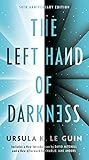
| 7 | The Left Hand of Darkness | 1969 | Hainish Cycle |
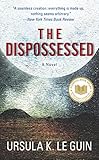
| 8 | The Dispossessed | 1974 | Hainish Cycle |
Ursula K. Le Guin is one of the two or three most important writers in the history of American science fiction and fantasy. That claim is not hyperbole. Over a career spanning more than five decades, she changed what both genres understood themselves to be capable of — demonstrating that fantasy and science fiction could engage with anthropology, political philosophy, gender theory, and Taoist thought without abandoning narrative pleasure. Her books are read in universities. They are also, and not coincidentally, very good stories.
The reading order question for Le Guin splits cleanly into two independent tracks. The first is the Earthsea Cycle, a fantasy series set in an archipelago world of islands and magic, beginning in 1968 with A Wizard of Earthsea. The second is the Hainish Cycle, a loosely connected sequence of science fiction novels set in a far-future interstellar civilization, which includes The Left Hand of Darkness (1969) and The Dispossessed (1974). These two series share no characters, no settings, and no plot connections. They are entirely separate bodies of work by the same author. Choose whichever genre you prefer and begin there.
The Earthsea Reading Order
The Earthsea Cycle runs to six books in total. Three are in our catalogue and can be read in sequence. The later volumes are listed below without links.
- A Wizard of Earthsea (1968) — Ged’s origin story: a gifted boy from a minor island, the wizard school on Roke, and a shadow he unleashes and must pursue across the entire archipelago.
- The Tombs of Atuan (1971) — Tenar’s story. A girl is named the reincarnation of a tomb priestess and raised in darkness. Ged appears, but as a secondary character; this book belongs to Tenar.
- The Farthest Shore (1972) — Ged as an older man, and Arren, a young prince. Together they travel toward the boundary between life and death. The thematic culmination of the original trilogy.
- Tehanu (1990) — Eighteen years after The Farthest Shore, Le Guin returned to Earthsea with a very different book: more intimate, more domestic, explicitly feminist in its concerns. Widely considered a direct response to the first trilogy from the vantage of a more mature writer.
- Tales from Earthsea (2001) — Five novellas set in the Earthsea world, spanning different periods of its history.
- The Other Wind (2001) — The final Earthsea novel, which brings together threads from across the series.
The original trilogy stands completely on its own. Books 1 through 3 form a closed arc — beginning, middle, and end — and many readers stop there without any sense of incompleteness. Tehanu is best approached as a separate, later work that revisits the same world with a different set of concerns; going into it expecting the register of the first three books will produce disappointment.
A Wizard of Earthsea — Start Here for Fantasy
A Wizard of Earthsea is the correct starting point for any reader approaching Le Guin through fantasy, and it remains one of the most distinctive first novels in the genre.
The story follows Ged, a boy born on the island of Gont with an unusual gift for magic. He is sent to the school for wizards on the island of Roke, where his talent draws him into a rivalry that ends in catastrophe: in a moment of pride, he tears open the boundary between the living world and the land of the dead, releasing a nameless shadow creature. The rest of the book is the chase — Ged pursuing the shadow across the islands of the archipelago, gradually coming to understand what the shadow actually is.
Le Guin’s central insight in this novel is Taoist in character: the shadow is not Ged’s enemy but his missing half. Power and darkness are the same thing. To become whole, he must stop fleeing and turn to face what he has refused to acknowledge. This is stated plainly by the book’s end — Le Guin does not deal in obscurity — but the plainness is earned. The story demonstrates the insight rather than merely asserting it.
The prose is worth addressing directly because it can surprise readers coming from contemporary fantasy. Le Guin writes in a formal, measured register — the voice of myth being recounted rather than scene being dramatized. There is very little interiority in the modern sense, very little moment-to-moment sensation. The book reads like a legend being told at some remove from the events themselves. This is entirely deliberate, and it is what gives the book its weight. Readers who want the immersive present-tense urgency of contemporary fantasy may take a chapter or two to adjust; readers who give it that time usually find the style inseparable from the book’s power.
A Wizard of Earthsea was originally published as a children’s book. It is one. It is also not only that.
The Tombs of Atuan and The Farthest Shore
The Tombs of Atuan is the most structurally unconventional book in the original trilogy. Ged, the protagonist of the first novel, appears here as a secondary figure — the story belongs entirely to Tenar, a girl who was taken from her family as a child and raised as the reincarnated priestess of a set of ancient, nameless powers. She lives in darkness, tends the labyrinthine tombs, and has been given no self of her own — only the role she was assigned at birth.
When Ged enters the tombs searching for a lost artifact, Tenar’s story becomes one of awakening and choice: the first exercise of a will she was never supposed to have. The novel is shorter than A Wizard of Earthsea and more focused; its concerns are about captivity, identity, and the difference between a life assigned and a life chosen. It is a remarkable book to have been published in 1971, and its themes anticipate what Le Guin would return to with much greater explicitness in Tehanu twenty years later.
The Farthest Shore closes the original trilogy and is the most ambitious of the three books in its concerns. Ged, now an older man and Archmage of Roke, sets out with the young prince Arren to investigate a spreading emptiness across the world — magic is failing, and the people who once practiced it are forgetting they ever could. The quest leads toward the land of the dead.
The book is about death: not as horror or as tragedy, but as the condition that makes life meaningful. Le Guin argues — through story, not through thesis — that a world without death would not be paradise but a kind of living annihilation. Arren is the book’s true protagonist, though Ged’s presence gives it weight. The thematic arc of the trilogy moves from shadow and identity in the first book, through captivity and selfhood in the second, to mortality and meaning in the third. Taken together, the three novels constitute one of the most coherent philosophical statements fantasy literature has ever produced.
The Hainish Cycle — The Left Hand of Darkness and The Dispossessed
The Hainish Cycle is entirely separate from Earthsea and can be read in any order. Le Guin never wrote a strict sequence for these novels; they share only the background premise that humanity was seeded across many planets by an ancient civilization called the Hainish, and that a loose confederation of worlds — the Ekumen or League — forms the political backdrop. No novel requires knowledge of the others.
Two Hainish novels are in our catalogue, and both are among the most important science fiction novels ever written.
The Left Hand of Darkness (1969) follows Genly Ai, an envoy from the interstellar Ekumen, sent to the planet Gethen on a diplomatic mission. The people of Gethen have no fixed gender — they are ambisexual, becoming temporarily gendered only during periods of fertility. Le Guin uses this premise not to write a thesis about gender but to examine what a visitor shaped by gendered assumptions makes of a world without them — and what that reveals about his assumptions. The novel won both the Hugo and Nebula Awards and remains the foundational text of feminist science fiction.
The Dispossessed (1974) is structured in alternating timelines and follows Shevek, a physicist from the anarchist moon colony of Anarres, who travels to the capitalist home planet of Urras — the world his people’s ancestors left two centuries before. The novel is an examination of two political systems, neither idealized: Anarres is genuinely committed to anarchist principles but has calcified into its own forms of conformity; Urras has wealth and beauty but profound inequality. Shevek navigates both. The Dispossessed won the Hugo, Nebula, and Locus Awards and is one of the few novels that earns the description “a serious work of political philosophy in the form of a story” without that description being a warning.
Both novels can be read independently of each other and of the rest of the Hainish Cycle. If you are coming to Le Guin as a science fiction reader and have not read either, start with whichever premise appeals more.
Why Le Guin Matters
Le Guin’s importance to science fiction and fantasy is not primarily about influence in the sense of writers who imitate her style — though there are plenty of those. It is about what she demonstrated was possible.
Before The Left Hand of Darkness, science fiction engaged with gender almost exclusively through assumption: characters were male unless otherwise specified, and gender itself was rarely the subject of serious speculation. Le Guin made it a subject. Before The Dispossessed, political science fiction tended toward either dystopia or wish-fulfillment. Le Guin built a genuinely ambiguous political novel that took both anarchism and capitalism seriously as systems with internal logic and internal failure modes. Before A Wizard of Earthsea, fantasy protagonists were almost universally white by default; Ged is explicitly dark-skinned, as are most inhabitants of the Earthsea archipelago.
She also demonstrated that serious ideas and genuine storytelling were not in opposition — that a novel could be built around an anthropological thought experiment or a Taoist philosophical premise and still work as a story, still generate suspense and character and emotional investment. This is not obvious, and many writers who attempt it produce books that read like essays wearing story costumes. Le Guin almost never did. The ideas in her novels emerge from the narrative rather than being imposed on it.
Every generation of science fiction and fantasy writers after 1969 has had to reckon with what she made possible. Many still are.
The Syfy Series and Le Guin’s Response
In 2004, the Syfy channel aired a two-part miniseries adaptation of the Earthsea books. Le Guin’s public response was immediate and pointed. In an essay published in Slate, she noted that the production had cast white actors in the roles of Ged, Tenar, and the other principal characters — despite the books’ explicit descriptions. Ged is described as red-brown skinned, Tenar as white-skinned (she is specifically marked as unusual for it), and most Earthsea characters as dark. The casting was not an oversight but a pattern, and Le Guin named it directly: Hollywood had taken a fantasy world that was not white by default and made it so.
Her objection was not only to the casting. She argued that the adaptation had reduced the books’ philosophical concerns to generic fantasy action — that the themes of shadow, identity, and balance that structure the originals had been replaced by a conventional hero-versus-villain plot. The essay, titled “A Whitewashed Earthsea,” remains one of the clearest statements any author has made about the relationship between adaptation and source material.
Before her death in January 2018, Le Guin was involved in the development of a new Netflix series adaptation of the Earthsea books. The project was in early stages at the time of her death and its current status is unclear. The books remain the only complete and authoritative version of Earthsea.
For new readers: start with A Wizard of Earthsea if you prefer fantasy, or The Left Hand of Darkness if you prefer science fiction. Both are under 300 pages, both are complete experiences in themselves, and both will tell you immediately whether Le Guin is a writer you want to spend more time with. Most readers find that she is.
For the Best Fantasy Books
For the definitive guide to fantasy fiction — from Tolkien and Le Guin to Brandon Sanderson and George R.R. Martin — see our Best Fantasy Books of All Time list.
For the Best Science Fiction Books
For the definitive guide to science fiction — from Asimov and Herbert to Andy Weir and Ursula K. Le Guin — see our Best Sci-Fi Books of All Time list.
More Fantasy and Science Fiction Guides
- Robin Hobb Books in Order: Farseer and Realm of the Elderlings
- Books Like Ender’s Game: Military Sci-Fi and Ethics
Affiliate disclosure: Links on this site are affiliate links. We earn a small commission at no extra cost to you. This does not influence our editorial recommendations.
Frequently Asked Questions
What order should I read the Earthsea books?
Read the original trilogy in order: A Wizard of Earthsea, The Tombs of Atuan, The Farthest Shore. These three books form a complete arc. Tehanu (Book 4) and the later Earthsea books can follow. The trilogy works as a complete reading experience on its own.
Are the Earthsea books and the Hainish Cycle connected?
No. Earthsea is fantasy set in an archipelago world with magic. The Hainish Cycle (including The Left Hand of Darkness and The Dispossessed) is science fiction set in a vast interstellar civilization. Both series were written by Le Guin but share no characters or settings — they are completely independent.
What is the best Le Guin book to start with?
A Wizard of Earthsea for fantasy readers. The Left Hand of Darkness for science fiction readers. Both are short (under 300 pages), complete as standalones, and demonstrate Le Guin's essential concerns. Start with whichever genre you prefer.
Is Earthsea appropriate for younger readers?
A Wizard of Earthsea was originally published as a children's/young adult book and is appropriate for ages 10 and up. The tone is measured and the themes are about shadow, identity, and death — serious but not inappropriate for young readers. The later Earthsea books are more adult in their concerns.
Is there an Earthsea TV adaptation?
Yes. A Netflix series, Earthsea, aired in 2004 as a Syfy miniseries (which Le Guin publicly criticized for whitewashing the characters and oversimplifying the themes). A new Netflix series was in development; Le Guin passed away in 2018. The books remain the definitive Earthsea experience.