Sarah J. Maas Books in Order: Complete Reading Guide for All Three Series (2026)
The complete reading order for all Sarah J. Maas series — Throne of Glass, A Court of Thorns and Roses, and Crescent City — with recommendations for where to start.
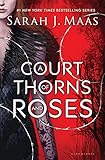
Sarah J. Maas has built something rare in contemporary fantasy: three interconnected series, set in the same universe, that each stand as significant achievements in their own right. The reading order question is not trivial. All three series eventually cross over, with the Crescent City books containing major spoilers for characters and events in both ACOTAR and Throne of Glass. One of the series starts slowly enough that new readers often abandon it before it transforms into one of the best epic fantasy series of its generation. And one individual book — A Court of Mist and Fury, the second ACOTAR novel — has acquired a reputation as one of the finest fantasy romance novels ever written, making it a destination in itself rather than just a sequel.
New readers asking where to start are often pointed in conflicting directions, and the stakes of that choice are real: starting with the wrong book can mean investing in a series that doesn’t pay off until book three or four, or encountering spoilers that undercut the emotional impact of a different series. This guide covers all three series, the crossover reading order, and the specific questions — particularly the Tower of Dawn question — that come up most frequently.
All 14 Sarah J. Maas Books at a Glance
| # | Title | Year | Series/Type |
|---|---|---|---|
| 1 | Throne of Glass | 2012 | Throne of Glass #1 |
| 2 | Crown of Midnight | 2013 | Throne of Glass #2 |
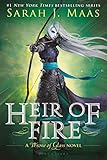
| 3 | Heir of Fire | 2014 | Throne of Glass #3 |
| 4 | Queen of Shadows | 2015 | Throne of Glass #4 |
| 5 | A Court of Thorns and Roses | 2015 | ACOTAR #1 |
| 6 | Empire of Storms | 2016 | Throne of Glass #5 |
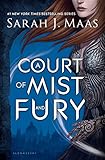
| 7 | A Court of Mist and Fury | 2016 | ACOTAR #2 |
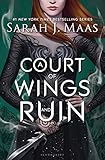
| 8 | A Court of Wings and Ruin | 2017 | ACOTAR #3 |
| 9 | Tower of Dawn | 2017 | Throne of Glass #6 |
| 10 | A Kingdom of Ash | 2018 | Throne of Glass #7 |
| 11 | House of Earth and Blood | 2020 | Crescent City #1 |
| 12 | A Court of Silver Flames | 2021 | ACOTAR #5 |
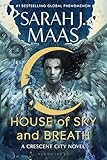
| 13 | House of Sky and Breath | 2022 | Crescent City #2 |
| 14 | House of Flame and Shadow | 2024 | Crescent City #3 |
Best starting point: A Court of Thorns and Roses for most readers, or Throne of Glass for epic fantasy fans.
The Quick Answer: Where to Start
For most readers: start with A Court of Thorns and Roses.
ACOTAR is the most accessible entry point into Maas’s universe. The first book is a loose Beauty and the Beast retelling set in a world of faeries, with a clear narrative structure that pays off within a single volume. The series reaches its peak in Book 2, which is widely considered the best thing Maas has written. The complete ACOTAR arc wraps up in three books (with a fourth novella and a fifth book following side characters), making it a manageable commitment before deciding whether to continue.
For readers who want epic fantasy first: start with Throne of Glass.
If you’re drawn to large-scale world-building, political intrigue, and a seven-book arc that builds toward a genuinely epic conclusion, Throne of Glass is the right starting point. Be warned: the first book reads younger and lighter than what the series becomes. Most fans will tell you that the series transforms completely around Book 3. If you can commit to that runway, the payoff is exceptional.
Crescent City — the third series — is not a starting point. It contains significant spoilers for both ACOTAR and Throne of Glass and is best read after completing, or substantially completing, both of the other series.
A Court of Thorns and Roses Series — Reading Order
For a dedicated deep-dive into the ACOTAR series — per-book reviews, the ACOMAF question, content notes, and how it connects to the SJM universe — see our A Court of Thorns and Roses Books in Order guide.
The ACOTAR series follows Feyre Archeron, a human huntress who is taken to the faerie realm after killing a wolf in an enchanted forest. What begins as a fairy-tale retelling evolves into something considerably darker, more emotionally complex, and more politically ambitious by the second book.
-
A Court of Thorns and Roses (2015) — The Beauty and the Beast retelling that establishes the world, the faerie courts, and Feyre. A strong debut that works as a standalone before the larger arc takes over.
-
A Court of Mist and Fury (2016) — The peak of the series, and by the consensus of most readers, the peak of Maas’s output. ACOMAF expands the world dramatically, introduces new characters who become series favourites, and contains a central relationship arc that has made it one of the most widely recommended fantasy romance novels published in the last decade. Read ACOTAR first; the impact of this book depends heavily on where the first one leaves you.
-
A Court of Wings and Ruin (2017) — The conclusion to the main Feyre trilogy. The scale expands to an inter-court war, and most of the major narrative threads opened in Books 1 and 2 are resolved. Some readers find the pacing uneven compared to ACOMAF; most consider it a satisfying close to Feyre’s story.
-
A Court of Frost and Starlight (2018) — A novella-length interlude set after the events of Book 3. Optional reading — it functions primarily as a bridge to the following books and provides closure for several characters — but it’s not essential if you’re moving directly to ACOSF.
-
A Court of Silver Flames (2021) — Follows Nesta Archeron (Feyre’s sister) rather than Feyre. ACOSF can technically be read after ACOMAF — Nesta’s storyline is relatively self-contained — but is best read in sequence after Book 3. It is the most explicitly romance-focused book in the series and has developed its own devoted readership independent of the earlier books.
Throne of Glass Series — Reading Order
For a dedicated deep-dive into the Throne of Glass series — including The Assassin’s Blade placement, Tower of Dawn timing, and a full ranked guide — see our Throne of Glass Books in Order guide.
The Throne of Glass series follows Celaena Sardothien, a nineteen-year-old assassin who is released from a brutal salt mine to compete as the King’s Champion. The series begins with a contained competition arc that feels somewhat lighter in tone than what follows; it expands, across seven books, into a vast story about empires, magic, sacrifice, and identity that readers consistently describe as one of the most rewarding epic fantasy series they have encountered.
The patience the series demands is real. The transformation is also real.
-
Throne of Glass (2012) — The competition-focused first book. Establish the world and Celaena’s voice here. Some readers find it lighter than expected; it was originally conceived as a YA novel and reads as one.
-
Crown of Midnight (2013) — Where the series begins to transform. Crown of Midnight deepens the world, raises the stakes considerably, and ends with revelations that reframe everything that came before. Many readers who were lukewarm on Book 1 consider this the book that committed them to the series.
-
Heir of Fire (2014) — The scope expands dramatically. New characters, new countries, and the first clear sense of how large the series is going to become. Generally considered the point at which Throne of Glass becomes a genuinely exceptional epic fantasy rather than a very good YA series.
-
Queen of Shadows (2015) — Returns the action to Adarlan with a significantly more powerful protagonist. One of the longer books in the series, with multiple POV characters and several storylines running in parallel.
-
Empire of Storms (2016) — The penultimate book in the main sequence, and the one that raises the stakes to their highest point before the final volume. Read this before Tower of Dawn (see below for a detailed explanation of the reading order question this creates).
-
Tower of Dawn (2017) — Follows Chaol Westfall, a major supporting character from earlier books, on a parallel mission in the southern continent during the same timeline as Empire of Storms. This creates the most common reading-order question in the entire Maas universe, addressed in detail below.
-
A Kingdom of Ash (2018) — The final volume. All storylines converge. At over 900 pages, it is the longest book in the series and functions as the culmination of seven books of setup. Most fans consider it one of the most satisfying series conclusions in contemporary fantasy.
Crescent City Series — Reading Order
Crescent City is set in Lunathion, a city in a world that blends urban fantasy with epic fantasy — think a version of our world where Fae, angels, shifters, and humans coexist, filtered through a noir-adjacent aesthetic. The series follows Bryce Quinlan, a half-Fae party girl whose life is overturned by a brutal murder investigation.
The first book is the longest entry point into any Maas series. The second and third books contain significant crossover material with both ACOTAR and Throne of Glass.
Do not start here unless you have read — or are willing to be spoiled on — both ACOTAR and Throne of Glass.
-
House of Earth and Blood (2020) — The longest of Maas’s first books in any series, at over 800 pages. Establishes Lunathion, its politics, its cast, and the mystery at the series’ core. The slow opening pays off; many readers describe the second half as unputdownable. Safe to read without prior Maas knowledge, though context from the other series enriches it.
-
House of Sky and Breath (2022) — Contains major crossover spoilers for both ACOTAR and Throne of Glass. Characters and plotlines from the other series appear directly in this book. Reading Crescent City Book 2 before completing ACOTAR and Throne of Glass will substantially spoil key events in both. This is not a vague thematic connection — it is direct, named, plot-level crossover.
-
House of Flame and Shadow (2024) — The most recent Crescent City novel, and the one that most fully integrates all three series. The convergence that began in Book 2 reaches its peak here. All the same spoiler warnings as Book 2 apply, more intensely.
The Crossover Reading Order (Spoiler Warning)
If you intend to read all three series — which is, ultimately, the complete Maas experience — the recommended order to avoid major spoilers is:
- Complete ACOTAR Books 1–3 (A Court of Thorns and Roses, A Court of Mist and Fury, A Court of Wings and Ruin) at minimum
- Complete Throne of Glass Books 1–7 (all seven books, including Tower of Dawn and A Kingdom of Ash)
- Then begin Crescent City
You can read ACOTAR and Throne of Glass in either order relative to each other — they do not spoil one another. Both need to be substantially complete before Crescent City Book 2, which is where the crossover begins in earnest.
A Court of Silver Flames and A Court of Frost and Starlight can be read at any point after completing the main ACOTAR trilogy, before or after Throne of Glass, without spoiling anything in Crescent City.
The rationale for finishing Throne of Glass before Crescent City is particularly strong. House of Sky and Breath and House of Flame and Shadow reference specific characters, relationships, and outcomes from A Kingdom of Ash in ways that are unavoidable. If you care about the Throne of Glass endgame at all, finish that series before opening Crescent City Book 2.
Which Series is Best to Start With?
The honest comparison, for a new reader deciding where to put their time:
A Court of Thorns and Roses is the best starting point for readers who: want immediate accessibility; are drawn to fantasy romance; have a lower tolerance for slow openings; or want to read the series that has the largest active readership and the most online discussion. ACOMAF — Book 2 — has genuine claims to being one of the most emotionally effective fantasy romance novels of the last decade, and most readers reach it having invested only one book’s worth of setup.
Throne of Glass is the best starting point for readers who: prioritise epic fantasy over romance; are willing to invest in a seven-book arc; want a protagonist who changes dramatically over the course of a long series; or are more interested in political intrigue and world-building than in the relationship dynamics that drive ACOTAR. The caveat is real: Book 1 is the weakest entry point of any Maas series. The series doesn’t begin to show its full ambition until Crown of Midnight, and doesn’t reach its stride until Heir of Fire.
Crescent City is not a starting point for the reasons described above. If you encounter someone who tells you it’s a good introduction to Maas, they are giving you advice that will result in significant spoilers for the other series.
If you genuinely cannot decide, the majority recommendation among experienced Maas readers is to start with ACOTAR, continue through ACOMAF (which is where most readers become committed), finish the ACOTAR trilogy, then pick up Throne of Glass. This approach gives you the most immediate payoff while preserving the full Throne of Glass arc for later.
Tower of Dawn and Empire of Storms — When to Read
This is the most frequently asked question after “where to start,” and it has a real answer rather than a preference-based one.
Tower of Dawn and Empire of Storms run on parallel timelines — the events of Tower of Dawn take place concurrently with most of Empire of Storms. Maas originally intended Tower of Dawn’s storyline to be part of Empire of Storms, but the Chaol sections grew long enough to become their own book.
This creates a genuine reading-order problem. There are three approaches:
Option A: Read Empire of Storms, then Tower of Dawn, then A Kingdom of Ash. This is what most readers do and what most experienced fans recommend. You follow the main storyline through Empire of Storms to its conclusion, then read Tower of Dawn as a parallel-timeline companion, then go into A Kingdom of Ash with both storylines complete. The disadvantage is that Empire of Storms ends on significant revelations that Tower of Dawn then re-approaches from a different angle — there is some narrative backtracking.
Option B: Use the official tandem read guide. Maas and her publishers released a chapter-by-chapter guide for reading Empire of Storms and Tower of Dawn simultaneously, alternating chapters between the two books. This preserves the chronological experience and is the most technically “correct” reading. The disadvantage is that it’s logistically cumbersome — you need both books open — and many readers find the constant context-switching interrupts the flow of both narratives.
Option C: Read Tower of Dawn before Empire of Storms. Some readers recommend this for a specific reason: Tower of Dawn introduces a character — Yrene Towers — who appears briefly in an earlier book, and reading her full story before the events of Empire of Storms can enrich that book’s ending. This is a minority recommendation and only makes sense if you don’t mind reading an “answer” book before the “question” is fully posed.
The practical recommendation: read Empire of Storms first, then Tower of Dawn, then proceed to A Kingdom of Ash. This is how the series was published, it’s how the majority of readers have experienced it, and A Kingdom of Ash is written with the assumption that you have completed both books immediately prior.
For individual reviews and more detail on specific books, see our full coverage of A Court of Thorns and Roses, A Court of Mist and Fury, A Court of Silver Flames, Throne of Glass, and House of Earth and Blood.
Books Like A Court of Thorns and Roses
For fantasy romance novels with ACOTAR’s fae world, enemies-to-lovers tension, and addictive series structure, see our Books Like A Court of Thorns and Roses guide.
For the Best Fantasy Books
For the definitive guide to fantasy fiction — from Tolkien and Le Guin to Brandon Sanderson and George R.R. Martin — see our Best Fantasy Books of All Time list.
For the full Sarah J. Maas bibliography, reviews, and biography, visit the Sarah J. Maas author page on Editors Reads.
Affiliate disclosure: Links on this site are affiliate links. We earn a small commission at no extra cost to you. This does not influence our editorial recommendations.
Frequently Asked Questions
What order should I read Sarah J. Maas books?
Most readers should start with A Court of Thorns and Roses (ACOTAR) — it's the most accessible entry point and the series with the widest readership. If you prefer a longer epic fantasy, start with Throne of Glass. Crescent City is best read after ACOTAR since it contains crossover content that spoils the other series.
Do Sarah J. Maas series connect to each other?
Yes — all three series exist in the same universe and converge significantly in Crescent City Book 2 (House of Sky and Breath) and Book 3 (House of Flame and Shadow). To avoid spoilers, read Throne of Glass and ACOTAR before starting Crescent City.
Is ACOTAR or Throne of Glass better to start with?
ACOTAR (A Court of Thorns and Roses) is the better starting point for most readers. It's shorter, self-contained, and immediately accessible. Throne of Glass is a longer seven-book epic that starts slowly before becoming extraordinary around books 3-4.
How many Sarah J. Maas books are there?
Sarah J. Maas has written 16 books across her three series: 7 in Throne of Glass, 5 in A Court of Thorns and Roses (including the novella A Court of Frost and Starlight), and 3 in Crescent City as of 2024. More books in the Crescent City and ACOTAR worlds are expected.