Richard Powers Books in Order: Complete Bibliography & Best Starting Points
Richard Powers's complete bibliography in order — from The Overstory and Bewilderment to The Time of Our Singing and Galatea 2.2. Best starting points for new readers.
Richard Powers is the most ambitious American novelist of the past thirty years — the writer who systematically incorporates cutting-edge science into literary fiction, asking what discoveries in genetics, ecology, neuroscience, and artificial intelligence mean for how we understand human identity and human obligation. His novels are demanding (each one requires deep engagement with a particular scientific field) and rewarding (the science illuminates the human story in ways that conventional literary fiction cannot).
Born in Evanston, Illinois in 1957, he studied physics before turning to literature, and his novels have been compared to those of Thomas Pynchon and Don DeLillo in their ambition and intellectual scope. He has won the Pulitzer Prize, the National Book Award, and numerous other prizes.
Where to Start
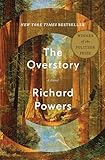
The Overstory (2018)
The best starting point and Powers’s masterwork — nine Americans and trees, a Pulitzer Prize-winning argument for the moral standing of the non-human world. More accessible than his earlier work (the naturalist writing about trees is immediately beautiful) and the most urgent in its subject matter. The novel that established his international reputation.
Bewilderment (2021)
The companion novel and the more personal — an astrobiologist and his nine-year-old son who cannot regulate his emotions, an experimental neurofeedback treatment, and the ecological crisis threatening the funding that might save both. Shorter and more accessible than The Overstory; the best second novel.
The Earlier Novels
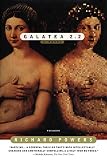
Galatea 2.2 (1995)
The novel that first established Powers’s method — a writer at a university helping train a neural network to pass a literature examination, and the question of whether the network is doing what human readers do. The most accessible of his earlier novels and the most prescient (the questions it raises about artificial intelligence and consciousness have become urgent in ways they were not in 1995).
The Time of Our Singing (2003)
Powers’s most emotionally ambitious novel — the Strom family across three generations: a Jewish German scientist who marries a Black woman at Marian Anderson’s 1939 Lincoln Memorial concert, their three children, and the ways their mixed identity plays out across the civil rights era. The novel is about music (the physics of sound, the American musical tradition, the relationship between classical music and race) and about the ways American history writes itself on individual bodies. At 600 pages, the most expansive of his novels.
Complete Bibliography (Major Works)
| Title | Year | Note |
|---|---|---|
| Three Farmers on Their Way to a Dance | 1985 | First novel; WWI |
| Prisoner’s Dilemma | 1988 | Family; game theory |
| The Gold Bug Variations | 1991 | Music; genetics; Bach |
| Operation Wandering Soul | 1993 | Children’s hospital |
| Galatea 2.2 | 1995 | AI; literature; accessible |
| Gain | 1998 | Corporate history; cancer |
| Plowing the Dark | 2000 | Virtual reality; hostage |
| The Echo Wife | 2003 | See below |
| The Time of Our Singing | 2003 | Music; race; family |
| The Echo Maker | 2006 | Neuroscience; National Book Award |
| Generosity | 2009 | Genetics; happiness |
| Orfeo | 2014 | Music; bioterrorism |
| The Overstory | 2018 | Trees; Pulitzer |
| Bewilderment | 2021 | Neuroscience; ecology |
A Novelist of Ideas
Richard Powers is one of the foremost novelists of ideas in contemporary American fiction, a writer whose ambitious novels engage deeply with science, technology, nature, and the great questions they raise, combining intellectual ambition with emotional and human depth. Powers’s fiction is distinguished by its intellectual ambition, its deep engagement with science, technology, nature, music, and the great ideas and questions of contemporary life, and its capacity to combine this intellectual engagement with emotional and human depth. He brings to his fiction a formidable intelligence and a serious engagement with ideas, exploring complex scientific, technological, and philosophical subjects while also rendering the human and emotional dimensions of his stories. This role as a novelist of ideas is central to Powers’s achievement, for his ambitious novels engage deeply with science, technology, nature, and the great questions they raise, combining intellectual ambition with emotional and human depth. His combination of intellectual ambition and human depth gives his fiction its distinctive character. For readers, Powers offers a novelist of ideas, ambitious fiction that engages deeply with science, technology, nature, and the great questions they raise. A novelist of ideas, Powers engages deeply with science, technology, nature, and the great questions they raise in his ambitious novels, combining intellectual ambition with emotional and human depth.
Science, Nature, and the Human
A central concern of Richard Powers’s fiction is the relationship between science, nature, and the human, the way that scientific and technological developments and the natural world bear on human life, meaning, and the future. Powers’s fiction is deeply engaged with science, nature, and the human, exploring the relationship between scientific and technological developments, the natural world, and human life, and the great questions of meaning, ethics, and the future that this relationship raises. His celebrated novel of trees and the people who fight to protect them, in particular, explores the relationship between the human and the natural world, while his fiction more broadly engages with science, technology, and their bearing on human life and meaning. This concern with science, nature, and the human is central to Powers’s fiction, for he explores the relationship between scientific and technological developments, the natural world, and human life, meaning, and the future. His engagement with the relationship between science, nature, and the human gives his fiction its distinctive subject and its depth. For readers, Powers offers a profound exploration of science, nature, and the human, the relationship between scientific developments, the natural world, and human life and meaning. Science, nature, and the human are a central concern of Powers’s fiction, the relationship between scientific and technological developments, the natural world, and human life, meaning, and the future.
Ambition, Scope, and Emotional Depth
A defining quality of Richard Powers’s fiction is its combination of intellectual ambition and scope with genuine emotional depth, its capacity to engage the largest ideas and questions while also moving the reader and rendering the human dimensions of its stories. Powers’s fiction is marked by its ambition and scope, by its engagement with the largest ideas and questions and its capacity to encompass vast subjects, and also by its emotional depth, its capacity to render the human and emotional dimensions of its stories and to move the reader. This combination of intellectual ambition and emotional depth is central to Powers’s achievement, for he engages the largest ideas and questions while also moving the reader and rendering the human dimensions of his stories, combining the novel of ideas with genuine emotional power. His ability to combine intellectual ambition and scope with emotional depth distinguishes his fiction and gives it both its intellectual substance and its human power. For readers, Powers offers ambition, scope, and emotional depth, the engagement with the largest ideas and questions combined with genuine emotional power. Ambition, scope, and emotional depth are a defining quality of Powers’s fiction, its combination of intellectual ambition and scope with genuine emotional depth, engaging the largest ideas and questions while also moving the reader and rendering the human dimensions of its stories.
Reading Order Recommendations
New to Powers: The Overstory → Bewilderment → Galatea 2.2.
Science and identity: Galatea 2.2 → The Time of Our Singing → The Overstory.
The ecological novels: The Overstory → Bewilderment.
Frequently Asked Questions
What is the best Richard Powers novel to start with?
The Overstory (2018) is the best starting point — Powers's Pulitzer Prize-winning novel about trees and the people whose lives are shaped by them. It is the most accessible of his novels (the naturalist writing is immediately beautiful, the nine Americans whose lives it follows have distinct and compelling stories) and the most thematically urgent. Galatea 2.2 (1995) is the best starting point for readers interested in artificial intelligence and the nature of consciousness — a semi-autobiographical novel about a writer who helps train a neural network to pass a literature examination.
What is The Overstory about?
The Overstory (2018) follows nine Americans whose lives become entangled with trees — a chestnut tree that has survived a blight for over a century; a game designer who discovers that trees communicate through underground fungal networks; an activist who chains herself to a redwood; a Stanford scientist who studies plant sentience. Powers structures the novel like a tree: roots (separate stories), trunk (the characters come together in an act of forest activism), crown (they separate again). The novel won the Pulitzer Prize for Fiction and is the most powerful literary argument for the moral standing of the non-human world in American fiction.
What is Galatea 2.2 about?
Galatea 2.2 (1995) is a semi-autobiographical novel about 'Richard Powers,' a novelist who returns to a university to serve as a humanist-in-residence and becomes involved in an experiment: helping a cognitive scientist train a neural network called Helen to pass a literature examination. As Helen's responses become more sophisticated, Powers begins to wonder about the nature of consciousness, about what literature is for, and about whether a machine that responds to Keats the way a human does is having the same experience. The most accessible of Powers's earlier novels and the one that best demonstrates his central preoccupation: the relationship between science and the humanities.
What themes run through Richard Powers's work?
Powers's novels consistently engage with science — not as a background but as a formal element, with the way particular sciences (genetics, neuroscience, ecology, computer science, musicology) change what we understand about who we are and what we owe each other. His central questions are ethical: if trees communicate and feel, does that change our obligations to them? If consciousness is a product of neural processing, what distinguishes human consciousness from artificial intelligence? If music is a physical phenomenon explicable by acoustics, what is the experience of music? His novels are simultaneously entertainment, intellectual argument, and moral challenge.