Fredrik Backman Books in Order: Complete Reading Guide
All Fredrik Backman books in order — from A Man Called Ove to The Winners. Which to read first, how the Beartown trilogy connects, and what makes Backman's emotional fiction so distinctive.
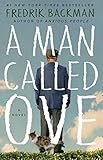
Fredrik Backman is a Swedish author whose novels follow a recognisable template — prickly, isolated individuals cracked open by the people around them — executed with enough sincerity and precision that the template mostly works. His first novel, A Man Called Ove, became one of those rare books that spread entirely through word of mouth, translated into dozens of languages, and eventually reaching over three million readers before its Hollywood remake introduced it to millions more. The rest of his career has been a process of working out what that success was actually about and whether he could do something more demanding with the same emotional register.
The answer, in the case of the Beartown trilogy, is yes — though at the cost of the warmth that made Ove so easy to love. Whether you prefer the earlier or later Backman depends on what you want from him.
This guide covers every book in publication order, where to start, how the Beartown trilogy fits together, and what makes Backman’s fiction worth reading alongside its genuine limitations.
Quick answer: Start with A Man Called Ove. It is the purest expression of what Backman does and requires no prior knowledge of his other work. Read the Beartown trilogy in order: Beartown, Us Against You, The Winners. Anxious People can be read at any point after Ove.
All Fredrik Backman Books at a Glance
| Title | Year | Series/Standalone | Note |
|---|---|---|---|
| A Man Called Ove | 2012 | Standalone | Start here |
| My Grandmother Asked Me to Tell You She’s Sorry | 2013 | Standalone | |
| Britt-Marie Was Here | 2014 | Ove spin-off | Loose connection to Ove |
| And Every Morning the Way Home Gets Longer and Longer | 2015 | Standalone novella | |
| Beartown | 2016 | Beartown trilogy #1 | Read in order |
| Us Against You | 2017 | Beartown trilogy #2 | Read in order |
| My Heroes Have Always Been Junkies | 2018 | Graphic novel | Standalone |
| Anxious People | 2019 | Standalone | Best second read |
| The Winners | 2021 | Beartown trilogy #3 | Read in order |
Start Here: A Man Called Ove
Ove is fifty-nine years old, recently widowed, recently made redundant, and intent on ending his life. He fails repeatedly, interrupted each time by the neighbours he considers incompetent and the community he professes to despise. In the course of being interrupted, he becomes necessary to people who did not know they needed him, and they become necessary to him in ways he cannot bring himself to acknowledge.
The premise sounds maudlin. The execution is not. Backman balances Ove’s grief and rage with precise comic timing, and the novel is genuinely funny in a way that earns the emotional weight it accumulates. Ove’s rigid principles — about correctly reversing into a parking space, about which tools belong in which shed, about the moral distinction between Saabs and Volvos — are not affectations but the residue of a particular kind of Swedish working-class dignity, a world where standards mattered because they were all a certain kind of man had to offer. When that world is dismantled, piece by piece, by death and bureaucracy and the general indifference of modern institutions, Ove’s fury is not comic irritability but legitimate grief.
A Man Called Ove works as an entry point to Backman because it contains, in small and manageable form, everything he does: the difficult protagonist softened by backstory, the community that saves someone who would refuse to be saved, the structural sentimentality that walks a line between honest and manipulative. Readers who respond to it will want more of him immediately. Readers who find it too neat will have learned something useful about what to expect from the rest of his work.
The most common criticism — that the novel manufactures its emotional effects through formula rather than discovering them in character — is not entirely wrong. But the formula is deployed with real craft, and Backman earns Ove’s final transformation by insisting on its cost. Nothing is given freely.
The book was adapted as a Swedish film in 2015, starring Rolf Lassgård, which received two Academy Award nominations. The 2022 American remake, A Man Called Otto, stars Tom Hanks. Both are reasonably faithful to the plot. Read the book first.
The Beartown Trilogy in Order
The Beartown novels represent a different Backman — still interested in community and belonging, still structurally generous with backstory and interiority, but willing to go to darker and more uncomfortable places than anything in his earlier work. Together they form the most serious project in his bibliography.
Beartown — Where the Trilogy Begins
Beartown is a small Swedish town whose identity has contracted, over decades, around its junior ice hockey club. The mill has closed. Young people are leaving. The team is good enough to compete for the national championship, and everyone in town understands, at some level, what winning would mean — investment, jobs, a future for a place that has been losing both.
On the night of a semifinal victory, a seventeen-year-old girl is raped by the team’s star player.
Beartown is about what a community does when its self-preservation instincts conflict with justice. It is not subtle about this — Backman is not a subtle writer — but it is honest, and it does not allow easy exits for the reader or for its characters. The hockey sequences are superb: written with the kind of physical clarity that comes from genuine understanding of a sport, they build real investment in the team before Backman forces a confrontation with what supporting that team requires.
The novel’s emotional architecture is more complex than Ove: more characters, more competing claims on the reader’s sympathy, fewer comfortable resolutions. Its cast includes the accused and the accuser, their parents, their teammates, the coaches, the town officials, the people who believe her and the people who do not. Each carries their own logic. None is entirely a villain or entirely a victim.
Beartown is the right starting point for the trilogy because it establishes every major character and the social geography of the town with care. The sequels depend on that accumulated weight.
Us Against You — The Trilogy’s Middle
Us Against You picks up directly from the events of Beartown, expanding outward to include a rival town, Hed, and the political and economic forces that use both communities’ hockey cultures for their own ends. The fractures opened by the first novel continue to propagate through every relationship in Beartown.
The middle instalment of a trilogy has the hardest structural job, and Backman manages it reasonably well. Us Against You deepens rather than resolves — it adds characters and complications rather than clearing them away. The cast grows large, and not everyone is as fully realised as the principals, but the novel’s central argument about how institutions protect themselves at the expense of individuals develops with more rigour here than anywhere else in Backman’s work. Read it without a long gap after Beartown; the emotional continuity matters.
The Winners — The Trilogy’s Conclusion
The Winners concludes the trilogy several years after the events of the first two novels. Children who were young in Beartown are now adults making choices of their own. Some characters have left Beartown; some have returned. The questions the trilogy has been asking — about violence and loyalty and what towns do to survive — come to provisional conclusions that feel earned rather than imposed.
Read the three novels as a single sustained work if you can. The emotional payoff of The Winners depends on caring about characters whose histories the earlier books have slowly built.
Anxious People
Anxious People is Backman’s second major international hit, and the most structurally inventive of his standalones. A failed bank robbery becomes a hostage situation in a Stockholm apartment showing. A detective and his son investigate. The hostages are a collection of people with their own preoccupations, histories, and disasters, none of which have much to do with the robbery that trapped them together.
The novel is a farce in the best sense — the plot is engineered to be absurd, and Backman commits fully to the absurdity — but it is doing something more careful beneath the comedy. Each hostage is a study in the particular way that people carry damage they cannot name: the man who cannot stop apologising, the couple deciding whether to stay together, the woman who appears at apartment viewings without any intention of buying because she does not know where else to go. The hostage situation strips away the social performances that normally keep these people separate, and what Backman finds underneath is less darkness than bewilderment — people who are lost in ways they cannot articulate.
Anxious People is a better second Backman than a first, because its sentimentality is easier to accept when you have already established trust with his style. But it works on its own terms and is the most purely enjoyable of his later novels: funnier than Beartown, more formally playful than Ove, and generous with its characters in the way that Backman at his best always is.
The Other Books
My Grandmother Asked Me to Tell You She’s Sorry
Elsa is seven years old, the kind of child who reads encyclopaedias for pleasure and does not particularly fit in at school. Her grandmother — equally odd, possibly more so — is dying, and before she dies she asks Elsa to deliver a series of letters to people from her past. The novel is structured around Elsa’s journey to deliver these letters, each of which opens a chapter of her grandmother’s history.
The premise gives Backman a framework for his most overt use of fairy tale and magical-realist elements — the grandmother’s stories form a parallel fantasy world that the novel uses to process grief and loss. This will either charm or irritate you. Readers who find the magical scaffolding a little too convenient, designed to produce emotional effect on cue, are not wrong. But the novel’s portrait of the grandmother-granddaughter relationship is among the warmest things Backman has written, and Elsa herself is a more interesting child protagonist than the form usually produces.
My Grandmother Asked Me to Tell You She’s Sorry is best read as a secondary Backman rather than a first. It is a lesser achievement than Ove or Beartown, but it is a satisfying one for readers already disposed to his approach.
Britt-Marie Was Here
Britt-Marie Was Here is a spin-off of A Man Called Ove — Britt-Marie appears briefly in that novel as a neighbour character — but works entirely as a standalone. Britt-Marie is sixty-three, recently separated after a long marriage, and takes a temporary job managing a recreation centre in a small and depressed Swedish town called Borg. She does not know anything about football. The town’s children are obsessed with it.
The novel is smaller than Ove and more limited in its ambitions, but it covers ground — late-life reinvention, the particular silences of a marriage that has been wrong for decades — with more specificity than the broader brushstrokes of his more famous work. It is the best of his secondary novels and worth reading if you have worked through the main titles.
And Every Morning the Way Home Gets Longer and Longer
This slender novella — barely a hundred pages in print — is a conversation between an elderly man losing his memory and his adult son, set in a dreamlike space between past and present. It is the most formally experimental of Backman’s works and the most emotionally direct: there is no comedy, no ensemble, no plot in any conventional sense. Just a father and son, and the approaching loss of everything the father once was.
It is the work of Backman’s that is least representative of his usual approach and, for some readers, the most moving precisely because of that. Its brevity is a deliberate artistic choice, and it works.
What Makes Backman Different
Backman’s most consistent quality is his interest in community as a character. His novels are not primarily about individuals overcoming obstacles but about the way people become what they are through the specific communities that formed them — and about what those communities do, and fail to do, when tested.
The Swedish specificity of his settings matters to this. The particular social texture of Swedish life — the cultural weight placed on not drawing attention to oneself, on managing emotions privately, on the gap between public solidarity and private pain — is the water his characters swim in. Ove’s rigidity is not universal grumpiness but something specifically located in a mid-century Swedish working-class world of rules, solidarity, and repressed feeling. Beartown’s community dynamics — the way the hockey club functions as a civic institution, the political economy of a small northern town — are readable by non-Swedish audiences but rooted in a specific national texture that gives them an honesty that more generic fictional communities often lack.
His emotional directness is the quality that divides readers most cleanly. Backman does not pretend that his novels are about anything other than making you feel things. He uses the full range of techniques available to produce feeling: backstory deployed at maximum strategic impact, secondary characters given just enough depth to make their suffering land, prose that steps forward into direct authorial address at moments of high emotion. This transparency about method either registers as honesty or as manipulation, depending on what you bring to it. Critics who find him manipulative are not wrong about what he is doing — they are disputing whether doing it openly makes it better or worse. Readers who find him genuinely moving are also not wrong. The feeling is real; the question is whether it has been fairly earned.
His limitations are worth naming. Backman’s plotting can be mechanical; he favours coincidence and revelation over causation, and his structural resolutions can feel assembled to produce maximum catharsis rather than discovered in the material. His secondary characters, particularly in the longer novels, sometimes exist primarily to have things happen to them in ways that reflect on the principals. These are not disqualifying weaknesses, but readers who want fiction where structure and character feel organically integrated may find him frustrating.
What he offers in return is a fiction genuinely interested in how people live together and what they owe each other, specific enough about its time and place to resist the blandness that international commercial fiction sometimes settles for.
What to Read After Backman
If Backman has introduced you to emotionally direct literary fiction about community and belonging, several paths suggest themselves.
For more fiction exploring how communities respond to crisis and what they choose to protect: Tana French’s Dublin Murder Squad novels — particularly In the Woods and The Secret Place — offer similar interest in what communities conceal, with considerably more structural complexity and psychological ambiguity.
Readers specifically drawn to A Man Called Ove — the difficult loner humanised by community, the balance of comedy and grief — will find close equivalents discussed in our books like A Man Called Ove guide. For a broader sense of where Backman sits in contemporary literary fiction, the best fiction books of all time list covers the touchstones worth knowing.
For the full Fredrik Backman bibliography, reviews, and biography, visit the Fredrik Backman author page on Editors Reads.
Affiliate disclosure: Links on this site are affiliate links. We earn a small commission at no extra cost to you. This does not influence our editorial recommendations.
Frequently Asked Questions
What Fredrik Backman book should I read first?
Start with A Man Called Ove — it is his most beloved novel and a near-perfect introduction to his style. If you have already read it, Anxious People is the best second read. The Beartown trilogy (Beartown, Us Against You, The Winners) should be read in order.
Do Fredrik Backman books need to be read in order?
Most Backman novels are standalone and can be read in any sequence. The exception is the Beartown trilogy — Beartown, Us Against You, and The Winners form a continuous story and should be read in order. Britt-Marie Was Here has a loose connection to A Man Called Ove but works perfectly well as a standalone.
Is Beartown or A Man Called Ove better?
They are very different books. A Man Called Ove is warmer, more compact, and built around a single unforgettable character. Beartown is darker, more expansive, and more interested in community dynamics and moral complexity. Most readers find Ove the better starting point; many consider Beartown the more ambitious novel.
How many books has Fredrik Backman written?
Fredrik Backman has written nine books: seven novels, one novella (And Every Morning the Way Home Gets Longer and Longer), and one graphic novel (My Heroes Have Always Been Junkies). His most widely read titles are A Man Called Ove, Beartown, and Anxious People.
Has Fredrik Backman been adapted for film or television?
Yes. A Man Called Ove was adapted twice — first as a Swedish film in 2015 (starring Rolf Lassgård, nominated for two Academy Awards) and then as a Hollywood remake in 2022 (A Man Called Otto, starring Tom Hanks). Beartown was adapted as a Swedish television series for HBO Nordic in 2020.