Books Like The Shining: 10 Horror Novels
If you loved The Shining — the isolated setting, the psychological horror, the family under supernatural pressure — these 10 novels deliver the same dread. The best books like The Shining.
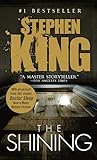
The Shining works because it combines two sources of terror: the supernatural horror of a genuinely haunted place and the psychological horror of a man whose damage precedes and invites the haunting. Jack Torrance’s violence, his alcoholism, his failure as a writer and a father — the Overlook Hotel doesn’t create these things. It finds them and amplifies them.
The novels listed here replicate one or both of these sources: the isolated setting that strips away ordinary life, the family or marriage under pressure that the horror makes impossible to ignore, the question of whether the monster comes from outside or inside.
By Stephen King First
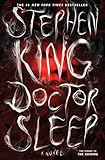
Doctor Sleep — Stephen King (2013)
The direct sequel. Danny Torrance is now an adult, working at a hospice in New Hampshire, using his gift — the shining — to ease dying patients. He is also, like his father, an alcoholic. When a girl named Abra Stone reaches out to him with a shining of her own, they are pulled into conflict with the True Knot, a group of psychic vampires who feed on children with the gift.
Doctor Sleep is slower and warmer than its predecessor — a recovery narrative as much as a horror novel — but it pays off everything set up in The Shining and faces the question of inherited damage directly. The ending is one of King’s best.
Misery — Stephen King (1987)
Isolation and captivity rather than haunting, but the psychological structure is similar: a writer (Paul Sheldon, rescued from a car crash by his “number one fan” Annie Wilkes) is trapped and tormented, and his survival depends on producing exactly what his captor wants. Annie Wilkes is the most frightening human character King has created. The novel is about creative captivity as much as physical imprisonment.
Pet Sematary — Stephen King (1983)
King has said this is the novel that frightened him most — the one he considered not publishing. It is darker than The Shining and more emotionally devastating. The horror (a burial ground that resurrects the dead, wrongly) is the vehicle for the subject King is actually writing about: the grief of losing a child, and the extreme things grief makes people capable of.
If The Shining is about inherited damage, Pet Sematary is about the lengths people go to avoid accepting irrevocable loss. Both are unbearable in different ways.
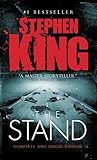
The Stand — Stephen King (1978, uncut edition 1990)
At over 1,000 pages (in the uncut edition), The Stand is not for every reader. But for those who want King operating at maximum scale — an America mostly destroyed by a superflu virus, the survivors drawn into a cosmic battle between good and evil — it is the most ambitious thing he has done. The isolated, pressurised world of The Shining becomes an entire post-apocalyptic continent.
Beyond King
The Haunting of Hill House — Shirley Jackson (1959)
The novel that most directly influenced The Shining. Four people spend a summer at Hill House, a mansion with a disturbing history, to document its phenomena. What happens is partly supernatural and partly — or mostly — the unravelling of Eleanor Vance, a repressed woman for whom the house becomes the first place she has ever felt belongs to her.
Jackson’s technique — keeping the reader uncertain whether Hill House is genuinely haunted or whether Eleanor is experiencing a breakdown — is the precursor to King’s double register. The Haunting of Hill House is the most important haunted-house novel in American literature.
The Turn of the Screw — Henry James (1898)
Henry James’s novella is the founding text of the ambiguous ghost story. A governess arrives at a country estate to care for two children; she begins to see figures she believes are the ghosts of the previous governess and her lover. Whether the ghosts are real or the governess is losing her mind is never settled — James holds the ambiguity perfectly throughout.
Rebecca — Daphne du Maurier (1938)
Not a haunted-house novel in the supernatural sense, but in the psychological sense: Manderley is haunted by the memory of its first mistress, Rebecca, who controls the living from beyond death through the mechanisms of reputation and the devotion of the housekeeper Mrs. Danvers. For readers who want gothic atmosphere and psychological dread without explicit horror, Rebecca is the obvious choice.
Modern Psychological Horror
Mexican Gothic — Silvia Moreno-Garcia (2020)
The most acclaimed recent gothic horror novel. A 1950s Mexico City socialite travels to a remote estate to investigate her cousin’s mysterious illness and finds a genuinely disturbing house with its own consciousness and history. Moreno-Garcia understands that what makes great gothic-horror work is not the monster but the architecture — the way a place embodies and amplifies what its inhabitants bring to it.
The Turn of the Key — Ruth Ware (2019)
A nanny answers an ad for a position at a remote Scottish smart home — a house whose technology is supposed to make it perfectly safe. Written as a letter from prison, where the narrator awaits trial for a child’s death. Ware updates the classic gothic structure (the governess at the great house with a secret) to a contemporary thriller with complete confidence. The isolation, the malevolent house, the hidden history — all present.
Reading by Theme
Isolated settings: The Shining → Doctor Sleep → The Haunting of Hill House.
Psychological horror (minimal supernatural): Misery → Rebecca → The Haunting of Hill House.
Family under pressure: Pet Sematary → The Shining → Mexican Gothic.
Contemporary gothic: Mexican Gothic → The Turn of the Key → Doctor Sleep.
Frequently Asked Questions
What makes The Shining different from other horror novels?
The Shining works on two levels simultaneously: as a supernatural horror novel (the Overlook Hotel is genuinely haunted) and as a psychological study of a man whose alcoholism, violence, and failure destroy his family. Jack Torrance's breakdown has causes that precede the hotel's influence — the supernatural amplifies what is already there. This double register, where the horror is both real and a manifestation of psychological damage, is what distinguishes it from simpler haunted-house fiction.
What is the best book to read after The Shining?
Doctor Sleep by Stephen King (2013) is the direct sequel and the natural next choice — it follows Danny Torrance as an adult dealing with both his psychic gift and his inherited alcoholism. Pet Sematary is the darker, more frightening King novel for readers who want the emotional devastation of The Shining without the supernatural explanation. For something outside King, The Haunting of Hill House by Shirley Jackson is the novel that most directly influenced The Shining.
Is The Shining based on a true story?
No — The Shining is fiction. King has said he was inspired partly by his own experience with alcoholism (Jack Torrance's arc reflects anxieties about his own drinking, which King was dealing with when he wrote the novel) and partly by a stay at the Stanley Hotel in Estes Park, Colorado. The Stanley Hotel is the inspiration for the Overlook. The story itself is original.
What is different between The Shining book and the Kubrick film?
The film and the novel diverge significantly. In King's novel, Jack Torrance is a recovering alcoholic who genuinely loves his son and is slowly corrupted by the hotel; his arc is a tragedy. In Kubrick's film, Jack (Jack Nicholson) seems unstable from the first scene, making the hotel's influence almost redundant. King famously disliked Kubrick's adaptation for this reason — and for the different ending. Both are masterpieces in their own medium.