Books Like Outlander: 11 Epic Historical Romances
If Outlander's blend of time travel, 18th-century Scotland, and slow-burn romance captivated you, these epic reads deliver the same sweep.
Diana Gabaldon’s Outlander is one of the more difficult novels to categorize, which is part of why it has lasted. On its surface it is a time-travel fantasy: Claire Randall, a British combat nurse in 1945, passes through a standing stone at Craigh na Dun and finds herself in 1743 Scotland, in the middle of a Jacobite uprising. But the time travel is largely a delivery mechanism for something else — an immersive portrait of 18th-century Highland life, a slow-building romance between Claire and the young Scottish warrior Jamie Fraser, and a series of adventures that put both characters in genuine, sustained danger. The novel is long, detailed, and unapologetically epic, which is exactly what its readers love about it.
What distinguishes Outlander from most historical romance is the combination of elements it refuses to separate. The history is serious and researched; the romance is central rather than decorative; the danger is real and the consequences lasting. Claire is a capable, modern-minded woman dropped into a world that has no place for her competence, and watching her navigate that tension while falling irrevocably in love gives the series its emotional engine. The books below share one or more of those qualities — some are epic historical fiction with a sweeping love story at the center, some are immersive journeys into a vanished world, and some scratch the specific itch of a romance shaped by war and impossible circumstances.
Books Like Outlander at a Glance
| Book | Author | Best for |
|---|---|---|
| The Bronze Horseman | Paullina Simons | Readers of epic historical romance, WWII |
| Birdsong | Sebastian Faulks | Readers of historical fiction, particularly those |
| Atonement | Ian McEwan | Literary fiction readers who value formal |
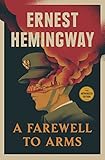
| A Farewell to Arms | Ernest Hemingway | Readers who want to understand the World War I |
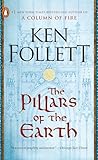
| The Pillars of the Earth | Ken Follett | Historical fiction readers who love immersive |
| Shogun | James Clavell | Fans of epic historical fiction, viewers |
| Fall of Giants | Ken Follett | Historical Fiction |
| Here Be Dragons | Sharon Kay Penman | Devoted readers of medieval historical fiction |
| A Discovery of Witches | Deborah Harkness | Readers who enjoy richly atmospheric paranormal |
| The Historian | Elizabeth Kostova | Readers who enjoy deeply researched historical |
| The Name of the Rose | Umberto Eco | Patient literary readers |
Sweeping Romances Shaped by War and History
#1 — The Bronze Horseman by Paullina Simons
Tatiana is seventeen years old in Leningrad when the Germans begin their siege in 1941. Alexander is a Red Army officer with a secret that could destroy them both. Simons’s novel is perhaps the closest thing to Outlander in its emotional register: an intense, slow-building love story set against historical catastrophe, with two characters whose union is made almost impossible by forces neither can control. The siege sections are as harrowing as anything in the genre, and the romance earns every page of its considerable length. Readers who felt wrecked by Jamie and Claire’s separations will feel the same here.
#2 — Birdsong by Sebastian Faulks
Stephen Wraysford falls in love with Isabelle Azaire in northern France in 1910, in a relationship that is passionate and doomed. The novel then leaps to the Western Front of 1916 and follows Stephen through the Somme and the tunnels beneath it, in some of the most viscerally realized battle sequences in British fiction. Birdsong shares with Outlander both a commitment to historical authenticity and a willingness to put its central romance inside genuinely brutal circumstances. The love story and the war are inseparable, which is exactly how both novels understand their eras.
#3 — Atonement by Ian McEwan
Thirteen-year-old Briony Tallis misidentifies a crime she witnesses in her family’s English country house, setting in motion events that separate two lovers across the Second World War and beyond. McEwan’s novel is formally precise in a way Gabaldon is not, but both books are fundamentally about the cruelty of being separated from the person you love by forces that are historical, political, and beyond individual control. The wartime sequences — particularly the Dunkirk retreat — are magnificent, and the novel’s final turn reframes everything that came before.
#4 — A Farewell to Arms by Ernest Hemingway
An American lieutenant and an English nurse fall in love during the Italian campaign of the First World War. Hemingway strips the romance and the war down to their essential mechanisms, with none of Gabaldon’s density, but the emotional territory is the same: two people trying to build something private and permanent inside a machinery of violence that has no interest in their happiness. The novel remains one of the clearest-eyed accounts of what it costs to love someone in wartime, and its ending is among the most devastating in American fiction.
Immersive Historical Fiction with Epic Scale
#5 — The Pillars of the Earth by Ken Follett
The construction of a cathedral in 12th-century England, across decades and through civil war, plague, political intrigue, and religious violence. Follett’s novel is one of the great achievements of popular historical fiction — not because any single element is exceptional, but because the whole is so completely realized that the reader lives inside it for all 900-plus pages. Like Outlander, it combines serious historical research with propulsive plotting and characters whose fates feel genuinely important. Readers who want to disappear into another century should start here.
#6 — Shogun by James Clavell
English navigator John Blackthorne is shipwrecked in feudal Japan in 1600 and must learn to survive inside a culture that is entirely opaque to him. Shogun is one of the great fish-out-of-water historical novels, and it shares with Outlander both the experience of a protagonist dropped into a world with different rules and the slow, absorbing process of learning those rules well enough to navigate them. The romance between Blackthorne and the Lady Mariko is as central to the novel as Claire and Jamie are to Gabaldon’s series, and equally complicated by history.
#7 — Fall of Giants by Ken Follett
The first volume of Follett’s Century Trilogy follows five interlinked families — Welsh, English, Russian, German, and American — through the First World War and the Russian Revolution. Follett’s gift for making historical events feel personal and immediate is fully operational here, and the romantic storylines are woven through the geopolitical ones rather than subordinated to them. For readers who loved the multigenerational sweep of the later Outlander books, this trilogy delivers that same sense of history as something lived rather than observed.
#8 — Here Be Dragons by Sharon Kay Penman
Joanna, illegitimate daughter of King John of England, is married to Llewelyn Fawr, Prince of Wales, as a political alliance in the early 13th century. What follows is a detailed, meticulously researched account of their marriage — a relationship that begins in political calculation and deepens into genuine love across decades of conflict between England and Wales. Penman’s dedication to historical accuracy is as serious as Gabaldon’s, and her portrait of a woman navigating power, loyalty, and desire in a world controlled by men covers the same emotional ground as Outlander.
Blending History with the Uncanny
#9 — A Discovery of Witches by Deborah Harkness
Oxford scholar and witch Diana Bishop discovers an enchanted alchemical manuscript in the Bodleian Library and finds herself at the center of a conflict between species — witches, vampires, and daemons — that she doesn’t fully understand. Her relationship with the geneticist and vampire Matthew Clairmont is the novel’s emotional center, and the series eventually moves into time travel to Elizabethan London. A Discovery of Witches shares Outlander’s combination of a modern, capable heroine, a romance with a compelling and dangerous partner, and a fully imagined historical world.
#10 — The Historian by Elizabeth Kostova
A young woman discovers her father’s correspondence with a mysterious scholar and follows the trail into the history — and possible continued existence — of Vlad the Impaler. Kostova’s novel is structured as a series of nested narratives that move across Eastern European archives and landscapes, building an atmosphere of obsessive historical research and genuine menace. The novel shares Outlander’s sense of the past as a place you can almost enter, and its central romance is conducted under the same kind of impossible pressure.
Long Historical Series for Committed Readers
#11 — The Name of the Rose by Umberto Eco
A learned Franciscan friar and his novice arrive at an Italian abbey in 1327 to attend a theological debate and find themselves investigating a series of deaths. Eco’s novel is dense, erudite, and patient — it rewards readers who are willing to engage with its ideas about heresy, language, and the politics of medieval Christianity. The historical reconstruction is among the most complete in fiction, and the murder mystery at its center is genuinely clever. For Outlander readers who responded most to Gabaldon’s immersive, researched world-building, this is the natural next challenge.
How to Choose Your Next Read
If you want the closest emotional match to Jamie and Claire: The Bronze Horseman or Birdsong.
If you want the same epic historical scale: The Pillars of the Earth or Shogun.
If you want time travel and the supernatural: A Discovery of Witches.
If you want serious literary historical fiction: Atonement or A Farewell to Arms.
If you want a long series to commit to: Fall of Giants (Century Trilogy) or Here Be Dragons (Welsh Princes series).
The Outlander Series in Order
For all nine Outlander novels, the companion novellas, and Diana Gabaldon’s recommended reading sequence, see our Outlander Books in Order guide.
For the Best Romance Novels
For the definitive guide to romance fiction — from Jane Austen to contemporary romance, from literary to beach reads — see our Best Romance Novels of All Time list.
Affiliate disclosure: Links to Amazon on this page are affiliate links. We earn a small commission at no extra cost to you. This does not influence our editorial recommendations.
Frequently Asked Questions
What should I read after finishing Outlander?
After Outlander, the most satisfying next reads depend on which element gripped you most. For the sweeping romance and wartime danger, try The Bronze Horseman by Paullina Simons. For immersive historical fiction set in Britain, The Pillars of the Earth by Ken Follett delivers the same epic scale. For a time-travel romance with a scholarly heroine, A Discovery of Witches by Deborah Harkness is the natural next step.
Are there other books with time travel romance similar to Outlander?
The closest books to Outlander's time-travel romance formula are A Discovery of Witches by Deborah Harkness, which blends historical settings with a supernatural love story, and The Historian by Elizabeth Kostova, which uses archival research as a kind of time travel into the world of Vlad the Impaler. For readers who love the displaced-in-time emotional stakes, The Bronze Horseman by Paullina Simons achieves a similar intensity without the fantasy element.
What are the best historical fiction series as long and immersive as the Outlander series?
The best multi-book historical fiction series comparable to Outlander in scope are Ken Follett's Kingsbridge series beginning with The Pillars of the Earth, James Clavell's Asian Saga beginning with Shogun, and Ken Follett's Century Trilogy beginning with Fall of Giants. Each series spans generations, builds a richly detailed world, and rewards readers who commit to the full run.