Books Like And Then There Were None: Closed Mysteries
Agatha Christie's ten strangers lured to an island and killed one by one — with no apparent murderer — is the bestselling mystery novel of all time and the perfection of the closed-circle whodunit. These books share its elegant plotting, its claustrophobic isolation, and the pleasure of the reveal.
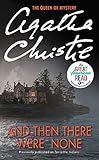
Agatha Christie published And Then There Were None in 1939, and no mystery writer has fully solved the problem she solved. Ten strangers are lured to an isolated island off the Devon coast, each accused over a gramophone record of a death they escaped punishment for, and are then killed one by one according to the nursery rhyme printed on their bedroom walls. The problem is elegant and apparently impossible: if the murderer is one of the ten, they must still be on the island when there is only one person left. Christie’s solution remains one of the most audacious structural moves in the history of crime fiction.
The novel has sold over 100 million copies, making it the bestselling mystery novel ever written and one of the bestselling books of any genre in history. Its influence on the form is total: every locked-room mystery, every isolated-setting thriller, every novel that confines a cast of suspects in a space from which they cannot escape is working in Christie’s shadow. The closed-circle mystery — where the killer must be among the people on the page — is now so fundamental to the genre that it is easy to forget how perfectly it was first executed here.
The books below were chosen for readers who loved the formal pleasure of And Then There Were None: the careful plotting, the satisfying reveal, the sealed space that makes everyone a suspect. They range from Christie’s own other masterworks to contemporary novelists who have absorbed her lessons and applied them to new settings, and they include a few books that share the island’s deeper logic — isolation as a condition that reveals what people really are.
Agatha Christie and the Golden Age
#1 — Murder on the Orient Express by Agatha Christie
The Calais Coach of the Orient Express is stranded by a snowdrift in Yugoslavia, and by morning one of its passengers has been stabbed a dozen times in his locked compartment. Hercule Poirot must solve the murder before the train moves again. Christie’s solution here is the opposite of And Then There Were None in its logic but identical in its audacity: every suspect has an alibi, and the answer to why that is lies in a conspiracy that the reader will almost certainly not see coming. The closed circle at maximum formality — a luxury train is the most civilized possible island.
#2 — The Murder of Roger Ackroyd by Agatha Christie
Roger Ackroyd is found stabbed in his study after receiving a letter that would have revealed the identity of a blackmailer. Dr. Sheppard, who found the body, narrates the investigation as Poirot works through the suspects in the village. Christie breaks the central rule of detective fiction with such elegant precision that the Detection Club debated whether she had cheated. The novel’s trick is the first and most perfect deployment of the unreliable narrator in crime fiction — predating every psychological thriller discussed on this site and still the best single execution of the device.
#3 — Rebecca by Daphne du Maurier
A young woman marries the wealthy widower Maxim de Winter and moves to Manderley, his grand Cornish estate — but the estate is presided over by the memory of his first wife, Rebecca, and by the housekeeper Mrs. Danvers, who will not let Rebecca’s ghost rest. Du Maurier’s novel is not a whodunit in the Christie sense, but it belongs here because it delivers the same pleasure: a mystery with a solution that reframes everything, a Gothic atmosphere of maximum tension, and a revelation that lands like a perfectly thrown stone. The best Gothic mystery in the English language.
Contemporary Closed-Circle Mysteries
#4 — The Thursday Murder Club by Richard Osman
Four retirees in a Cotswold retirement village — Joyce, Elizabeth, Ibrahim, and Ron — meet each Thursday to review cold cases. When a local property developer is found dead, they find themselves with a real murder to investigate. Osman’s novel carries Christie’s spirit into the contemporary world with complete fidelity: the pleasure of watching intelligent people reason from evidence, the closed community where everyone knows everyone’s business, and the denouement that surprises without cheating. Warmer and funnier than Christie, but with the same fundamental affection for the puzzle form.
#5 — The Seven Deaths of Evelyn Hardcastle by Stuart Turton
Aiden Bishop wakes up in the woods with no memory and watches a woman named Evelyn Hardcastle murdered in front of him. He wakes again in someone else’s body. He will relive the day of Evelyn’s murder eight times, inhabiting a different guest at Blackheath House each time, until he can correctly identify the killer — or be trapped in the loop forever. Turton’s novel is Christie’s formal ingenuity made philosophically strange: the closed circle becomes a time loop, the suspects are also bodies to inhabit, and the solution requires understanding not just who killed Evelyn but the structure of the trap itself. One of the most original mystery novels of the past decade.
#6 — The Maid by Nita Prose
Molly the maid, who struggles to read social cues and finds order and meaning in the rituals of hotel housekeeping, discovers a dead body in a suite at the Regency Grand. Prose’s novel is the cozy mystery with genuine emotional depth: Molly is one of the most original protagonists in recent crime fiction, and the pleasure of watching her apply her particular way of seeing to the problem of who killed Mr. Black is both intellectually satisfying and unexpectedly moving. The hotel as a closed world, with its hierarchy of staff and guests, is the contemporary version of Christie’s island.
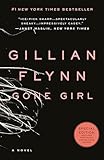
#7 — Gone Girl by Gillian Flynn
Nick Dunne comes home to find his wife Amy missing. Flynn’s novel is not a traditional whodunit, but it belongs here because it executes Christie’s greatest trick in a contemporary register: the victim who is also the villain, the investigation that reveals something the investigator does not expect, the solution that retroactively reframes every earlier scene. And Then There Were None ends with a confession that explains how we were deceived; Gone Girl does something similar with Amy’s diary. Christie’s inversion of expected roles — killer, victim, detective — is taken to its logical modern conclusion.
The Isolated Setting as Horror
#8 — The Secret History by Donna Tartt
A group of Classics students at a small Vermont college have committed a murder. Tartt tells us this in the opening sentence; the novel is a retrospective account of how it happened and what it cost them. The campus as island — a closed community of people who know too much about each other and cannot leave — is the literary version of Christie’s device. The moral claustrophobia of The Secret History, the way the group’s shared guilt binds them as tightly as the nursery rhyme binds Christie’s ten, is the form raised to literary fiction.
#9 — Lord of the Flies by William Golding
A group of English schoolboys are stranded on an uninhabited island after their plane is shot down. They attempt to govern themselves, fail, and descend into violence. Golding’s novel is Christie’s island used as a political and philosophical argument: what happens when the closed circle has no murderer planted among them, but produces one from the logic of the group itself? The island as a space where civilization’s constraints are removed and human nature reveals itself is the horror version of Christie’s formal device. Essential reading for anyone thinking about why the isolated setting generates such narrative pressure.
#10 — The Hunting Party by Lucy Foley
A group of old university friends gathers at a remote Scottish estate for New Year’s Eve. By the end of the party, one of them is dead. Foley’s novel is the most direct Christie homage on this list: the isolated setting, the cast of suspects who all have history with each other, the multiple perspectives each of which conceals something, and the careful deployment of information toward a reveal. The contemporary update lies in the psychological register — the characters’ secrets are more squalid and realistic than Christie’s — but the pleasure of the puzzle is identical.
How to Choose Your Next Read
If you want the most formal Christie pleasure: Murder on the Orient Express — the closed circle at maximum elegance.
If you want the greatest structural trick: The Murder of Roger Ackroyd — the rule Christie broke and no one has broken better since.
If you want Gothic atmosphere over puzzle: Rebecca — the mystery as uncanny dread.
If you want the most inventive contemporary variation: The Seven Deaths of Evelyn Hardcastle — Christie’s form made philosophically strange.
If you want the darkest version of the island: Lord of the Flies — isolation as political argument.
Agatha Christie Books in Order
For every Agatha Christie novel in publication order — Poirot, Miss Marple, and standalones — see our Agatha Christie Books in Order guide.
For the Best Mystery and Crime Books
For the definitive guide to mystery and crime fiction — from Agatha Christie to Tana French — see our Best Mystery Books of All Time list.
Affiliate disclosure: Links to Amazon on this page are affiliate links. We earn a small commission at no extra cost to you. This does not influence our editorial recommendations.
Frequently Asked Questions
Why is And Then There Were None considered the greatest mystery novel?
And Then There Were None solves a problem that most mystery writers avoid: how do you construct a whodunit when the murderer must be among a group with no possible outside access, and when the group shrinks to one? Christie's solution is audacious and, once you know it, seems obvious — which is the mark of the best mysteries. The novel has sold over 100 million copies and has never gone out of print since 1939. Its structure has been imitated hundreds of times, but the original remains the most perfectly constructed version.
Is And Then There Were None appropriate for younger readers?
The novel is widely read in schools and is generally considered appropriate for readers from about age 12 or 13 upward. The violence is not graphic — Christie describes deaths rather than dwelling on them — and the moral framework, while complex, is clear. Some editions marketed to younger readers use the original UK title, Ten Little Indians, though both the original UK and US titles had nursery rhyme variants that are now retired from most modern publications in favor of the current title.
What is the best Agatha Christie to read after And Then There Were None?
The Murder of Roger Ackroyd is the other essential Christie, and the one that will most reward a reader who has just finished And Then There Were None. Both novels hinge on a structural trick — in Roger Ackroyd, it is the identity of the narrator; in And Then There Were None, it is the identity of the killer — and reading them together shows the full range of Christie's formal ingenuity. After those two, Murder on the Orient Express is the third pillar: the closed circle at maximum complexity, with a solution that is technically impossible and yet entirely satisfying.